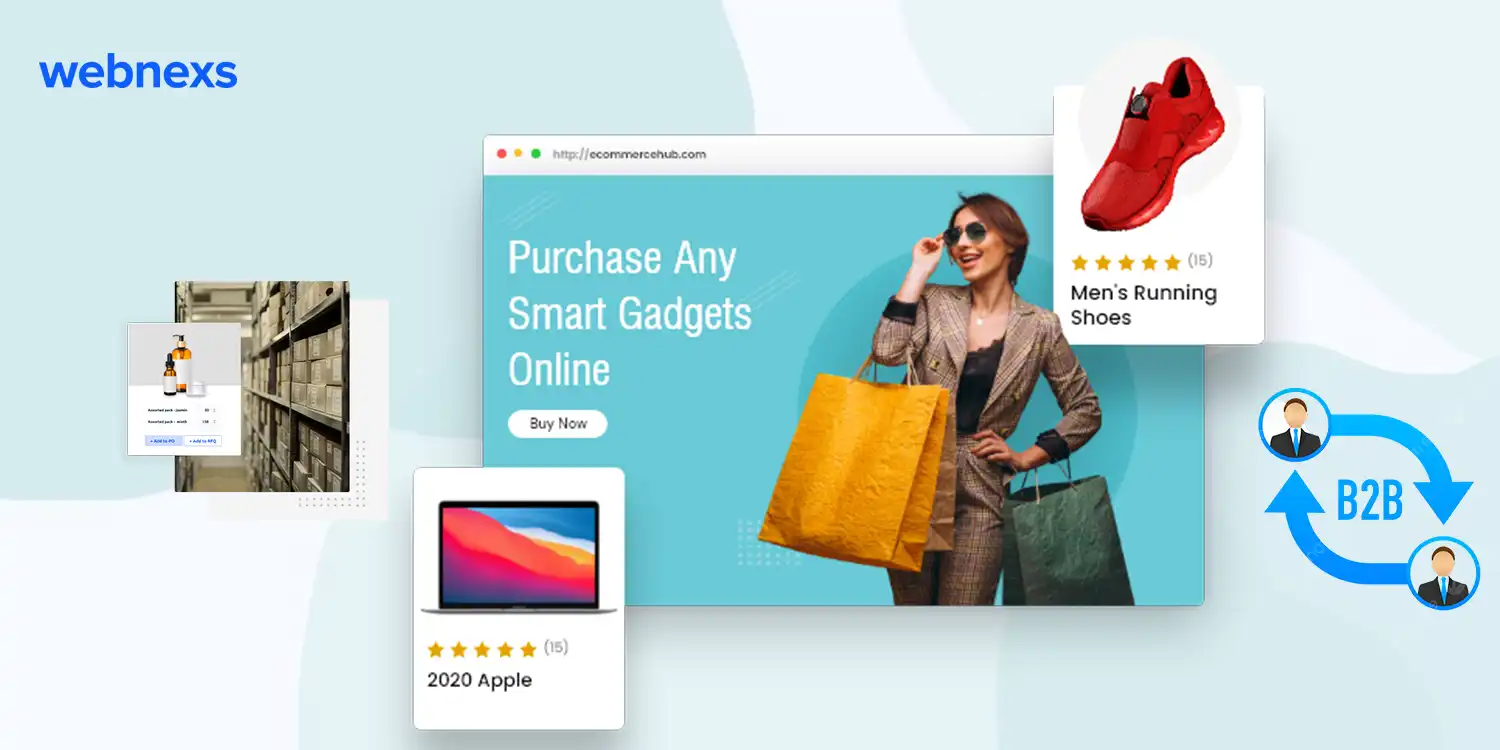
A B2B Multi Vendor Marketplace is no longer just a trend—it’s a powerful digital business model reshaping how companies buy and sell. Businesses today don’t want slow processes or middlemen; they want speed, transparency, and scale.
And that’s exactly what a multi vendor marketplace delivers.
From wholesale procurement to SaaS services, everything is shifting online. If you’ve been thinking about entering eCommerce, this is the space where serious growth is happening.tion.
Key Takeaways on B2B Multi Vendor Marketplace
- The B2B multi vendor marketplace industry is going to be really big and worth a lot of money in a few years.
- The B2B multi vendor marketplace industry will have ways to make money, such as taking a commission on sales getting subscription fees and selling ads.
- Businesses, like the B2B multi vendor marketplace platforms that let them buy things in bulk set their prices and pay securely.
- A multi vendor marketplace reduces operational costs compared to traditional retail
- With the right platform like Webnexs, scaling becomes faster and easier
What is a B2B Multi Vendor Marketplace?
A B2B Multi Vendor Marketplace is a website where many sellers sell things to businesses. This is different, from when people buy things for themselves. On a B2B Multi Vendor Marketplace businesses buy lots of products at one time they talk about the price. They work with the sellers for a long time. The B2B Multi Vendor Marketplace is a place for businesses to find many sellers in one place. They can buy things from a B2B Multi Vendor Marketplace.
Think of it as a digital ecosystem where:
- Vendors manage their own stores
- Buyers compare multiple suppliers
- The platform earns through commissions and services
This model creates a win-win situation for everyone involved. Learn more about our B2B ecommerce development services.
Whether B2B or B2C, the build fundamentals overlap — see our complete guide on how to build a marketplace website.
Why B2B Multi Vendor Marketplace is Booming
🌐 Digital-First Buying Behavior
Let’s be real—buyers today don’t start offline anymore. Nearly every purchasing decision begins online.
Businesses:
- Compare vendors
- Analyze pricing
- Check reviews
- Make bulk decisions digitally
This shift has made the multi vendor marketplace model incredibly powerful.
Market Growth & Future Potential
The numbers tell a compelling story:
- Global eCommerce expected to cross massive milestones by 2030
- Wholesale and procurement sectors are growing rapidly
- SaaS and service-based marketplaces are exploding
That means one thing—you’re entering at the right time.
Core Features of a B2B Marketplace Platform
1. Multi-Vendor Support
Every vendor gets:
- Independent dashboards
- Product control
- Order tracking
This increases competition—and that naturally improves quality and pricing.
👉 Learn more about multi vendor marketplace features here:
2. Advanced Product Management
Handling large inventories? No problem.
Features include:
- Bulk uploads
- Real-time updates
- Product variants
👉 Explore development strategies:
https://blog.webnexs.com/multi-vendor-ecommerce-development-marketplaceapp/
3. Payment & Invoicing Solutions
Security is everything in B2B.
Key features:
- Escrow systems
- Invoice generation
- Multiple payment gateways
4. Bulk Order Management
This is where B2B shines.
Capabilities:
- Custom quotes
- Volume discounts
- Automated workflows
👉 Read more about building platforms:
https://blog.webnexs.com/8-steps-to-build-an-ecommerce-website-like-amazon/
Challenges in Starting a B2B Multi Vendor Marketplace
1. Vendor Onboarding Complexity
Problem: Too many vendors, too many rules
Solution: Automated onboarding portals
2. Complicated Pricing Models
Problem: Different pricing for different buyers
Solution: Dynamic pricing engines
3. Secure Payments & Credit Terms
Problem: High-value transaction risks
Solution: Escrow + secure gateways
4.Trust & Quality Issues
Problem: Buyers fear poor quality
Solution: Ratings, reviews, and verification badges
👉 Real examples:
https://blog.webnexs.com/multi-vendor-marketplace-solution-work-examples/
Examples of Successful B2B Multi Vendor Marketplace
1. Alibaba
Location: China
Target Audience: Small to medium-sized businesses (SMBs), wholesalers, manufacturers, and suppliers seeking to source or sell products internationally.
Success Driving Factors:
- The driving force behind its success is the coverage of millions of buyers and suppliers with a vast range of products across various industries.
- Sellers can set their prices and negotiate, allowing greater flexibility in operating their business.
- By leveraging technological innovation, the platform was enabled to work faster and smarter, giving shoppers a smooth experience.
Success Metrics:
- Over 48 million small and medium-sized enterprises (SMEs) globally.
- More than 200,000 suppliers in the B2B multi vendor marketplace, with approximately 90% based in China.
- Alibaba reached $4.51 billion in the 2nd quarter of 2024, which is a 29% year-over-year revenue increase.
2. Amazon
Location: USA
Target Audience: Small startups to large enterprises requiring supplies, equipment, and services.
Success Driving Factors:
- Integration into Amazon’s ecosystem of brand and infrastructure has earned trust and credibility.
- Unique needs of the buyers were addressed, along with providing millions of products and tailored pricing models.
- Logistics is fast and reliable.
Success Metrics:
- Amazon’s multi vendor B2B marketplace is projected to account for 2.4% of the U.S. B2B e-commerce sales by 2025.
- Over 6 million customers worldwide, including small businesses, large enterprises, and public institutions.
- 96 of the Fortune 100 companies utilize Amazon Business for their procurement needs.
Why Start a B2B Multi Vendor Marketplace?
A multi vendor marketplace earns in multiple ways:
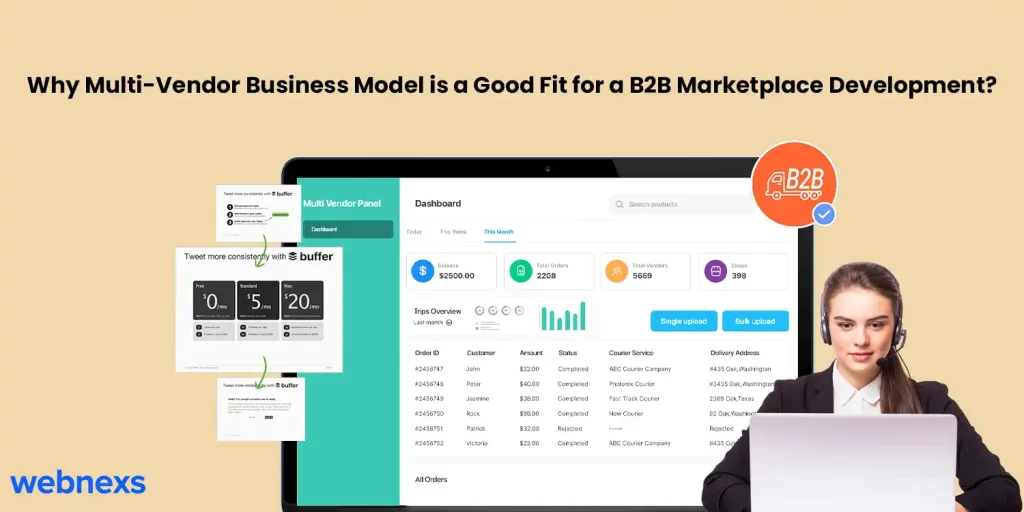
1. Commissions
Earn from every transaction
2. Vendor Subscriptions
Recurring monthly revenue
3. Data Monetization
Sell insights and analytics
4. Advertising
Charge vendors for visibility
5. Custom Services
Offer logistics, integrations, and tools
👉 Understand marketplace benefits:
https://blog.webnexs.com/single-vendor-and-multi-vendor-marketplac
Read More: How to Build the Best Online B2B Marketplace Platform?
Profit Estimation Breakdown
| Revenue Source | Estimated Contribution |
| Commissions | High |
| Subscriptions | Medium |
| Ads | Medium |
| Data | Growing |
| Services | High |
Key Insight:
Unlike physical stores, a B2B multi vendor marketplace reduces overhead and increases margins.
👉 Cost insights:
https://blog.webnexs.com/cost-of-building-a-marketplace-website-and-app/
Step-by-Step Guide to Build Marketplace
1. Register Your Business
Legal structure + compliance
2. Setup Payments
Bank + gateways
3. Choose Platform
SaaS / White-label / Custom
4. Vendor Onboarding
Build supplier network
5. Launch
Test → Deploy → Scale
👉 Complete guide:
https://blog.webnexs.com/multi-vendor-marketplace-solution-the-best-idea-for-ecommerce-business/
Types of Marketplace Solutions
| Type | Advantage | Limitation |
| SaaS | Easy setup | Limited customization |
| White-label | Fast branding | Moderate flexibility |
| Custom | Full control | Time-consuming |
👉 Learn more:
https://blog.webnexs.com/single-vendor-and-multi-vendor-marketplaces/
Why Webnexs is the Best Choice
When it comes to building a B2B multi vendor marketplace, Webnexs stands out.
Why?
- Scalable architecture
- Advanced vendor management
- Custom integrations
- Faster deployment
It’s designed specifically for businesses that want to grow without technical headaches.
Comparison B2B vs Traditional Commerce
| Feature | B2B Marketplace | Traditional Store |
| Reach | Global | Local |
| Cost | Low | High |
| Scalability | High | Limited |
| Automation | Yes | Minimal |
| Profit Potential | Very High | Moderate |
Comparison Webnexs vs Other Platforms
| Feature | Webnexs | Others |
| Customization | High | Medium |
| Scalability | High | Limited |
| Support | Dedicated | Generic |
| Deployment Speed | Fast | Slow |
| B2B Features | Advanced | Basic |
Get a free consultation and launch your marketplace sooner with Webnexs.
Conclusion
A B2B Multi Vendor Marketplace is not just another business idea—it’s a long-term digital asset.
With:
- Low operational costs
- High scalability
- Multiple revenue streams
…it creates a strong foundation for sustainable growth.
If you’re serious about entering eCommerce, this is your moment.
Start smart. Scale fast. And choose the right platform—because that makes all the difference.