
Exploring E-Commerce
and Entertainment(VOD) Solutions
 OTT PlatformsSeptember 8, 2026
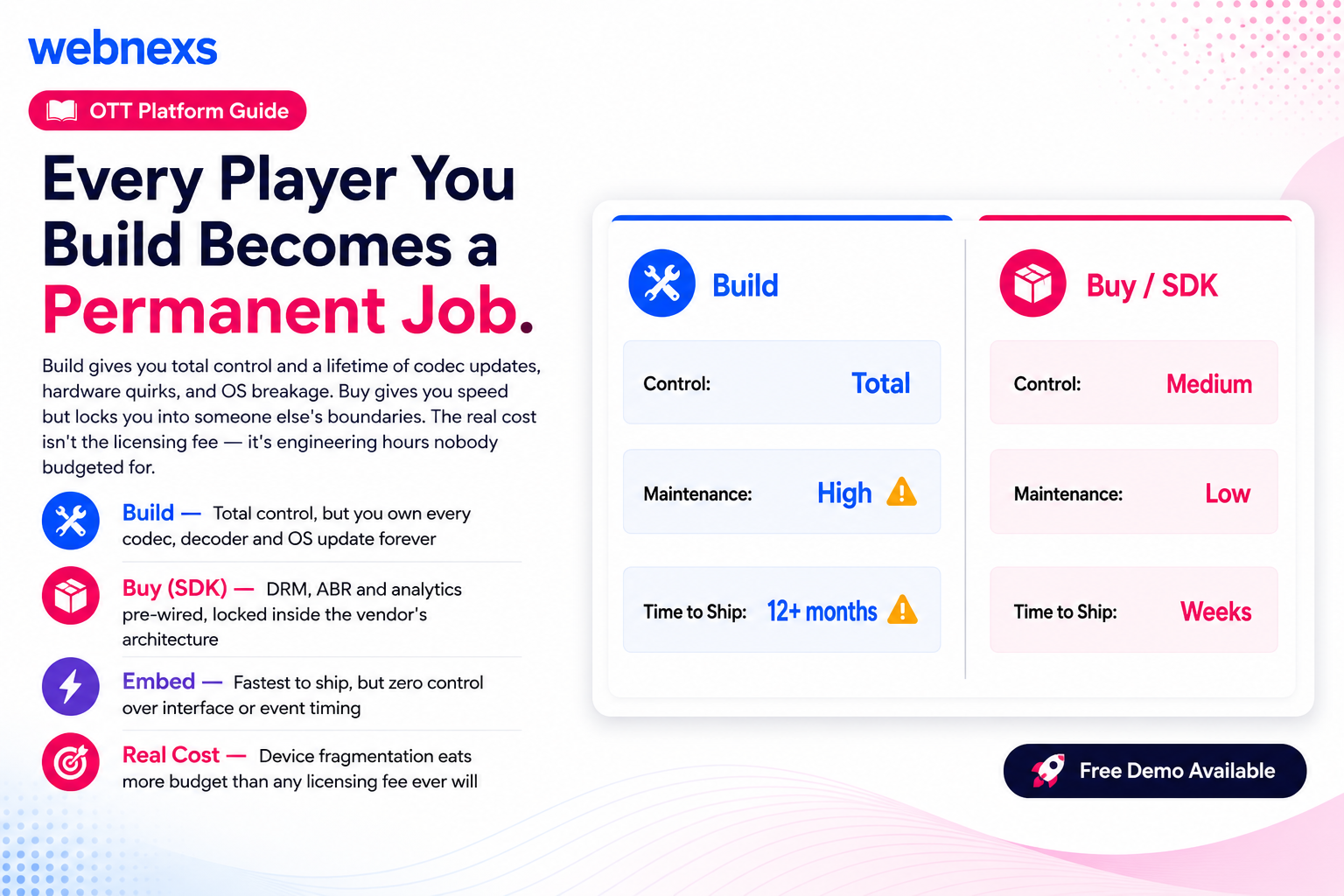
Build vs Buy a Video Player: What It Actually Costs
Quick answer: Build vs buy a video player depends on whether you need custom rendering logic or standard playback. Building requires engineering time to handle codec support, buffering, and error recovery. Buying shifts these maintenance burdens to a vendor. The real cost is not just licensing fees, but the ongoing developer hours spent integrating, debugging, […]
 GeneralSeptember 8, 2026
AI Agents for Business: What They Are and How to Deploy Them Without Hiring a Team
Webnexs Forge builds AI agents for business and operates them as a managed service, under webnexs.com/forge. Quick answer: An AI agent is software that takes a business goal, plans the steps to reach it, uses real tools such as a CRM, an ad account, or an inbox to carry them out, and checks its own […]
- OTT PlatformsSeptember 8, 2026
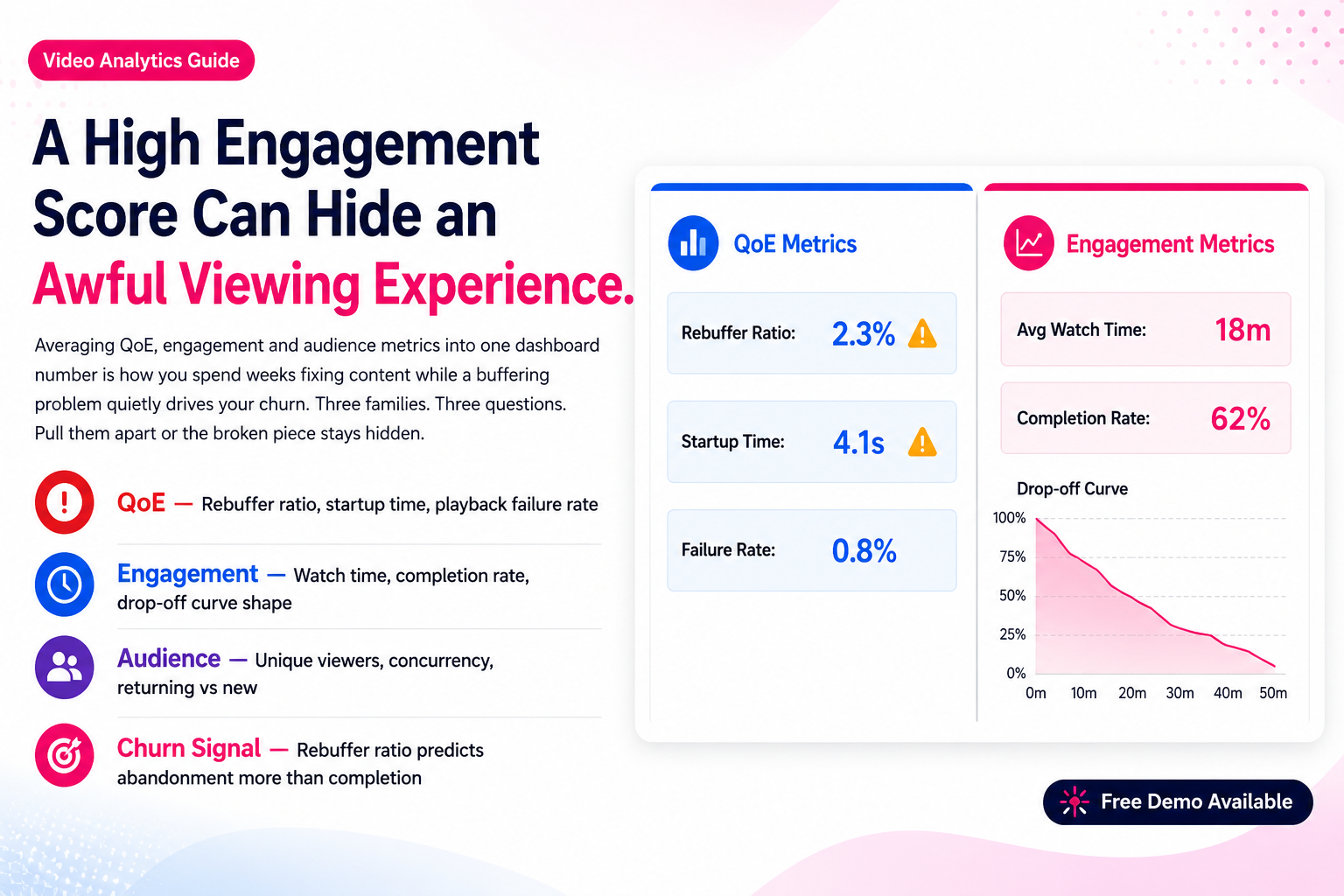
Video QoE vs Engagement Metrics: Which One Predicts Churn
Quick answer: Video QoE vs engagement metrics reveals distinct churn predictors. QoE measures technical delivery stability, directly impacting drop-off rates during buffering events. Engagement metrics track user intent, such as watch time and completion. Churn prediction requires correlating technical failures with behavioral disengagement. Isolating these signals prevents misattributing technical issues to content preference, enabling precise […]
 Video on Demand(VOD)October 1, 2026
Top 10 Video Monetization Platforms to Maximize Your Revenue in 2026
Quick answer: The top video monetization platforms in 2026 are Webnexs, Flicknexs, Kaltura, Muvi, Vimeo, Dacast, Brightcove, Panopto, JW Player and Wistia. They let you earn from video through ads (AVOD), subscriptions (SVOD) and pay-per-view (TVOD). This guide compares all ten so you can choose the right one for your content and audience. Webnexs […]
 OTT PlatformsAugust 17, 2026
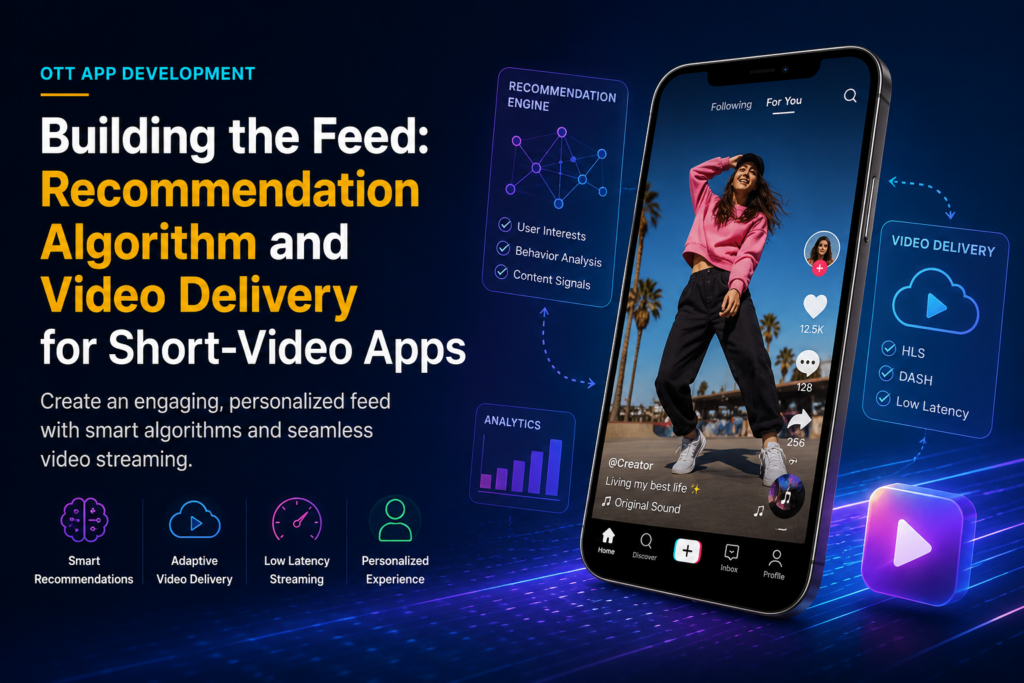
Building the Feed: Recommendation Algorithm and Video Delivery for Short-Video Apps
Explore technical build, cost, and architecture insights for founders & product teams on short-video app development.
 OTT PlatformsAugust 17, 2026
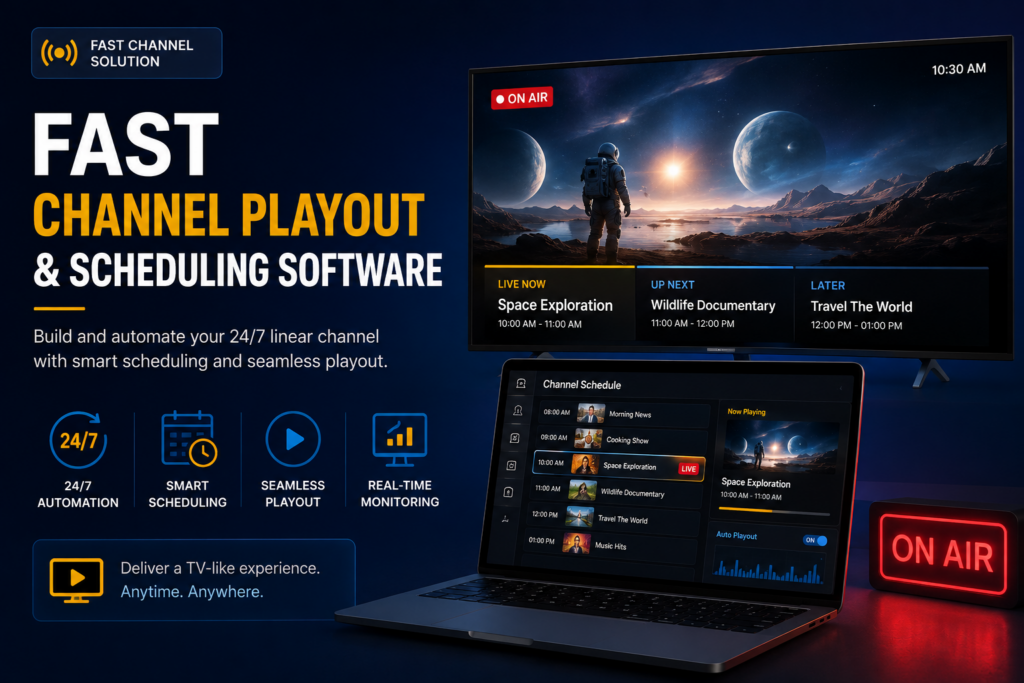
FAST Channel Playout and Scheduling Software: Building a 24/7 Automated Linear Feed
Explore FAST channel playout and scheduling software for automated 24/7 linear feeds. Technical insights for founders & product teams.
 OTT App DevelopmentAugust 11, 2026
How to Build an Android OTT App in 2026: Cost & Guide
How to Build an Android OTT App in 2026: Cost & Guide Quick answer: An android ott app development project requires Kotlin code, ExoPlayer/Media3 for streaming, Google Play distribution, and a UI that adapts to phones and tablets. Webnexs delivers a production-ready binary on a timeline set during discovery for a fixed fee plus ongoing […]
 OTT App DevelopmentAugust 11, 2026
How to Build an iOS OTT App in 2026: Cost & Guide
How to Build an iOS OTT App in 2026: Cost & Guide Quick answer: iOS OTT app development requires Swift code, AVFoundation video playback, App Store distribution, and a testing phase in TestFlight; expect a development driver set during discovery for a core feature set, plus a quarterly update budget if you choose managed support. […]
 OTT App DevelopmentAugust 14, 2026
How to Build an LG webOS TV App in 2026: Cost & Guide
How to Build an LG webOS TV App in 2026: Cost & Guide Quick answer: Webnexs handles the full LG webOS app build, including packaging your OTT catalog, developing against the webOS TV SDK, and guiding you through LG certification and Content Store publishing. This guide covers lg webos app development end to end. Webnexs […]
 OTT App DevelopmentAugust 14, 2026
How to Build a Fire TV App in 2026: Cost, Timeline & Guide
How to Build a Fire TV App in 2026: Cost, Timeline & Guide Quick answer: To build a Fire TV app in 2026, start with an Android-based codebase, design a UI for remote (D-pad) navigation, ensure Amazon Appstore compliance, and complete the review cycle. The app must support Fire Stick, Fire TV Cube, and Fire […]
 OTT App DevelopmentAugust 14, 2026
How to Build an Android TV App in 2026: Cost & Guide
How to Build an Android TV App in 2026: Cost & Guide Quick answer: Android TV and Google TV run on the same Android SDK as phones, so one codebase can carry your entire OTT service to the big screen — D-pad navigation, Leanback UI components, and Google Play distribution included. This guide covers android […]
 OTT App DevelopmentAugust 14, 2026
How to Build a Samsung TV App (Tizen) in 2026: Cost & Guide
How to Build a Samsung TV App (Tizen) in 2026: Cost & Guide Quick answer: Building a Samsung TV app means working in Tizen Studio, writing HTML5/JavaScript, designing every screen around remote-control navigation, and clearing certification through the Samsung Seller Office. This guide covers samsung tv app development end to end. Webnexs delivers Samsung Tizen […]