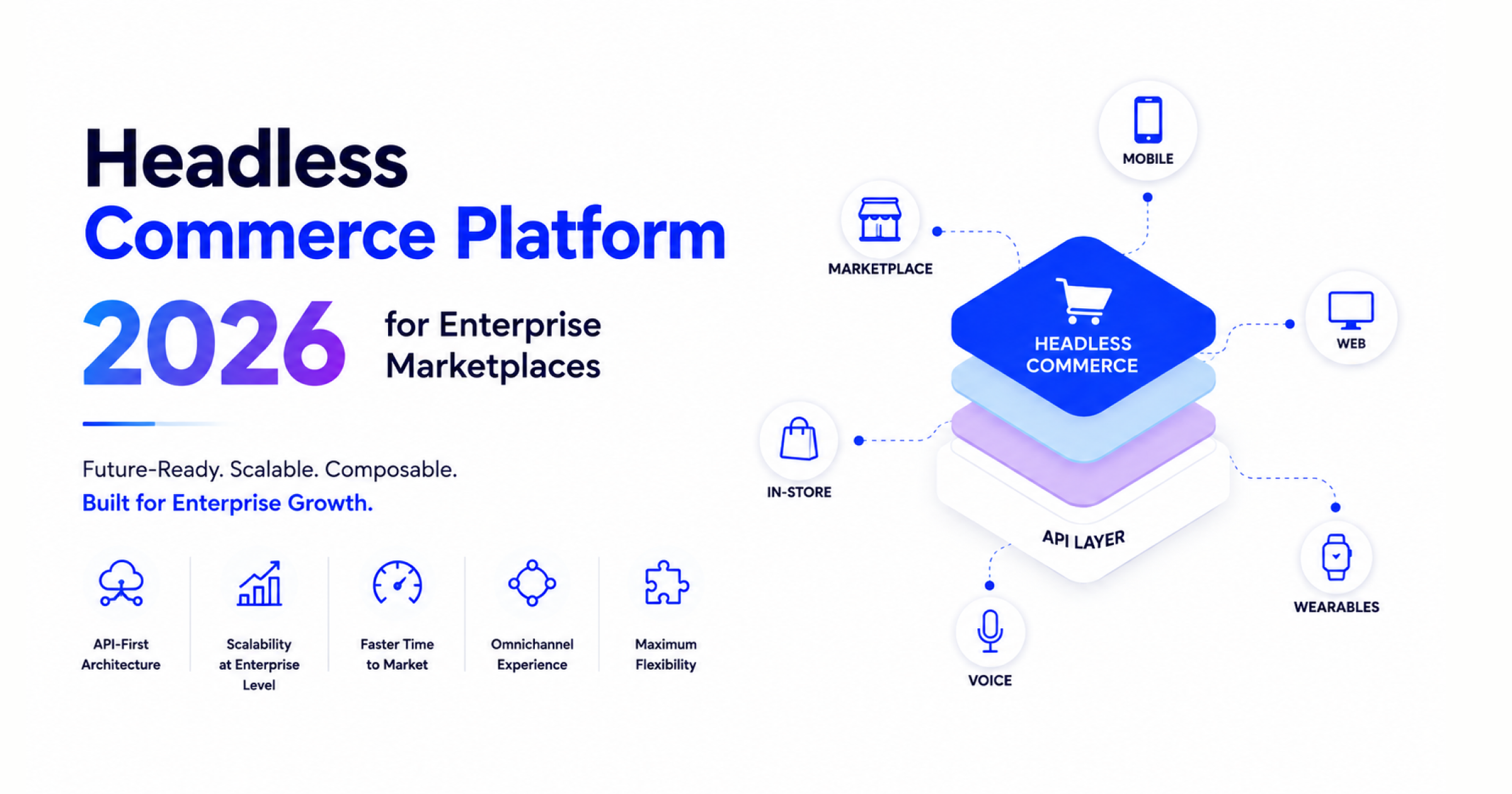
A headless commerce platform in 2026 is becoming the way to go for companies that want to grow and have a lot of different parts to their online business. The old way of doing things just does not work well when you need to be on different platforms and have many people working together.
This is why many companies are moving away from the storefronts and systems that were all connected.
For the foundational steps behind any marketplace build, see our complete guide on how to build a marketplace website.
By separating the part of the website that people see from the part that makes the commerce work companies can do things faster and make changes easily. This guide will tell you what headless commerce is, compare some of the platforms talk about the costs and show you why Webnexs is a top choice, for companies that need a strong headless marketplace.
Headless Commerce Platform 2026 Benefits for Enterprise Marketplaces
A headless commerce platform in 2026 is really helpful for companies. It lets them keep the frontend and backend separate. This means they can make changes and try things faster. They can also sell their products in different ways and make their system bigger when they need to.
Headless ecommerce is great for companies that have many sellers on their platform. It can handle things like having many vendors, special pricing and working with other systems. This way of doing things helps companies get ready for the future. It does this by getting rid of limitations on the frontend. At the time it keeps the company safe and working well. Headless commerce platform is very good at this. Headless ecommerce is also very good, at supporting enterprise marketplace models.
Key Benefits
- Frontend freedom (web, mobile, kiosk, IoT)
- Faster feature rollouts
- Enterprise-level scalability
- Superior performance and page speed
- API-first integrations
- Better developer productivity
Businesses prefer Webnexs because it delivers these benefits without enterprise complexity overhead.
Build a Scalable Marketplace with Webnexs
Headless Commerce Platform 2026 vs Traditional Ecommerce Architecture
A headless commerce platform in 2026 is different from the online shopping system. This headless commerce platform is different because it separates the way things look from the backend commerce services. Headless ecommerce is really good for companies with lots of buyers and sellers. It lets these companies make the frontend experiences and backend systems bigger and better on their own. The old way of doing things puts the design and logic together which makes it hard to try things and make changes. Especially for big companies, with lots of people buying and selling things.
Architecture Comparison
| Feature | Traditional | Headless |
| Frontend Flexibility | Low | High |
| Omnichannel | Limited | Native |
| Performance | Moderate | High |
| Marketplace Support | Weak | Strong |
| Scalability | Constrained | Enterprise |
Headless Commerce Platform 2026 Top Platforms Compared for Enterprise Marketplaces
Choosing a headless commerce platform 2026 requires evaluating API maturity, marketplace readiness, scalability, and cost predictability. Many platforms claim headless support but rely on workarounds. True headless ecommerce for enterprise marketplace use cases requires native API-first design and multi-vendor logic.
Headless Platform Comparison Table
| Platform | Headless Ready | Marketplace Support | Scalability | Best For |
| Webnexs | Yes (API-first) | Native | Enterprise | Marketplaces |
| Shopify Plus | Partial | Limited | Medium | DTC |
| BigCommerce | Partial | Plugin-based | Medium | SMB |
| Custom Stack | Yes | Custom | High | High Risk |
Headless Commerce Platform 2026 and Headless Ecommerce for Enterprise Marketplace Stack Explained
The headless commerce platform for 2026 is a choice for big companies that have their own marketplaces. It has a lot of things like an API- commerce engine, frontend frameworks, a content management system, payment services and integrations all working together.
Headless ecommerce is great for marketplaces because it lets each part work on its own. This means the system can change quickly and deal with problems easily.
The headless commerce platform is made up of parts that work well together. This way the company is not stuck with one platform and it can grow quickly. The headless commerce platform also makes it easy to add vendors and sell things in many different ways without having to rebuild the whole system. The headless commerce platform is very helpful, for companies that want to grow and sell things in different ways.
Typical Enterprise Stack
- Commerce Engine (API-first)
- Frontend (React, Vue, Next.js)
- CMS (Headless CMS)
- Payment Services
- Marketplace Vendor Module
- ERP & CRM Integrations
Webnexs delivers this stack pre-configured for marketplaces.
Build a Scalable Marketplace with Webnexs
Headless Commerce Platform 2026 Cost Breakdown for Enterprise Marketplaces
The cost of a headless commerce platform 2026 depends on platform licensing, integrations, hosting, and customization. While headless ecommerce for enterprise marketplace solutions require upfront investment, they significantly reduce long-term costs by eliminating replatforming, plugin dependencies, and performance bottlenecks.
Cost Components
| Cost Area | Description |
| Platform License | Core headless engine |
| Frontend Development | Custom UI/UX |
| Integrations | ERP, CRM, OMS |
| Hosting | Cloud or dedicated |
| Maintenance | Security & updates |
Webnexs offers predictable enterprise pricing without revenue-based fees.
Headless Commerce Platform 2026 Step-by-Step Implementation Process
Implementing a commerce platform in 2026 is a big task. You have to figure out what your business needs. Then you have to pick an API-first commerce engine. After that you have to design the frontend experiences for your commerce platform. You also have to integrate marketplace modules into your commerce platform.. You have to test if your headless commerce platform can handle a lot of users.
Headless ecommerce is very important for companies that want to make a marketplace. When you implement ecommerce for an enterprise marketplace you have to think about a few key things from the start. These things are modularity, security and performance for your ecommerce platform. You have to make sure your headless ecommerce platform is good, at all of these things.
Step-by-Step Process
- Define enterprise marketplace requirements
- Select headless commerce backend
- Design frontend architecture
- Configure multi-vendor workflows
- Integrate APIs and services
- Test performance and security
- Launch and scale
Webnexs accelerates this process with a ready headless marketplace framework.
Headless Commerce Platform 2026 Limitations of Shopify Plus for Enterprise Marketplaces
Shopify Plus has some capabilities but it is not meant for big companies that need a lot of control over their online stores. If you have vendors and need to set complex prices Shopify Plus is not the best choice. You will have to find ways to work around its limitations. Big companies that want a commerce platform, in 2026 usually find that Shopify Plus is not enough because it does not have strong enough APIs and its ecosystem is limited. Shopify. Just does not work well for big companies that need a lot of customization and control over their online stores.
Key Limitations
- Limited marketplace workflows
- API throttling
- Plugin dependency
- Scaling complexity
Build a Scalable Marketplace with Webnexs
Headless Commerce Platform 2026: How Webnexs Delivers Enterprise-Grade Headless Marketplaces

Webnexs is a company that makes headless commerce platform solutions for big businesses in 2026. They make these solutions so that big companies can use them easily. The way Webnexs works is that it uses something called API- architecture. This means Webnexs can handle things like many vendors working together selling things in many places and making lots of changes.
Businesses like Webnexs because it’s very flexible and already has the things that marketplaces need. This means businesses do not have to spend a lot of time and money to make it work for them. Webnexs also makes sure that it can handle a lot of work and is very reliable which is important for businesses. Webnexs headless commerce platform is a choice, for companies that want to sell things in many places and need a system that can handle all of that.
Why Webnexs Stands Out
- True API-first architecture
- Native multi-vendor support
- Enterprise performance at scale
- Customizable frontend freedom
- Trusted by global clients
Headless Commerce Platform 2026 API-First Marketplace Features Deep Dive
Core API Capabilities
- Vendor management APIs
- Product and catalog APIs
- Pricing and commission APIs
- Order and fulfillment APIs
- Buyer account APIs
Enterprise-Ready Integrations
- ERP and OMS
- CRM platforms
- Payment gateways
- Logistics providers
Webnexs delivers these APIs as standard, not add-ons.
Headless Commerce Platform 2026 Real-World Enterprise Marketplace Use Cases
- B2B Procurement Marketplace: Custom buyer portals with ERP sync
- Global Multi-Vendor Ecommerce: Omnichannel frontend delivery
- Service Marketplaces: API-driven vendor onboarding
- Enterprise Distribution Networks: Scalable partner ecosystems
Businesses prefer Webnexs because these use cases work without architectural compromises.
For deeper insights into enterprise-grade marketplace models, explore B2B Procurement Marketplace solutions designed for large-scale operations.
Headless Commerce Platform 2026 Expert Tips for Enterprises
- Choose true API-first platforms
- Avoid plugin-dependent ecosystems
- Design for omnichannel from day one
- Prioritize marketplace-ready logic
- Plan long-term scalability
Webnexs aligns with all enterprise headless best practices.
Talk to a Headless Commerce Expert
If you’re evaluating a headless commerce platform 2026 or planning headless ecommerce for enterprise marketplace growth beyond Shopify Plus, architecture decisions matter.
Webnexs is one of the leading providers trusted for scalable, API-first, enterprise marketplace solutions, , including multi-vendor ecommerce marketplace deployments used by global enterprises.
👉 Talk to a Headless Commerce Expert
👉 Request a Custom Architecture Demo
Build future-proof marketplaces. Scale without limits.
Headless Commerce Platform 2026 FAQs
What is a headless commerce platform and how does it benefit enterprise marketplaces?
A headless commerce platform separates the frontend and backend, allowing companies to make changes and try new things faster, and sell their products in different ways, making it ideal for companies with many sellers on their platform.
How does a headless commerce platform differ from traditional ecommerce architecture?
A headless commerce platform separates the frontend from the backend commerce services, whereas traditional ecommerce architecture puts the design and logic together, making it harder to try new things and make changes.
What are the key benefits of using a headless commerce platform for enterprise marketplaces?
The key benefits include frontend freedom, faster feature rollouts, enterprise-level scalability, superior performance and page speed, API-first integrations, and better developer productivity.
Why do businesses prefer Webnexs for their headless commerce needs?
Businesses prefer Webnexs because it delivers the benefits of headless commerce without the complexity overhead, making it a top choice for companies that need a strong headless marketplace.
What factors should I consider when choosing a headless commerce platform for my enterprise marketplace?
When choosing a headless commerce platform, you should evaluate API maturity, marketplace readiness, scalability, and cost predictability to ensure you find the right platform for your needs.
How can a headless commerce platform help my business prepare for the future?
A headless commerce platform can help your business prepare for the future by getting rid of limitations on the frontend, keeping your company safe and working well, and supporting enterprise marketplace models.