Quick Answer
Building a successful marketplace app requires a robust multi-vendor ecommerce platform. Focus on user experience, vendor management, and scalable infrastructure. Prioritize features like easy onboarding, secure payments, and efficient logistics. Ensure mobile optimization and strong customer support to foster trust and growth.
Best multi vendor ecommerce Development and best multi vendor marketplace platform conversations are everywhere right now—and for good reason. Ecommerce has reached a point where selling alone feels… limiting. Customers expect choices. Vendors want traffic without tech headaches. Founders want growth without warehouses stacked to the ceiling.
That’s where the multi vendor marketplace platform model quietly takes over.
For the complete foundational process, see our guide to marketplace website development before diving into app specifics.
If you look closely, almost every fast-growing ecommerce business today isn’t trying to sell everything. Instead, they’re building a space where others sell, and the platform grows stronger with every new vendor added. It’s a smarter, more scalable approach—and it’s why marketplaces are outpacing traditional ecommerce year after year.
This guide isn’t theory. It’s built from real marketplace launches, real platform comparisons, and real mistakes businesses make when choosing the wrong technology. By the end, you’ll understand how to build a multi vendor marketplace that actually works—not just on paper, but in the real world.
Develop Your Multi Vendor Ecommerce Website Now!
Let’s take a closer look at the details. We’ll show you how to build a multi vendor ecommerce marketplace or app to accelerate your business growth.
What Is a Multi Vendor Marketplace Platform?
A multi vendor marketplace platform is a kind of online store that lets many sellers sell their products to customers. This platform helps independent sellers to register list their products manage their stock receive orders and sell to customers through one website.
Of having many separate online stores a multi vendor marketplace is like a big online shopping center where many sellers operate under one brand.
In terms a multi vendor marketplace works like a shopping mall. The marketplace owner provides the technology, hosting, payment system and customers while sellers focus on selling their products. The platform makes money through a commission on sales, subscriptions from sellers, fees for listing products or all of these.
A modern multi vendor marketplace platform has tools for managing sellers processing orders and handling payments.
Some advanced platforms use intelligence to offer features like product recommendations, pricing insights and personalized shopping experiences.
Businesses can create multi vendor marketplace solutions for types of customers such as businesses selling to consumers (B2C) businesses selling to other businesses (B2B) or a mix of both. Examples of multi vendor marketplaces include Amazon, Etsy and Alibaba.
Today companies prefer to create multi vendor marketplace websites using software rather than maintaining their own online stores.
In short a multi vendor marketplace platform changes the way ecommerce works by building a community of sellers and buyers making it a powerful business model.
Develop Your Multi Vendor Ecommerce Website Now!
Why Multi Vendor Marketplace Platform Dominates Ecommerce?
The multi vendor marketplace platform is the ecommerce model because it solves problems for both sellers and buyers such as limited reach, high costs, lack of trust and slow growth.
Unlike online stores a multi vendor marketplace grows faster scales easier and adapts better to changing consumer behavior.
One reason why multi-vendor marketplaces are so popular, in ecommerce is that they give customers lots of options.
Customers can compare prices check out sellers read reviews and see delivery options all in one place.
Many studies have found that than 71% of shoppers actually prefer marketplaces to individual ecommerce websites. They like the fact that multi-vendor marketplaces offer a lot of choice. Customers trust marketplaces because they have options.
From the seller’s perspective vendors prefer marketplaces because they are easy to use. Of building their own website managing hosting and payment systems sellers can simply join an existing multi vendor marketplace platform with ready traffic and trust.
This is why 62% of sellers prefer selling on marketplaces rather than operating independent stores.
Another reason multi vendor marketplaces dominate ecommerce is scalability. A single vendor ecommerce store grows slowly while a multi vendor ecommerce website grows quickly.
Every new vendor adds products, content, competition and customers—without increasing inventory risk for the platform owner.
Technology also plays a role in the success of multi vendor marketplaces. Modern platforms support features like headless commerce, cloud-based hosting and secure payment systems.
These features allow platforms to handle traffic, thousands of vendors and millions of transactions without performance issues.
Finally trust drives the dominance of multi vendor marketplaces. Marketplaces build trust through verified vendors, transparent reviews, secure payments and fair return policies.
This trust directly improves conversion rates—multi vendor marketplaces 4–6% conversion rates significantly higher, than traditional ecommerce sites.
Because of risk faster growth, higher trust and better customer experience the multi vendor marketplace platform has become the dominant ecommerce model globally—and businesses that adopt it early gain a long-term competitive advantage.
How to Build a Multi Vendor Ecommerce Marketplace App
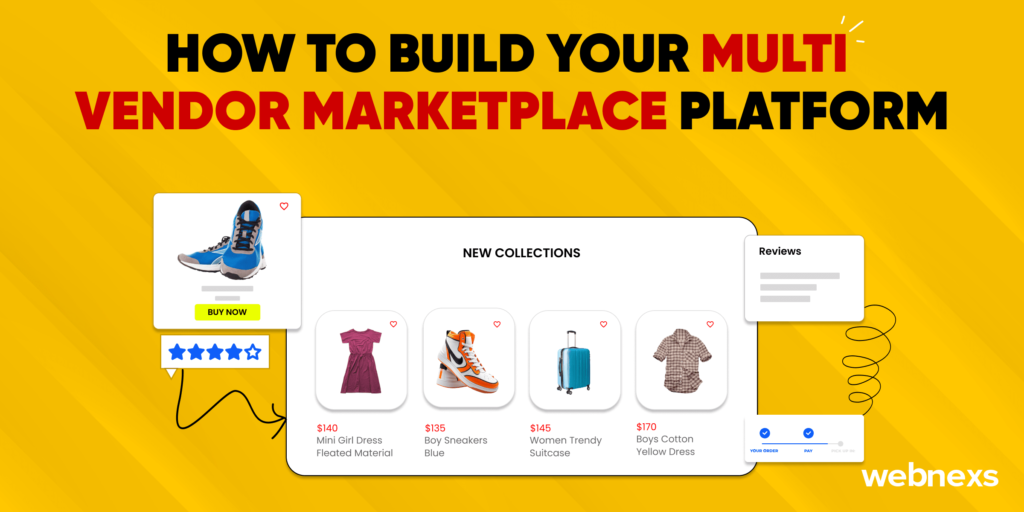
Creating a multi vendor ecommerce marketplace app can open up a world of possibilities for connecting vendors and customers. It might sound complex at first, but don’t worry! With the right strategies and tools, you can transform your vision into a successful marketplace that benefits all participants. By focusing on careful planning, effective execution, and continuous improvement, Here’s a step-by-step guide to help you navigate this process effectively.
Develop Your Multi Vendor Ecommerce Website Now!
Understanding the Multivendor Ecommerce Platform Business Model
At its core, the multivendor ecommerce platform model revolves around aggregation. You do not sell things yourself. You make a place, on the computer where other people can sell things. Your website helps people who want to sell things get started list the things they want to sell get paid and handle any problems that come up when people buy things. It also helps with any arguments that happen between the buyer and the seller.
This model excels because it:
- Scales faster than single-vendor ecommerce
- Requires less inventory investment
- Encourages competition among vendors, improving pricing
- Increases customer retention through variety
Successful platforms like Amazon, Etsy, and Alibaba didn’t succeed by selling everything themselves—they succeeded by empowering vendors.
Difference Between Single Vendor vs Multi Vendor Ecommerce Marketplace
Single-vendor ecommerce is linear. Growth depends entirely on your inventory, logistics, and marketing budget. In contrast, a multi vendor ecommerce marketplace is exponential. Each vendor added increases product range, traffic potential, and revenue opportunities.
Single-vendor platforms struggle with scalability, while marketplaces thrive on it. That’s why businesses aiming for long-term growth inevitably transition to marketplace models.
Why Marketplaces Convert 4–6% Higher Than Traditional Stores
According to industry data, marketplaces enjoy 4–6% conversion rates, compared to 1–2% for traditional ecommerce websites.
Why? Well customers trust marketplaces more.
* They read reviews, from buyers.
* They compare prices from sellers.
* They see ratings. Know what they are getting.
All these things make it easier for customers to buy. They feel more confident when buying from a marketplace. They know what they get.
Market Growth Statistics Behind the Best Multivendor Marketplace Platform
The fact is, marketplaces are really taking off and it is not a guess. There are numbers to back it up. When we look at how people shop all around the world it is clear that customers and sellers like marketplaces more than individual stores.
Some recent reports have shown us:
- The global multi vendor marketplace market is going to reach $40.1 billion by 2025
- 71% of shoppers like marketplaces than websites that only sell one brand
- 62% of sellers like selling on marketplaces more than having their own websites
- Marketplaces make 30–50% money from customers over time
- These numbers show us why it is so important to choose the best multi vendor marketplace platform. It is no longer something you can just think about. It is something you have to do.
Global Marketplace Growth & Shopper Behavior Trends
These days people do not want to go to a lot of websites to shop. They want one place where they can look at prices read what other people think and buy things easily. Marketplaces are perfect for this.
Also shopping on phones has made marketplaces even more popular. Apps for marketplaces make shopping personal and fast. Which are all important things for people when they are deciding what to buy.
Why 71% of Buyers Prefer an All in One Marketplace
- An all in one marketplace makes buying things a lot. Customers can do a lot of things such as:
- Look at vendors at the same time
- Read reviews from other people that we know are real
- Check out faster
- Get better prices
- This makes the experience of shopping a lot and people are more likely to come back and shop again.
Data-Backed Insights From AI-Powered Marketplace Platforms
Modern AI-powered marketplace platforms do a lot more than basic online shopping. They look at how people shop make prices better suggest products and stop activity. Which makes both customers and the platform happier and more profitable. Marketplaces like these are really good, at making sure people have an experience and that the platform makes money. Multivendor marketplace platforms are the way to go
Key Benefits of Using the Best Multi Vendor Marketplace Platform
Using the multi vendor marketplace platform has a lot of good things about it. It does things that regular ecommerce cannot do. You can grow your business in a smarter way with a multi vendor marketplace platform. This is because you can grow your business faster and it will not cost you much money to do things.
Build Revenue Without Inventory Using Marketplace Commission Model
One of the things about multi vendor marketplaces is that you can make money without having to keep any products in stock. You can use a marketplace commission model to make money. This means you get a bit of money from every sale that happens on your multi vendor marketplace platform. You do not have to buy or send out any products yourself. This is really great because it means you are not taking many risks and you can make more money. This is why a lot of startups and big companies like multi vendor marketplaces.
Lower Costs With Automated Vendor Management Systems
There are tools that can help you manage the people who sell things on your multi vendor marketplace platform. These tools can automatically do things like add sellers track how well they are doing pay them and help resolve any problems that come up. This means you do not have to do much work yourself and it will cost you less money to run your multi vendor marketplace platform. The sellers will also be happier because everything is automated. This means they will want to keep selling things on your multi vendor marketplace platform for a time.
Scale Faster With Cloud-Based Marketplace Hosting
There are hosting services for multi vendor marketplaces that use cloud technology. This means your multi vendor marketplace platform can handle a lot of people visiting it at the time. You can grow your business fast, with these hosting services. For example if you want to add a lot of sellers to your multi vendor marketplace platform it will not be a problem. You can add 10 sellers or 10,000 sellers and your multi vendor marketplace platform will still work well.
How to Create a Multi Vendor Marketplace App Step, by Step
Building a marketplace sounds hard.. If you do it right and find a good developer it is not that complicated. You can break it down into steps. First you need to plan your marketplace. What will you sell? Who are your customers? Then you find a developer who knows how to build a multi vendor marketplace. They will help you make it happen. It is a process that you can manage. You just need to take it one step at a time.
Check Your Idea With a Multi Vendor Marketplace Developer
Before you start building you need to check if your idea’s good. A Multi Vendor Marketplace Developer can help you look at the kind of things you want to sell who else is selling them who might want to buy them and how money you might make.
This helps you make sure your marketplace is actually solving a problem that people have and not just copying what other people are doing with their marketplaces.
Choose the Right Multi Vendor Marketplace Software
You need to pick the multi vendor marketplace software for your site. The multi vendor marketplace software you choose will decide if your site does well or not. Things like being able to grow with your site making changes to fit your needs keeping everything safe and being able to connect with tools are more important than things that just look cool.
This is where Webnexs does a job. It gives you the flexibility of a big company, with multi vendor marketplace software and you can get started with your multi vendor marketplace software faster.
📊 Comparison Table: Best Multi Vendor Marketplace Platforms
| Feature | Webnexs | Wcart | Shopify Multivendor | WooCommerce Plugin |
| Native Multivendor | ✅ Yes | ✅ Yes | ❌ Plugin-based | ❌ Plugin-based |
| Scalability | Enterprise-grade | Mid-level | Limited | Limited |
| Vendor Onboarding | Advanced | Standard | Basic | Basic |
| Payment Splitting | Built-in | Partial | App-dependent | Plugin-dependent |
| Customization | Full | Moderate | Restricted | Moderate |
| Best For | Global marketplaces | SMBs | Simple stores | Small sellers |
Why this matters:
Businesses that start on plugins often rebuild later. Platforms that start with Webnexs usually scale without replatforming.
Why Webnexs Is the Best Choice to Build Multi Vendor Marketplace
Webnexs stands out as the #1 multivendor ecommerce platform provider globally. With advanced vendor management, AI-powered features, headless commerce capabilities, and robust marketplace payment gateways, Webnexs delivers future-ready marketplace solutions.
Thousands of global businesses trust Webnexs to create multi vendor marketplace website solutions that scale without limitations.
Read More: Key Things To Consider Building Multi Vendor Marketplace Development
Selecting the Right Multi Vendor Marketplace Platform for Your Business

The thing is, not all platforms are the same. When you are choosing a vendor marketplace platform you have to think about what your business wants to achieve who your customers are and how you want to grow.
Open Source vs SaaS Multivendor Ecommerce Platform
Some platforms are source, which means you can change them to suit your needs but you need to have a lot of technical know-how to manage them. On the hand SaaS platforms are quicker to set up more secure and can grow with your business but you might not be able to customize them as much as you want.
Webnexs is an option because it offers customizable marketplace solutions that are good for big businesses without giving you a headache.
Headless Commerce & API-First Vendor Marketplace
These days marketplaces work better with a commerce system. This means the front and back ends are separate so you can easily connect with websites, mobile apps and other systems.
API-first marketplaces are also better because they are faster more flexible and ready for the future.
Scalability, Security & Customization Checklist
When you are picking a platform make sure it has:
- High-level security that meets all the rules
- A cloud system that can grow with your business
- A way to easily add vendors
- Support for many payment methods
- A system that is ready for search engines
Development Process of a Multi Vendor Marketplace App
Once you have chosen the multi vendor marketplace platform the next step is to make sure the development process is done correctly. This is important because it will affect how well your marketplace works in the run. If you rush or do not plan well you might have problems with performance vendors might not be happy. Customers might leave. That is why successful marketplaces think of development as a way to invest in their business not just a technical task.
A good multi vendor marketplace development process is balanced. It works well for the business the technology and the users. From the prototype to the final launch every step should be designed to help both vendors and customers.
UX/UI Design for Vendors Website & Buyers
The experience of the users is very important for a vendor marketplace. If vendors have a time uploading products or customers have trouble checking out even the best marketing plan will not work. The design of the marketplace should be easy to use, fast and look good.
For vendors the dashboard should be simple and powerful. They need to be able to manage their products track orders see how much money they are making and talk to customers. If the interface is cluttered vendors might not want to use the platform. That is why top platforms like Webnexs put a lot of effort into designing an experience for vendors.
For customers the focus should be on making it easy to browse. If you have search filters can compare products have a wishlist and a smooth checkout you will have more sales. A marketplace that is easy to use will make customers trust you away.
Backend Architecture, for Multivendor Ecommerce Website
Every multivendor ecommerce website has a strong backend system. This is where vendor data, product catalogs orders, payments and analytics are managed.
A good backend system makes sure that:
- Orders are processed smoothly even when there is a lot of traffic
- Inventory is synchronized correctly across vendors
- Transactions are secure
- You can see how the marketplace is performing in time
Webnexs uses a backend system that can support thousands of vendors without slowing down. This means businesses can grow without worrying about problems.
Server Scaling, Database Orchestration & Security
Sometimes marketplaces get a lot of traffic during sales or holidays. If you do not have a way to scale your servers you might have downtime. Lose money.
Using a cloud-based system, for your marketplace means you can scale easily and balance the load automatically. This way the marketplace is available all the time.It is also very important to organize your marketplace data so you can respond quickly to your customers when they need something from the marketplace.
Security is very important. You need to have secure APIs, encrypted payments follow the rules and detect fraud to protect both vendors and customers and make the platform trustworthy.
Best Business Models for Multi Vendor Marketplace Development
The business model you choose is really important because it decides how you make money and work with vendors. You need to pick the model so you can make a profit and keep vendors happy in the long run.
Commission-Based Marketplace Platform Model
A lot of successful marketplaces use the commission-based model. This is where vendors pay a part of each sale they make on the platform. This way everyone wins. When vendors make money the marketplace makes more money too.
This model makes it easy for vendors to join. It encourages the people who own the platform to spend money on marketing and getting new customers. Amazon is an example of how well this model can work when it is done right.
Subscription & Vendor Membership Model
The subscription model is where vendors pay a fee every month to sell on the marketplace. This way the marketplace can predict how money it will make. It works well for niche or B2B multi vendor marketplace platforms.
Vendors like this model when they think they will sell a lot of things. In return the marketplace gives them tools, numbers and ways to promote their products to make the fee worth it.
Listing Fees for B2B Multi Vendor Marketplace
Listing fees are when vendors pay for each product they put on the marketplace. This helps keep the quality of products high by stopping vendors from listing quality or fake products. It works well for marketplaces that sell special or expensive things.
A lot of platforms use listing fees along, with commission or subscription models so they can make money in ways.
Create Your Multi Vendor Ecommerce App Today!
Real-World Example – Amazon as a Multi Vendor Marketplace
No discussion about marketplaces is complete without Amazon. What started as an online bookstore evolved into the world’s largest multi vendor ecommerce marketplace.
Amazon’s Success as a Multi Vendor Marketplace

How Amazon Built The World Biggest Vendor Marketplace
Amazon decided to let other sellers use its platform. That was a change. By letting vendors sell next to Amazons stuff the company got a lot more things to sell.
This move helped Amazon because it didn’t have to keep much stuff in inventory. It also meant customers had things to choose from. These are two things that make customers happy.
Today, than 60 percent of what Amazon sells comes from third-party sellers on Amazon.
Lessons You Can Apply When You Create Multi Vendor Marketplace Website
Amazon’s success offers valuable lessons:
Focus on customer trust through reviews and guarantees
To get sellers on board we need to make it easier for vendors to join.
We should invest in logistics and fulfillment support.
We can use data to figure out the prices and make good recommendations for the products that the sellers are offering.
The data will help us optimize the pricing for the products that the vendors are selling and also give us ideas, for what products to recommend to the customers who are buying from the vendors.
Platforms like Webnexs embed these principles into their marketplace solutions, helping businesses replicate Amazon-like success on a scalable level.
UX, Trust & Logistics as Growth Drivers
Amazon really cares about how people feel when they use their site. They want to get things to you fast and make it easy to send things back. This is what everyone else should be doing. Places that do these things well are usually better, than the others.
Build your Amazon like multi vendor marketplace website
Top Challenges in Multi Vendor Marketplace Development

Building a marketplace is tough. Many challenges come up. Each challenge needs a solution. We can solve them if we think carefully and make a plan, for the marketplace. The plan will help us overcome each challenge.
Vendor Quality Control and Performance Tracking
One of the problems is making sure vendors are good and do their job well. If one vendor sells products or takes too long to ship them it can hurt the reputation of the whole marketplace.
The answer is to use computer systems that can manage vendors automatically. We can track how well vendors are doing by looking at numbers what customers say about them and if they are following the rules. This helps keep everything across the marketplace.
Technical Complexity in AI-Powered Marketplace
As the marketplace gets bigger it gets more complicated, from a point of view. We need good computers to handle a lot of data give customers suggestions and keep transactions safe.
If we work with people who know what they are doing like Webnexs we can make sure our AI-powered marketplace is stable fast and can adapt to changes.
Regulatory Compliance and Secure Transactions
We need to follow tax laws to protect customer data and make sure that tax laws are helping us to keep customer information safe. We have to make sure that payments are safe so that customers can trust us when they make a payment.
Using tools that help us follow tax laws and having payment systems in place reduces the risk of getting in trouble, with tax laws and helps customers trust us when they use our payment systems to make a payment.
Create Your Multi Vendor Ecommerce App Today!
Why Webnexs Is the Top Multi Vendor Marketplace Developer
Choosing the partner for your marketplace project is really important. It can. Go well or go wrong.
Webnexs is always the choice among solution providers around the world.
Webnexs – The Best Multivendor Ecommerce Platform
Webnexs provides a complete ecommerce marketplace solution that includes:
* Advanced vendor onboarding
* Analytics driven by AI
* commerce capabilities
* Integration with payment gateways
* Scalable hosting for marketplaces
Many businesses trust Webnexs to build future-proof platforms.
Wcart – A Good Alternative Multi Vendor Marketplace Platform
Wcart is an option, especially for small and mid-sized businesses. It has core features but it is not as scalable and customizable as Webnexs.
Why Big Businesses Prefer Webnexs Over Shopify Multivendor Marketplace
Shopify multivendor marketplaces need a lot of plugins to work. Webnexs has multivendor features built-in. This means performance, more customization and scalability in the long run. Webnexs provides performance than Shopify multivendor marketplace. Webnexs offers customization options, than Shopify multivendor marketplace. Businesses choose Webnexs for its long-term scalability.
Conclusion – Build, Scale & Dominate With the Best Multivendor Marketplace Platform
The future of shopping belongs to marketplaces. Businesses that use Multi-vendor ecommerce now can grow fast take less risk and succeed in the long run.
With technology that works an infrastructure that can grow and experts who know marketplaces, inside out Webnexs helps businesses build platforms that can compete worldwide. If you want to create a marketplace that gets multivendors makes customers happy and brings in income now is the time to do it.
Create Your Multi Vendor Ecommerce App Today!
Frequently Asked Questions (FAQs)
Multi vendor ecommerce development?
Multi-vendor ecommerce development involves creating a platform where multiple vendors can sell their products. This requires robust features like vendor dashboards, inventory management, and secure payment gateways. Focus on user experience, scalability, and integration capabilities to ensure a successful marketplace app.
Multivendor marketplace development?
Multi-vendor marketplace development involves creating a platform where multiple vendors can sell products or services. This requires robust technology to manage vendor onboarding, product listings, transactions, and customer interactions. Key features include secure payment gateways, vendor dashboards, and scalable infrastructure to support growth.
Ecommerce marketplace development?
To build a successful marketplace app, focus on multi-vendor ecommerce development that prioritizes user experience, scalability, and robust vendor management tools. Ensure smooth integration of payment gateways, secure data handling, and intuitive navigation to foster trust and engagement among users and vendors. Regular updates and responsive customer support are essential for long-term growth.
For background, see online marketplace models.