Quick answer: The top video monetization platforms in 2026 are Webnexs, Flicknexs, Kaltura, Muvi, Vimeo, Dacast, Brightcove, Panopto, JW Player and Wistia. They let you earn from video through ads (AVOD), subscriptions (SVOD) and pay-per-view (TVOD). This guide compares all ten so you can choose the right one for your content and audience.
Webnexs builds custom video monetization platforms that help businesses, media companies and creators launch their own branded streaming services. Explore the Webnexs VOD platform if you already know you want your own service.
Ready to Maximize Your Video Monetization? Request a Demo!
In today’s digital world, video content is more than just entertainment. It is a powerful way for businesses, creators, and influencers to connect with their audience and earn money.
“The global online video market is projected to reach $416.84 billion by 2030, with short-form videos alone expected to account for 90% of internet traffic by 2026 (Source: Vidico)”.
With millions of hours of watching videos the demand for video monetization platforms is rising.
Choosing the best among the various video monetization platforms is important. There are different models to consider, such as subscription, advertisement, and pay-per-view. Each model has its own benefits.
As we are in 2026, video monetization is continuing to grow with new technologies and hybrid models. This guide will take you through the best video monetization platforms, explain the different ways to make money from videos, and offer tips on choosing the right platform to maximize your earnings. Let’s get started!
Key Takeaways on Video Monetization Platforms
- Pick your revenue model first (ads, subscriptions, pay-per-view or a hybrid), then pick the platform that supports it.
- Ad-supported viewing is growing fast: 46% of US subscription streaming accounts were on ad-supported plans as of March 2025 (Source: Antenna figures published by The Current).
- The biggest split between platforms is ownership. White-label platforms give you your own branded apps; hosted platforms keep viewers inside the vendor’s ecosystem.
- Content protection (DRM, or digital rights management, plus encryption) matters most for paid content, because piracy directly cuts subscription and pay-per-view revenue.
- Enterprise tools like Kaltura and Brightcove suit large media teams, while Flicknexs, Vimeo and Dacast are easier starting points for smaller businesses.
What is video monetization?
A video monetization platform is software that lets you host, stream and earn money from video content. It handles the parts that turn viewing into revenue: payment collection, subscription billing, ad insertion, access control and analytics.
Without one, you would have to connect a video host, a payment processor, an ad server and a login system yourself, and keep them all working together. A monetization platform puts these pieces in one place, so you can focus on content and audience growth instead of infrastructure.
The demand behind these tools is large. The global video streaming market was valued at USD 104.8 billion in 2024, and the subscription revenue model holds the largest share (Source: IMARC Group’s video streaming market report).
The Three Main Video Monetization Models
Every platform in this list supports some mix of three models. Understanding them first makes the platform comparison much easier, because the right platform is simply the one that runs your chosen model best.
Advertising-Based Video on Demand (AVOD)
With advertising-based video on demand, viewers watch for free and you earn from ads shown before, during or after videos. These placements are called pre-roll, mid-roll and post-roll ads. Revenue grows with views, so AVOD works best for content with a broad audience.
Ad tiers are now the main growth engine in streaming. Between Q1 2023 and Q1 2025, 71% of net new US streaming subscriptions went to ad-supported tiers (Source: Antenna data reported by The Current).
The UK shows the same pattern: 33% of new subscribers chose ad-supported tiers in Q1 2025 (Source: Kantar’s UK streaming figures).
Modern AVOD platforms use SSAI (server-side ad insertion), which stitches ads directly into the video stream instead of loading them separately in the player. This makes ads harder to block and gives viewers a smoother experience with fewer loading pauses.
Best for: large free audiences, news, entertainment and creator content.
Watch out for: low earnings per view and dependence on advertiser demand.
Subscription-Based Video on Demand (SVOD)
Subscription video on demand charges viewers a recurring monthly or yearly fee for access to your library, usually without ads. Netflix is the best-known example. It follows the classic recurring subscription business model, which gives you predictable revenue you can plan around.
SVOD rewards depth. Viewers stay subscribed when there is always something new or valuable to watch, so this model suits businesses that can publish regularly or that own a large back catalog.
Best for: niche libraries with loyal audiences, such as fitness, education, faith and specialty film.
Watch out for: churn (subscribers canceling), and the need to keep adding fresh content.
Transactional-Based Video on Demand (TVOD)
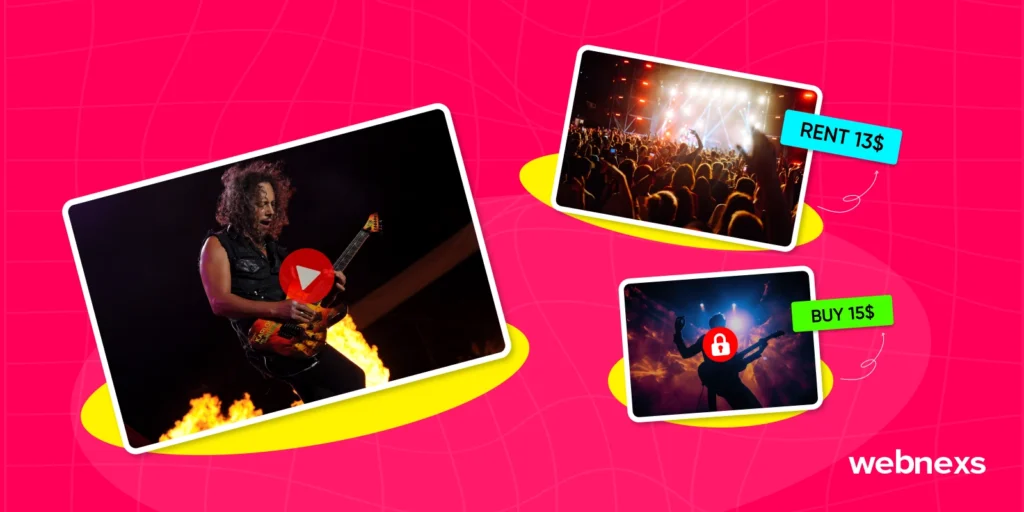
Transactional video on demand charges per title, either as a rental (time-limited access) or a purchase (permanent access). Live events often use the same model as pay-per-view streaming for events, where viewers buy a ticket to watch a single broadcast.
TVOD lets you charge premium prices for premium content. It works well when individual titles have high value on their own, such as a new film release, a championship match or a masterclass.
Best for: new film releases, concerts, sports events and premium courses.
Watch out for: uneven revenue between releases.
Key Features to Look for in a Video Monetization Platforms
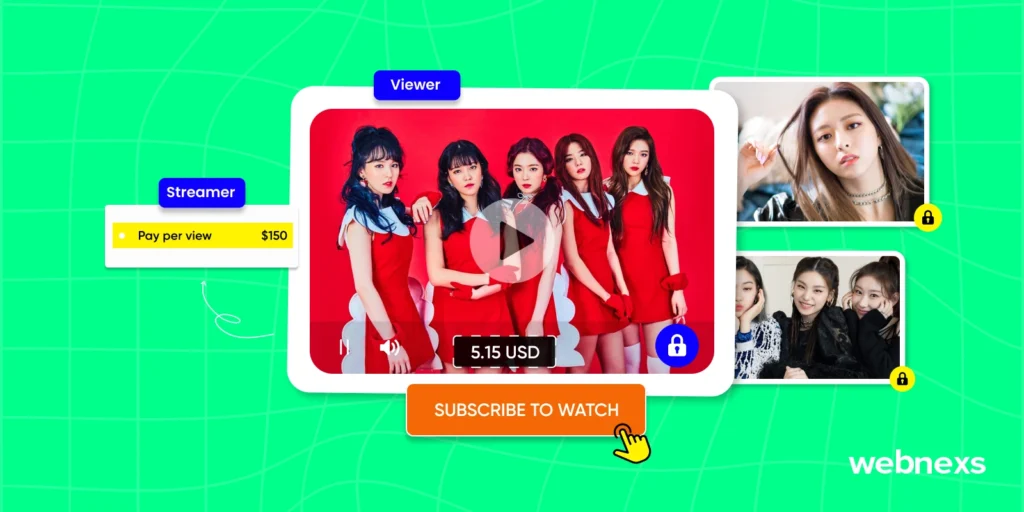
Supports Different Video Types
a significant share of online video consumption is driven by video on demand (VOD), including both live and recorded content. (Source: Statista)
A reliable video monetization platforms should support a variety of video formats so as to meet the needs of the content creators. If you are streaming live events, offering video on demand or pay-per-view content, the platform must smoothly support all these different video types.
This flexibility lets you reach different types of audiences and give them the best viewing experience, no matter what kind of content you are offering.
Ad Integration
a significant share of viewers will engage more with video ads that are shown in the context of content they already enjoy. (Source: Google)
To maximize revenue, video monetization platforms help to integrate advertisements into your videos. This includes display ads, sponsored ads, or even video ads.
It is important to integrate the ads strategically without interrupting the user experience which allows you to monetize your content effectively and also keeps your viewer engaged.
Easy Payments
a significant share of consumers prefer using digital wallets (like PayPal, Apple Pay) for payments, highlighting the need for flexible payment systems. (Source: Statista)
Payment should be easy and safe for both creators and viewers. A good video monetization platform offers different payment options, making it simple for viewers to pay for rentals, purchases, or subscriptions.
The platform should ensure smooth payments and reliable payouts for creators, whether through credit cards, digital wallets, or other methods. This way, you can focus on creating content while the platform handles the things related to payments.
Strong Security
The global market for digital rights management (DRM) solutions is expected to grow by a significant share annually, highlighting the increasing demand for video content protection.
(Source: Market Research Future)
Security is important when dealing with video content, especially for creators looking to protect their intellectual property. A trusted platform should provide strong security features like digital rights management (DRM), encryption, and secure payment processing.
This ensures that your content is protected from unauthorized access or piracy, while also safeguarding user data. Strong security builds trust with both creators and viewers, making them feel safe when interacting with your platform.
Content Management & Analytics
a significant share of content marketers consider analytics a key part of their strategy for improving video engagement. (Source: Wistia)
A good video monetization platform needs easy-to-use tools for managing your videos and tracking how they perform. You should be able to upload, organize, and manage your content easily. The platform should also give you detailed data on how viewers are engaging with your videos, how much money you’re making, and other important stats. These tools help you improve your content and better connect with your audience to grow your business.
Top 10 Video Monetization Platforms: A Quick Overview
| Platform | Monetization Models | Best For |
| Webnexs | Subscription, Pay-Per-View, Ads | Businesses looking for custom OTT and streaming solutions |
| Flicknexs | Subscription, Pay-Per-View, Ads, Freemium | Small to medium businesses focused on video streaming |
| Kaltura | Subscription, Ads, Pay-Per-View, Licensing | Enterprises needing customizable video solutions |
| Muvi | Subscription, Pay-Per-View, Ads, Freemium | Content creators and businesses launching OTT platforms |
| Vimeo | Subscription, Ads, Pay-Per-View | Independent creators, filmmakers, and businesses |
| Dacast | Subscription, Pay-Per-View, Ads | Live streaming, educational platforms, and events |
| Brightcove | Subscription, Ads, Pay-Per-View | Large enterprises and media companies |
| Panopto | Subscription, Licensing | Educational institutions and businesses for training |
| JW Player | Subscription, Ads, Pay-Per-View | Media companies and content producers |
| Wistia | Subscription, Freemium, Ads | Small businesses and marketers for video marketing |
10 Top Video Monetization Platforms of 2026
Webnexs
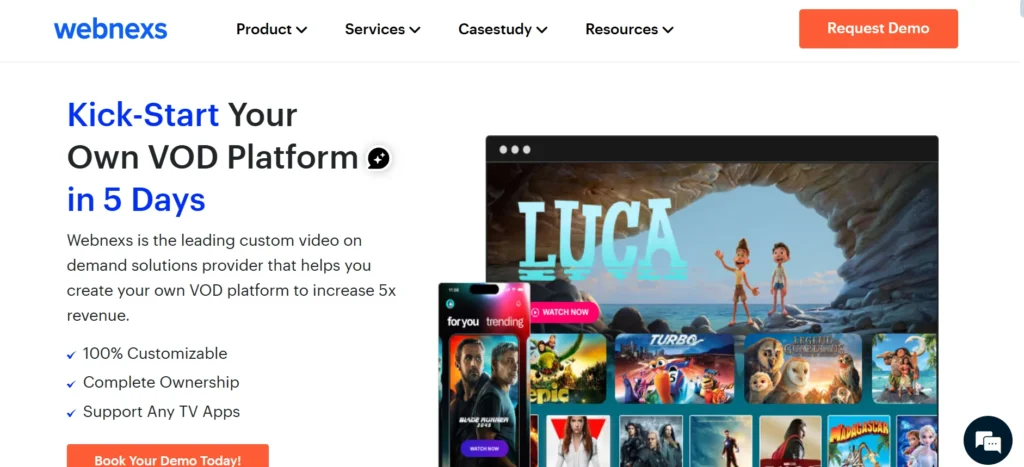
Webnexs is the all-in-one platform that helps businesses to create their own video streaming services. With the help of a user-friendly interface and advanced features, webnexs allows users to manage and monetize the content smoothly. Can be customized to suit any range of features customers expect.
It offers different ways to generate revenue, like subscription-based, advertisement and pay-per-view models. Webnexs is ideal for businesses that need a flexible and secure service to stream videos while keeping control over how their content is shared.
Webnexs offers personalized pricing based on what your business needs. The cost depends on the features you choose, the size of your business, and how many users you have.
Pros
- Can be customized to fit different business needs.
- Works well for large-scale video streaming services.
- Supports both live streaming and on-demand videos.
- Provides strong security and tools to manage users.
Cons
- The price may be too high for small businesses.
- You may need technical knowledge to set up and make the most of the features.
Flicknexs
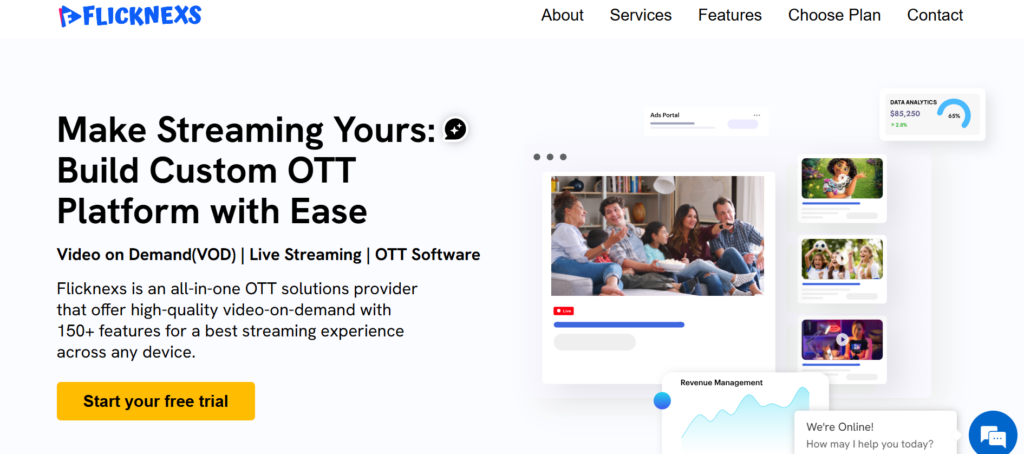
Flicknexs is an all-in-one Video Monetization platforms that focuses on live streaming, video hosting, and on-demand content management. It helps businesses easily organize their video libraries and offers monetization options such as subscriptions, pay-per-view, and ads.
Flicknexs integrates smoothly with platforms like WordPress and Shopify, making it a great choice for businesses that want to add video content to their existing websites.
Pros
- User-friendly platform suitable for small to medium-sized businesses.
- Multiple monetization options available.
- Good support for video hosting and streaming.
- Free trial for testing
Cons
- Limited features in the Basic Plan.
- The higher-tier plans may be expensive for smaller businesses.
Kaltura
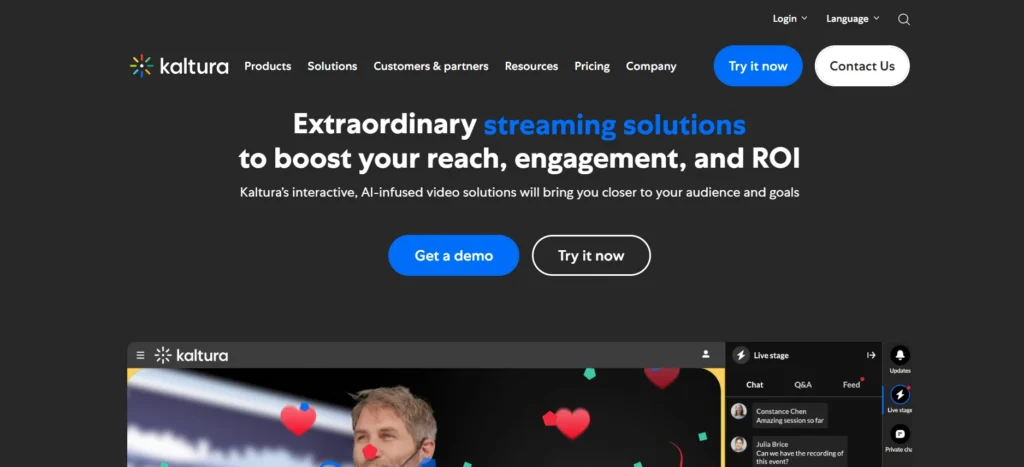
Kaltura is a powerful video platform designed for businesses, schools, and media companies.
It offers customizable solutions that can grow with your needs, supporting monetization options like subscriptions, pay-per-view, and ads. It’s perfect for larger organizations that need a full video management system.
Kaltura offers personalized pricing based on the size of your business and the features you need. Pricing is determined individually, depending on the scale and number of users.
Pros
- Highly customizable to fit different needs.
- Works well for large businesses or organizations.
- Provides strong security and management tools for videos.
- Great analytics and reporting features.
Cons
- Can be expensive for small businesses or individual creators.
- It requires technical knowledge to set it up and use it effectively.
Muvi
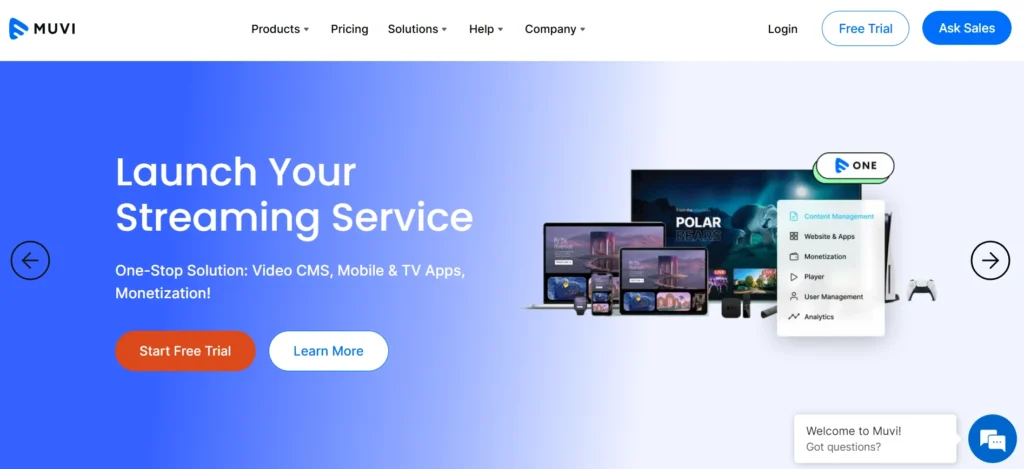
Muvi is a top video monetization platform that provides a complete solution for streaming and content management. With features like video hosting, live streaming, and monetization options, Muvi is ideal for content creators, media companies, and businesses looking to build their own streaming platforms.
It offers various monetization models, including pay-per-view, subscriptions, and ads.
Pros
- High degree of customization for OTT services.
- Multiple monetization options (subscription, pay-per-view, etc.).
- Excellent for businesses aiming to launch their own branded streaming service.
- Scalable and suitable for various content types.
Cons
- Expensive for smaller content creators.
- Steeper learning curve for new users.
Vimeo
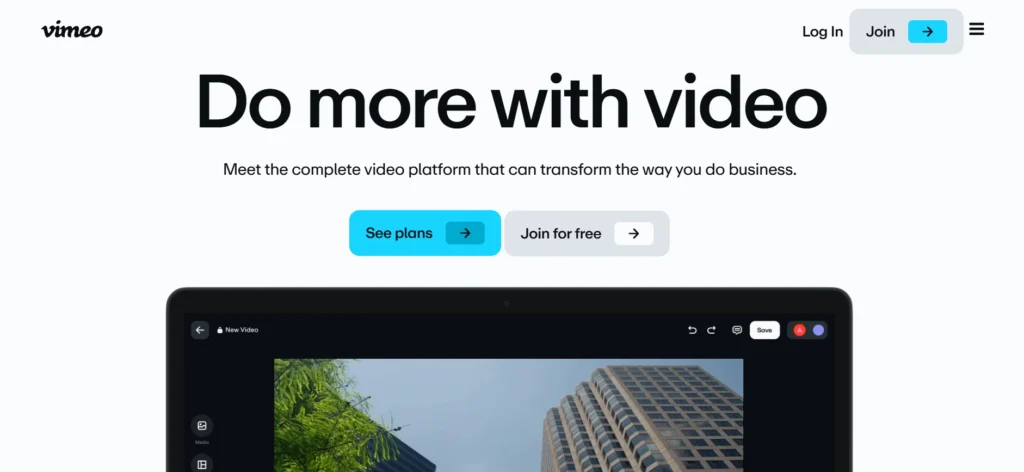
Vimeo is a popular video hosting and sharing platform providing content creators with various monetization tools such as subscription-based, pay-per-view, and tip-based models.
It is ideal for independent filmmakers, creators, and businesses looking for a high-quality video hosting solution with built-in monetization features.
Pros
- High-quality video hosting and playback.
- Great for creators looking to monetize their content.
- User-friendly interface and customization options.
- Strong video marketing tools and analytics.
Cons
- Limited monetization features in lower-tier plans.
- Higher-tier plans can be expensive for small creators.
- Limited live streaming functionality on the lower tiers.
Dacast
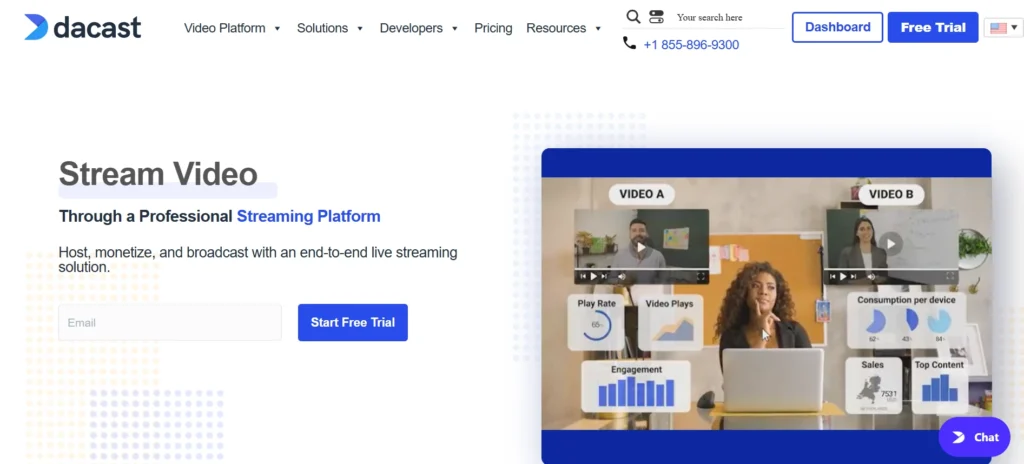
Dacast is a video hosting and live streaming platform designed for content creators and businesses that focus on live events. It offers several ways to make money, including subscription services, pay-per-view, and ad-based monetization, making it flexible for different types of content.
Dacast is especially popular for its live streaming capabilities, providing high-quality video delivery and the tools needed to stream events to a wide audience. This platform is a great choice for businesses that want to host live videos or on-demand content while generating revenue.
Pros
- Excellent for live streaming events and webinars.
- Multiple monetization options, including pay-per-view and ads.
- Reliable video delivery with global streaming capabilities.
Cons
- Limited features on the Starter plan.
- Pricing can be high for smaller-scale content creators.
- Limited customization options in lower-tier plans.
Brightcove
Brightcove is a powerful video platform built for large businesses and media companies that need to manage and stream a lot of video content. It offers flexible ways to make money from videos, like subscriptions, pay-per-view, and ads. Brightcove provides tools to easily manage videos, keep them secure, and track performance, making it a great choice for businesses looking to deliver high-quality video to a large audience.
Pros
- Enterprise-level scalability and performance.
- Strong video security and content protection.
- Advanced analytics and reporting tools.
- Reliable for high-quality video streaming.
Cons
- Pricing is typically higher than other platforms, especially for smaller businesses.
- Requires technical expertise for setup and management.
- May not be the best choice for small creators due to pricing and complexity.
Panopto
Panopto is a video platform designed mainly for schools, universities, and businesses. It provides an easy-to-use and secure way to manage, stream, and monetize videos. Panopto is perfect for organizations that need to share training videos, internal communications, or educational content.
The platform helps users organize their videos, stream them live or on-demand, and make money from them through different monetization options. It’s a great tool for those who want to create a video library for learning or internal use.
Pros
- Ideal for educational and corporate training.
- Easy integration with Learning Management Systems (LMS).
- Secure platform with great video search and management tools.
- Supports live streaming and on-demand content.
Cons
- Not suited for general content creators or entertainment-based videos.
- Custom pricing may make it expensive for smaller businesses.
- Limited public-facing video features compared to other platforms.
JW Player
JW Player is a flexible video player and monetization platform that lets you customize the video player and integrate ads. It’s perfect for media companies, publishers, and marketers who want to make money from videos through ads, subscriptions, or pay-per-view options.
Pros
- Highly customizable video player with great performance.
- Excellent support for video ads and monetization.
- Easy to integrate into websites and apps.
- Strong analytics and reporting tools.
Cons
- Limited features on the free plan.
- Premium plans can be expensive, especially for smaller businesses.
- May not be as feature-rich as other platforms for large-scale streaming
Wistia
Wistia is a video hosting and monetization platform designed for businesses and marketers. It provides tools for video marketing, customization, and monetization through subscription or freemium models. Wistia is particularly known for its analytics, customization options, and focus on business use cases.
Pros
- Excellent video marketing tools with detailed analytics.
- User-friendly interface and customization options.
- Great for lead generation and embedding video on websites.
- Supports branding and customization for a more professional appearance.
Cons
- The free plan has limitations in terms of storage and features.
- Pricing can become expensive as video volume increases.
- Some advanced features are locked behind higher pricing tiers.
How to Choose the Right Monetization Platform?
Choosing the right monetization platform can make a huge difference in generating revenue for your content.
Know Your Content Type
Think about what kind of content you make, whether blogs, videos, or social media posts. Different platforms work better for different types.
For example, blogs can make money through advertisements, while videos do well with advertisements or sponsorships. Pick a platform that matches the type of content you create.
Know Your Audience
It’s important to know who is watching or reading your content. If your audience prefers watching videos, YouTube or TikTok could be the way to go.
If they’re more active on Instagram or Twitter, those platforms might work better for you. Choose a platform where your audience spends the most time.
Look at Monetization Options
When selecting a platform, consider how you want to make money. Options include ads , affiliate marketing, selling products, and offering memberships.
You can also earn through sponsored content by partnering with brands.
Choose a platform that supports the monetization methods that meet with your content and goals.
Check the Requirements
Different platforms have their own rules for making money. Some may require you to have a certain number of followers or views before you can start earning.
Before you get started, make sure you meet these requirements so you know if you qualify to make money. It’s always good to check first.
Consider Revenue Split
Most platforms take a percentage of your earnings. For example, YouTube keeps part of your ad revenue. Affiliate programs also take a cut from any sales you make.
Compare how much the platform keeps and what you earn to make sure it’s worth it.
Test and Track Performance
Once you pick a platform, keep track of how it’s working for you. Use analytics tools to see how much money you’re making and how your audience is growing.
If something isn’t working, try other platforms until you find the one that fits best.
Steps to Monetize Your Videos Successfully

Choose the Right Platform
Pick the right place to share your videos based on your goals. Some platforms are great for advertisements, while others are better for selling videos or offering exclusive content. Think about your audience and content type to decide where to post your videos, or use multiple platforms to reach more people.
Set Up a Pricing Model
Decide how you will make money from your videos. You can earn through advertisements, subscriptions, or by charging per view. Pick a model that fits your content and how much your audience is willing to pay.
Integrate Payment Gateways
Make sure you can accept payments easily and securely. Use trusted payment systems that allow both one-time and subscription payments. Mobile payment options are also helpful for convenience.
Optimize Video SEO
Improve your video’s visibility by using the right keywords in titles, descriptions, and tags. Create eye-catching thumbnails and use captions to help search engines find your videos. Encourage viewers to engage with your content, as more interaction can increase your video’s chances of being seen.
Promote Content
Share your videos on social media, through emails, and on blogs to reach more people. Working with other creators can help spread the word.
Keep promoting your videos regularly to get more views and attract potential sponsors or subscribers, increasing your earnings.
Future Trends in Video Monetization
Interactive and Shoppable Videos
Did you know? Allowing consumers to interact with products through video can increase the likelihood of a purchase, offering creators a potential sales boost.
Videos will become more interactive, letting viewers click on products while they watch. This makes it easier for creators to sell things directly through their videos, and viewers will enjoy being part of the action.
Live Streaming Monetization
Did you know? Live streaming revenue is expected to exceed a typical budget globally by 2026, with platforms like YouTube, Facebook, and Twitch leading the way in live donations, paid subscriptions, and event ticket sales
Live streaming is becoming a big way to make money. Creators can earn money through live donations, chats, or by hosting paid events in real-time, making it a popular way to make money online.
Short-Form Video Growth
Did you know? Short-form videos are projected to account for a significant share of all mobile traffic by 2026, which means more opportunities for creators to monetize their quick, catchy content.
Short videos, like those on TikTok or Instagram Reels, are getting even more popular. These quick clips are great for ads and brand deals, giving creators new ways to earn money with shorter content.
Sponsored Content and Brand Partnerships
Did you know? Brand partnerships are becoming increasingly valuable, as companies look to sponsored content to reach their audiences.
Creators are increasingly partnering with brands to create sponsored content, where they get paid to feature products or services in their videos.
This trend is expected to grow as brands look for authentic ways to engage with audiences through influencers.
Conclusion
Video monetization platforms are important tools for creators, businesses, and media companies who want to make money from their videos. These platforms offer different ways to earn, such as ads, subscriptions, or pay-per-view options, allowing creators to choose what works best for their content and audience.
As video trends keep changing in 2026, things like live streaming, short videos, and interactive content are becoming more popular. Choosing the right video monetization platform is key to earning money and giving viewers a good experience.
By understanding your content, audience, and how you want to earn, you can pick the best platform to help you grow your earnings.
Implementing a Video Monetization Platform
When implementing a video monetization platform, several factors come into play. First, it is essential to define the target audience and the type of content to be monetized. This will help determine the most suitable monetization model and platform features. According to a report by Deloitte, a well-planned content strategy is crucial for successful video monetization.
Technical Requirements
The technical requirements for a video monetization platform include a robust content delivery network (CDN), a scalable video player, and a reliable advertising server. Additionally, the platform should support multiple ad formats, such as pre-roll, mid-roll, and display ads. The platform should also be able to handle a large volume of concurrent users and provide real-time analytics and reporting.
- Content ingestion and processing
- Video encoding and transcoding
- Ad serving and tracking
- Real-time analytics and reporting
Common Mistakes to Avoid
One common mistake is not properly testing the platform before launch, which can lead to technical issues and a poor user experience. Another mistake is not having a clear content strategy, which can result in low engagement and revenue. As noted by Forbes, a well-executed content strategy is critical for driving revenue and growth.
Frequently asked questions
What are video monetization platforms?
Video monetization platforms are services that help creators and businesses earn money from their videos through various models like ads, subscriptions, and pay-per-view.
How does AVOD work?
AVOD, or Advertising-Based Video on Demand, works by displaying ads before, during, or after videos, earning creators money from ad revenue.
What is SVOD?
SVOD, or Subscription-Based Video on Demand, is a model where users pay a regular fee to access ad-free content on a platform.
What is TVOD?
TVOD, or Transactional-Based Video on Demand, is a pay-per-view model where users pay to watch specific content.
How do I choose the right video monetization platform?
Choose a platform that aligns with your content and audience, and offers the right monetization model for your needs.
How do I protect my video content?
Use platforms that offer DRM and encryption to prevent piracy and protect your content.
Sources
Get a quote from our team for a build estimate on your project, or book a call to walk through scope and timelines.
Get new Webnexs engineering guides by email newsletter, or follow us on LinkedIn.