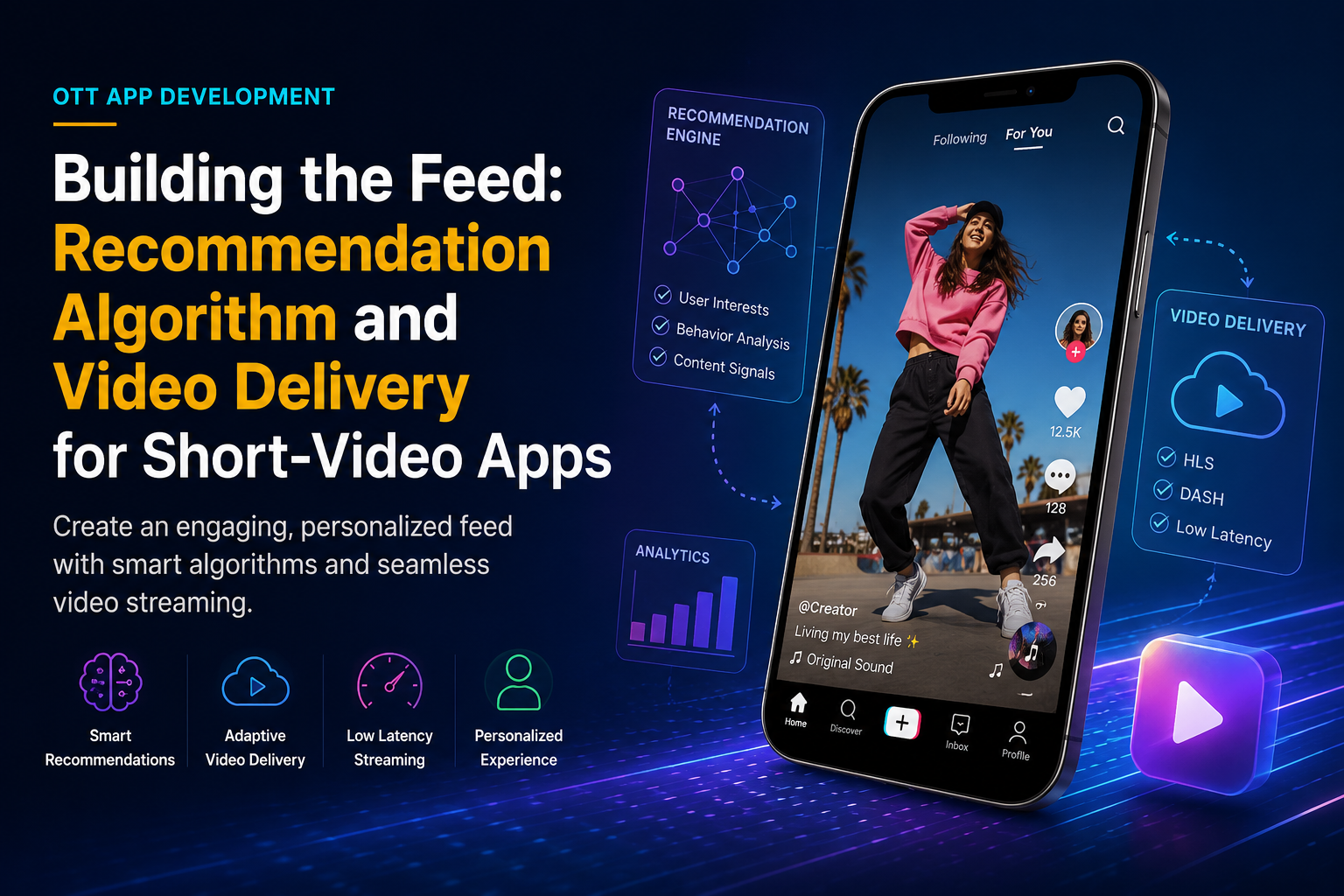
Building the Feed: Recommendation Algorithm and Video Delivery for Short-Video Apps
Quick answer: A successful short-video app feed combines advanced recommendation algorithms, optimized video delivery, and continuous performance tuning to keep users engaged. This guide covers building the feed end to end.
Webnexs builds feeds for short-video apps that handle millions of daily active users.
Key takeaways
- Personalization drives engagement
- Video delivery optimization is critical for retention
- Continuous updates and A/B testing ensure long-term feed relevance
- Monetization strategies must balance revenue with user experience


Quick Answer
A successful short-video app feed combines advanced recommendation algorithms, optimized video delivery, and continuous performance tuning. Key components include personalized content, adaptive bitrate streaming, and strategies to balance relevance with diversity. Costs vary widely based on complexity, from basic setups to advanced systems with custom features.
Key Takeaways
- Personalization drives engagement, but diversity prevents user fatigue.
- Video delivery optimization (CDNs, adaptive streaming) is critical for retention.
- Continuous updates and A/B testing ensure long-term feed relevance.
- Monetization strategies must balance revenue with user experience.
What Problem Are You Trying to Solve with Your Short-Video App’s Feed?
Your users open your app expecting an endless stream of engaging, bite-sized videos. But how do you ensure they stay hooked? The feed is the heart of any short-video app—it’s where users spend most of their time. A poorly designed feed leads to high bounce rates, while a well-crafted one keeps users scrolling for hours.
The challenge? Personalization at scale. Users expect a feed tailored to their tastes, but with millions of videos and users, this requires sophisticated algorithms. Simultaneously, videos must load instantly, even on slow networks. This dual challenge—recommendation and delivery—is what separates successful apps like TikTok from the rest.
At Webnexs, we’ve built feeds for short-video apps that handle millions of daily active users. Our approach combines machine learning for recommendations with robust video delivery infrastructure. Let’s break down how it works.
How Do Recommendation Algorithms Power Personalized Feeds?
The recommendation algorithm is the brain behind your feed. Its goal? To predict which videos a user will enjoy and engage with. Here’s how it operates:
- Data Collection: Every user action—likes, comments, shares, watch time, skips—is logged. Even passive behavior, like how long a user hovers on a video, matters.
- Feature Extraction: Videos are tagged with metadata (genre, creator, trends) and analyzed for visual/audio elements.
- Model Training: Machine learning models (e.g., collaborative filtering, neural networks) use this data to predict user preferences.
- Real-Time Ranking: When a user opens the app, the algorithm ranks videos based on predicted engagement and serves the top candidates.
Why This Matters: A personalized feed significantly increases watch time. Without it, users see a generic stream of videos, many of which they’ll ignore.
Comparison to Competitors: Platforms like Muvi and Uscreen offer basic recommendation engines, but they lack the depth of TikTok’s algorithm. Custom-built solutions, like those we develop at Webnexs, use advanced models (e.g., transformers) to capture nuanced user preferences.
What Role Does Video Delivery Play in Feed Performance?
Even the smartest recommendation algorithm fails if videos buffer or load slowly. Here’s how we optimize video delivery:
- Content Delivery Networks (CDNs): Distribute videos across global servers to reduce latency.
- Adaptive Bitrate Streaming (ABS): Adjust video quality based on the user’s network speed.
- Preloading: Load the next video in the feed while the user watches the current one.
- Caching: Store popular videos locally on the user’s device for faster access.
Why This Matters: Delays in video load time significantly reduce user satisfaction. For short-video apps, where attention spans are shorter, this is critical.
Comparison to Competitors: BigCommerce and other e-commerce platforms focus on image delivery, not video. Short-video apps require specialized infrastructure, which we build using tools like AWS CloudFront and Wowza Streaming Engine.
How Do You Balance Personalization with Content Diversity?
A purely personalized feed risks creating an echo chamber, where users only see content similar to what they’ve already liked. To avoid this, we introduce diversity in two ways:
- Exploration vs. Exploitation: The algorithm occasionally recommends videos outside a user’s usual preferences to discover new interests.
- Trending Content: A small portion of the feed highlights viral videos, regardless of individual preferences.
Why This Matters: Diversity keeps the feed fresh and helps creators reach new audiences. Apps that ignore this see user fatigue after a few weeks.
What Tech Stack Powers Recommendation Algorithms and Video Delivery?
Building these systems requires a robust tech stack. Here’s what we use at Webnexs:
- Recommendation Engine: Python (TensorFlow, PyTorch) for machine learning models.
- Real-Time Processing: Apache Kafka for handling user interaction data.
- Video Delivery: Nginx with HLS/DASH protocols for adaptive streaming.
- CDN Integration: AWS CloudFront or Cloudflare for global distribution.
Comparison to Competitors: Off-the-shelf solutions like Muvi use pre-built algorithms that lack customization. Our stack is tailored to each app’s unique needs, ensuring better performance.
How Much Does Building a Feed System Cost?
Costs vary based on complexity. A basic feed with simple recommendations and CDN integration starts at a significant investment. Advanced systems with real-time analytics, A/B testing, and custom ML models require a larger budget.
For a detailed breakdown, see our Short-Video App Development Cost and Tech Stack Breakdown.
How Do You Measure and Improve Feed Performance?
Launching the feed is just the beginning. Continuous optimization is key. We use:
- A/B Testing: Test different algorithms or video delivery strategies on subsets of users.
- Engagement Metrics: Track watch time, likes, shares, and retention rates.
- User Feedback: Collect qualitative data through surveys or in-app prompts.
Why This Matters: Even TikTok tweaks its algorithm weekly based on user data. Stagnant feeds lose users fast.
Ready to Build Your Own Engaging Video Platform?
Turn your vision into reality with a custom OTT or ecommerce solution tailored to your needs. Partner with Webnexs and use our expertise in video delivery and recommendation algorithms to create a smooth, addictive user experience. Build your custom video platform with Webnexs today.
How Can You Ensure Your Feed Stays Relevant Over Time?
A feed’s relevance depends on its ability to adapt to changing user preferences and content trends. Here’s how we ensure longevity:
- Continuous Learning: The recommendation algorithm retrains regularly using new data, capturing shifts in user behavior.
- Seasonal Adjustments: Incorporate trending topics or events (e.g., holidays, viral challenges) into the feed.
- User Feedback Loops: Allow users to provide feedback on recommendations, refining the model over time.
Why This Matters: Stagnant feeds lose relevance fast. Apps that adapt see higher long-term retention rates.
How Do You Handle Content Moderation in the Feed?
With millions of videos, moderation is critical to ensure a safe and engaging user experience. Our approach includes:
- Automated Filters: AI models detect inappropriate content (e.g., violence, nudity) before it reaches the feed.
- Human Review: Flagged content is reviewed by moderators to minimize false positives.
- User Reporting: Enable users to report videos, triggering immediate review.
Why This Matters: Poorly moderated feeds damage user trust and can lead to legal issues. Platforms like TikTok invest heavily in this area.
How Do You Optimize the Feed for Different Devices and Networks?
Users access short-video apps on various devices (phones, tablets) and networks (4G, Wi-Fi, 3G). Optimization strategies include:
- Responsive Design: Ensure the feed layout adapts to screen sizes and orientations.
- Network-Aware Streaming: Detect network speed and adjust video quality accordingly.
- Offline Viewing: Allow users to download videos for offline playback, a feature we’ve implemented for clients in emerging markets.
Why This Matters: Ignoring device and network diversity alienates a large share of potential users. Adaptive strategies improve accessibility and engagement.
How Do You Monetize the Feed Without Disrupting User Experience?
Monetization is critical for app sustainability, but intrusive ads can drive users away. Our strategies include:
- Native Ads: Integrate ads into the feed, matching the look and feel of organic content.
- Timed Insertions: Place ads after every few videos to minimize disruption.
- Subscription Models: Offer ad-free experiences for premium users.
Why This Matters: Poorly placed ads reduce watch time. Balancing revenue and user experience is key.
For more on monetization, see our guide on Coin and Wallet Monetization.
How Do You Ensure Fair Creator Exposure in the Feed?
Fair exposure for creators is essential to foster a healthy ecosystem. Here’s how we achieve this:
- Discovery Algorithms: Boost content from new or lesser-known creators based on quality and engagement potential.
- Creator Tiers: Prioritize content from verified or high-performing creators while ensuring smaller creators get visibility.
- Challenges and Campaigns: Promote themed challenges to give all creators a chance to trend.
Why This Matters: Apps that favor only top creators see a decline in new content, hurting long-term growth. Fair exposure keeps the platform dynamic.
How Do You Handle User Privacy in Personalized Feeds?
Personalization relies on user data, but privacy is non-negotiable. Our approach includes:
- Data Anonymization: Strip personal identifiers from data used for recommendations.
- User Controls: Allow users to opt out of personalized feeds or clear their watch history.
- Compliance: Adhere to regulations like GDPR and CCPA in data handling.
Why This Matters: Privacy breaches can lead to legal penalties and user distrust. Transparent practices build loyalty.
How Do You Scale the Feed for Millions of Users?
Scaling requires robust infrastructure and efficient algorithms. Our strategies include:
- Distributed Systems: Use microservices and cloud-based solutions (e.g., AWS, Google Cloud) to handle load.
- Caching Layers: Cache popular videos and recommendations to reduce server load.
- Load Balancing: Distribute traffic across multiple servers to prevent bottlenecks.
Why This Matters: Unscaled systems crash under high traffic, damaging user trust. Scalability ensures smooth performance as the app grows.
How Do You Integrate Social Features into the Feed?
Social features enhance engagement by fostering community. Key integrations include:
- Comments and Reactions: Allow users to interact with videos directly in the feed.
- Sharing: Enable easy sharing to external platforms like Instagram or WhatsApp.
- Follow System: Let users follow creators, ensuring their content appears in followers’ feeds.
Why This Matters: Social interactions increase watch time. They transform passive viewers into active participants.
How Do You Handle Feed Performance in Emerging Markets?
Emerging markets often have slower networks and less powerful devices. Our optimizations include:
- Lightweight Video Formats: Use formats like HEVC to reduce file size without sacrificing quality.
- Offline Mode: Allow users to download videos for offline viewing.
- Regional CDNs: Partner with local CDNs to reduce latency in specific regions.
Why This Matters: Ignoring emerging markets limits growth. Tailored optimizations open up vast user bases.
How Do You Handle Feed Personalization Without Overfitting?
Personalization is powerful, but overfitting (showing only what users already like) limits discovery. Our approach includes:
- Diversity Injection: Mix in unrelated but trending content to broaden user interests.
- Serendipity Factor: Include a small percentage of random or unexpected videos to keep the feed fresh.
- User Feedback Loops: Allow users to adjust personalization levels or indicate when they’re tired of a topic.
Why This Matters: Over-personalized feeds create echo chambers, reducing long-term engagement. Balancing relevance with novelty keeps users exploring.
How Do You Integrate Gamification into the Feed?
Gamification boosts engagement by making the feed more interactive. Strategies include:
- Streaks and Rewards: Reward users for daily engagement (e.g., watching multiple videos in a row).
- Badges and Leaderboards: Recognize active users or top creators to foster competition.
- Interactive Elements: Add quizzes, polls, or challenges directly in the feed.
Why This Matters: Gamified feeds significantly increase session times. They turn passive viewing into an active, rewarding experience.
How Do You Ensure Feed Security?
Security is critical to protect user data and prevent unauthorized access. Our measures include:
- Encryption: Encrypt video streams and user data in transit and at rest.
- Access Controls: Implement role-based access for backend systems to limit who can modify the feed.
- Regular Audits: Conduct security audits and penetration testing to identify vulnerabilities.
Why This Matters: Security breaches erode user trust and can lead to legal consequences. Robust measures are non-negotiable.
Frequently Asked Questions
Can I use a pre-built recommendation engine for my short-video app?
Pre-built engines (e.g., Muvi’s) work for basic apps but lack personalization depth. Custom solutions, while costlier, deliver better engagement.
How do I handle video delivery in regions with poor internet connectivity?
Use adaptive bitrate streaming and local caching. We also recommend partnering with regional CDNs for faster delivery.
How often should I update my recommendation algorithm?
Continuously. User preferences and content trends evolve, so regular updates are ideal. A/B testing helps validate changes.
For more on building short-video apps, explore our Microdrama and Vertical Streaming Development Guide or learn about Coin and Wallet Monetization.
Comparison of Short-Video App Feed Solutions
| Solution | Recommendation Algorithm | Video Delivery |
|---|---|---|
| TikTok | Advanced machine learning models | Adaptive bitrate streaming |
| Muvi | Basic recommendation engine | Limited video delivery options |
| Webnexs | Custom-built recommendation algorithms | Robust video delivery infrastructure |
Related reading
Sources
Get a quote from our team for a build estimate on your project, or book a call to walk through scope and timelines.
Get new Webnexs engineering guides by email newsletter, or follow us on LinkedIn.