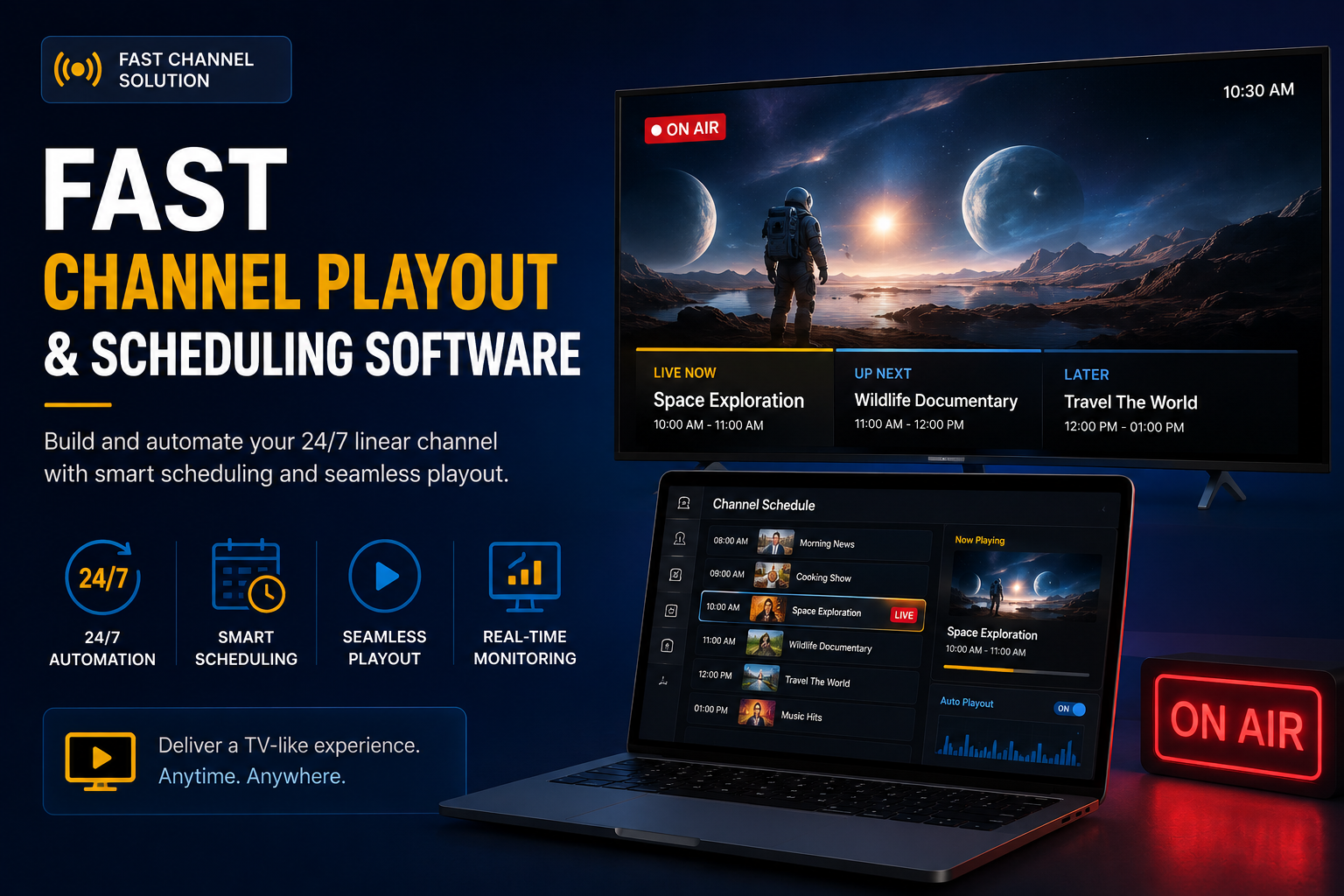
FAST Channel Playout and Scheduling Software: Building a 24/7 Automated Linear Feed
Quick answer: To build a 24/7 automated linear feed for a FAST channel, you need playout and scheduling software that can handle content ingestion, scheduling, and playout, ensuring a smooth viewer experience. This guide covers fast channel playout and end to end.
Webnexs provides playout and scheduling software for building a 24/7 automated linear feed for a FAST channel.
Key takeaways
- Playout and scheduling software is crucial for building a 24/7 automated linear feed
- The software should handle content ingestion, scheduling, and playout
- A well-designed playout and scheduling system can increase viewer engagement
- The right software depends on factors like content library size and monetization strategy


Quick Answer
To build a 24/7 automated linear feed for a FAST channel, you need playout and scheduling software that can handle content ingestion, scheduling, and playout, ensuring a smooth viewer experience.
Key Takeaways
- Playout and scheduling software is crucial for building a 24/7 automated linear feed for a FAST channel
- The software should be able to handle content ingestion, scheduling, and playout
- A well-designed playout and scheduling system can help increase viewer engagement and reduce operational costs
- Choosing the right software depends on factors such as content library size, target audience, and monetization strategy
- Integrating with popular platforms like Samsung TV Plus, Pluto TV, and The Roku Channel can expand your reach
What is Playout and Scheduling Software for FAST Channels?
Playout and scheduling software for FAST channels is a critical component in building a 24/7 automated linear feed. This software enables content owners to ingest, schedule, and play out their content in a linear format, mimicking traditional TV broadcasting. With the right playout and scheduling software, content owners can ensure a smooth viewer experience, increase engagement, and reduce operational costs.
How Does Playout and Scheduling Software Work for FAST Channels?
Playout and scheduling software for FAST channels typically works by ingesting content from various sources, such as video files or live feeds, and then scheduling it for playout at specific times. The software can also handle tasks such as content formatting, transcoding, and packaging, ensuring that the content is delivered in the correct format for various platforms.
What Features Should You Look for in Playout and Scheduling Software for FAST Channels?
When choosing playout and scheduling software for your FAST channel, there are several features to consider. These include: * Content ingestion and management * Scheduling and playout automation * Support for various content formats and codecs * Integration with popular platforms like Samsung TV Plus, Pluto TV, and The Roku Channel * Analytics and reporting tools to track viewer engagement and monetization performance * Scalability and reliability to ensure a 24/7 automated linear feed
How Do You Choose the Right Playout and Scheduling Software for Your FAST Channel?
Choosing the right playout and scheduling software for your FAST channel depends on several factors, including the size of your content library, your target audience, and your monetization strategy. You should also consider the software’s scalability, reliability, and integration with popular platforms. It’s essential to evaluate different software options and choose the one that best fits your needs. For more information on building a FAST channel, check out our guide to creating a FAST channel.
What are the Benefits of Using Playout and Scheduling Software for FAST Channels?
Using playout and scheduling software for FAST channels can bring several benefits, including: * Increased viewer engagement through a smooth and automated viewing experience * Reduced operational costs by automating tasks such as content ingestion and scheduling * Improved monetization performance through accurate and reliable ad insertion and tracking * Enhanced scalability and reliability, ensuring a 24/7 automated linear feed * Better analytics and reporting, enabling data-driven decisions to optimize your FAST channel
How Does Playout and Scheduling Software Integrate with Popular Platforms?
Playout and scheduling software for FAST channels can integrate with popular platforms like Samsung TV Plus, Pluto TV, and The Roku Channel, enabling content owners to expand their reach and increase their audience. This integration can be done through APIs, SDKs, or other technical means, ensuring a smooth and automated content delivery process. For more information on getting your FAST channel on popular platforms, check out our guide to getting a FAST channel on Samsung TV Plus, Pluto TV, and The Roku Channel.
What are the Differences Between FAST, AVOD, and SVOD Business Models?
For choosing a business model for your OTT platform, there are several options, including FAST, AVOD, and SVOD. Each model has its pros and cons, and the right choice depends on your content library, target audience, and monetization strategy. For more information on the differences between these business models, check out our comparison of FAST, AVOD, and SVOD business models.
Ready to Launch Your Own 24/7 Linear Channel?
Turn your vision into reality with a custom OTT or ecommerce solution tailored to your needs. Partner with Webnexs to build a smooth, automated platform that engages your audience around the clock. Start Your Project with Webnexs Today
How Do You Ensure a Smooth Content Ingestion Process for Your FAST Channel?
Ensuring a smooth content ingestion process is crucial for a FAST channel, as it directly affects the quality of the viewer experience. To achieve this, content owners should consider using a playout and scheduling software that supports multiple content formats and codecs, as well as automated content ingestion and validation processes.
What Role Does Automation Play in Playout and Scheduling Software for FAST Channels?
Automation plays a significant role in playout and scheduling software for FAST channels, as it enables content owners to streamline their content delivery process, reduce manual errors, and increase efficiency. Automated processes such as content scheduling, playout, and ad insertion can help ensure a smooth viewer experience and reduce operational costs.
How Do You Measure the Success of Your FAST Channel’s Playout and Scheduling Software?
Measuring the success of a FAST channel’s playout and scheduling software requires tracking key performance indicators (KPIs) such as viewer engagement, content delivery quality, and monetization performance. Content owners should use analytics and reporting tools to monitor these KPIs and make data-driven decisions to optimize their FAST channel. For more information on optimizing your FAST channel, check out our guide to optimizing a FAST channel.
What are the Common Challenges Faced by Content Owners When Implementing Playout and Scheduling Software for FAST Channels?
Content owners may face several challenges when implementing playout and scheduling software for FAST channels, including content format and codec compatibility issues, integration with popular platforms, and ensuring a smooth content ingestion process. To overcome these challenges, content owners should choose a playout and scheduling software that is scalable, reliable, and integrates well with popular platforms. For more information on overcoming common challenges, check out our pillar post on building a successful FAST channel.
How Do You Optimize Your FAST Channel’s Playout and Scheduling Software for Better Performance?
Optimizing your FAST channel’s playout and scheduling software for better performance requires a combination of technical and strategic considerations. This includes ensuring that your software is scalable and reliable, can handle high volumes of content and viewer traffic, and is integrated with popular platforms and devices. Additionally, content owners should monitor their channel’s performance using analytics and reporting tools, and make data-driven decisions to optimize their content delivery and monetization strategies.
What are the Best Practices for Implementing Playout and Scheduling Software for FAST Channels?
Implementing playout and scheduling software for FAST channels requires careful planning and execution. Best practices include choosing a software that is scalable, reliable, and integrates well with popular platforms, ensuring a smooth content ingestion process, and automating tasks such as content scheduling and playout. Content owners should also prioritize content protection and security, and follow industry standards and guidelines for content delivery and monetization. For more information on best practices, check out our guide to implementing a FAST channel.
How Do You Scale Your FAST Channel’s Playout and Scheduling Software as Your Audience Grows?
Scaling your FAST channel’s playout and scheduling software as your audience grows requires a combination of technical and strategic considerations. This includes ensuring that your software is scalable and reliable, can handle high volumes of content and viewer traffic, and is integrated with popular platforms and devices. Additionally, content owners should monitor their channel’s performance using analytics and reporting tools, and make data-driven decisions to optimize their content delivery and monetization strategies.
What are the Future Trends and Developments in Playout and Scheduling Software for FAST Channels?
The future of playout and scheduling software for FAST channels is likely to be shaped by emerging trends and technologies, such as artificial intelligence, machine learning, and cloud-based infrastructure. These technologies are expected to enable more efficient and automated content delivery, improved personalization and recommendation, and enhanced viewer experiences. Content owners should stay up-to-date with the latest developments and trends in the industry, and be prepared to adapt and evolve their playout and scheduling software to stay competitive. For more information on future trends and developments, check out our pillar post on the future of OTT.
What are the Key Considerations for Content Owners When Selecting a Playout and Scheduling Software for FAST Channels?
When selecting a playout and scheduling software for FAST channels, content owners should consider several key factors, including the software’s scalability, reliability, and integration with popular platforms. They should also evaluate the software’s features, such as content ingestion and management, scheduling and playout automation, and support for various content formats and codecs. Additionally, content owners should consider the software’s pricing model, customer support, and security features to ensure that their FAST channel’s content is protected and delivered securely.
How Do You Ensure a High-Quality Viewer Experience with Your FAST Channel’s Playout and Scheduling Software?
Ensuring a high-quality viewer experience with your FAST channel’s playout and scheduling software requires careful attention to several factors, including content quality, streaming quality, and device compatibility. Content owners should ensure that their software supports high-quality video formats, such as 4K and HDR, and that it can handle high volumes of viewer traffic without buffering or lag. They should also test their channel on various devices and platforms to ensure that the viewer experience is consistent and high-quality across all devices.
What are the Benefits of Using a Cloud-Based Playout and Scheduling Software for FAST Channels?
Using a cloud-based playout and scheduling software for FAST channels offers several benefits, including scalability, reliability, and cost-effectiveness. Cloud-based software can handle high volumes of content and viewer traffic without the need for expensive hardware or infrastructure. It also provides content owners with greater flexibility and agility, allowing them to quickly respond to changes in the market or viewer demand. Additionally, cloud-based software typically includes automated updates and maintenance, reducing the need for manual intervention and minimizing downtime.
How Do You Measure the Return on Investment (ROI) of Your FAST Channel’s Playout and Scheduling Software?
Measuring the ROI of your FAST channel’s playout and scheduling software requires tracking key performance indicators (KPIs) such as viewer engagement, content delivery quality, and monetization performance. Content owners should use analytics and reporting tools to monitor these KPIs and calculate the ROI of their software. They should also consider factors such as the cost of the software, the cost of content acquisition and production, and the revenue generated by their FAST channel. By carefully tracking and analyzing these KPIs, content owners can make data-driven decisions to optimize their FAST channel and maximize their ROI.
Frequently Asked Questions
What is playout and scheduling software for FAST channels?
Playout and scheduling software for FAST channels is a critical component in building a 24/7 automated linear feed, enabling content owners to ingest, schedule, and play out their content in a linear format.
How does playout and scheduling software work for FAST channels?
Playout and scheduling software for FAST channels typically works by ingesting content from various sources, scheduling it for playout at specific times, and handling tasks such as content formatting, transcoding, and packaging.
What features should I look for in playout and scheduling software for FAST channels?
When choosing playout and scheduling software for your FAST channel, look for features such as content ingestion and management, scheduling and playout automation, support for various content formats and codecs, integration with popular platforms, and analytics and reporting tools.
Comparison of FAST, AVOD, and SVOD Business Models
| Business Model | Description | Monetization Strategy |
|---|---|---|
| FAST | Free, ad-supported streaming | Ad revenue |
| AVOD | Ad-supported video-on-demand | Ad revenue and subscription fees |
| SVOD | Subscription-based video-on-demand | Subscription fees |
Related reading
Sources
Get a quote from our team for a build estimate on your project, or book a call to walk through scope and timelines.
Get new Webnexs engineering guides by email newsletter, or follow us on LinkedIn.