Quick Answer
For businesses in 2026, top audio streaming platforms offer tailored solutions for background music, branding, and customer engagement. Key features include licensed tracks, customizable playlists, and integration with business tools. Choose platforms with reliable streaming, diverse music libraries, and compliance with licensing laws to enhance customer experience and avoid legal issues.
What is an audio streaming platform for business?
Audio streaming platform for business is a scalable cloud-based solution that acts as a core framework of companies to host manage distribute and monetize audio content on multiple devices it provides the infrastructure security and monetization tools needed to run a profitable OTT audio service.
Why Businesses Are Launching Audio Streaming Platforms in 2026
Growth of Audio OTT Market
The shift toward audio-first consumption is hard to ignore.
More users are choosing to listen instead of watch especially during commutes workouts or multitasking hours.
Such change in the way of consumer behavior is helping businesses to invest directly for an audio streaming platform for business rather than depending on third-party distribution.
Think about it this way. When you own the platform you own the audience relationship. That changes everything.
Market trends show steady growth in audio OTT platforms driven by smartphones smart speakers and in-car entertainment systems. Even platforms like Spotify have validated demand but they also highlight a limitation you do not control the ecosystem.
For businesses this creates a clear opportunity to build owned audio platforms with stronger margins and direct monetization control.
Monetization Opportunities in Audio
Here is where audio becomes a serious business model.
Unlike traditional media audio platforms can stack multiple revenue streams without heavy operational costs. A well-built audio streaming SaaS platform supports flexible monetization such as:
SVOD for predictable recurring revenue
AVOD for scaling through ads
TVOD for premium exclusive content
But that is just the surface.
Businesses are layering additional strategies like branded content premium communities and creator partnerships.
From Consumer Apps to Owned Platforms
Relying on third-party apps comes with trade-offs.
Limited data access restricted monetization and algorithm dependency can slow growth. That is why businesses are moving toward white label audio streaming platforms.
The shift is clear.
Owning your platform means:
Full control over branding
Direct access to user data
Freedom to experiment with pricing
Independence from platform policies
It also allows integration with your broader ecosystem such as memberships courses or media networks.
For companies serious about scaling audio this is no longer optional.
Key Features of an Audio Streaming Platform for Business
White-label Customization
Brand matters more than ever.
A white label audio streaming platform gives you full control over how your product looks feels and functions. From app interfaces to user journeys everything can be aligned with your brand identity.
This is especially important if you are building a niche platform where user experience defines retention.You can also connect your platform with other digital assets. For example businesses often integrate with their OTT apps or even expand into multi-content streaming ecosystems.
Monetization Models (SVOD AVOD TVOD)
A strong audio OTT solution should not lock you into a single revenue model.
Instead it should allow flexibility.
You might start with subscriptions and later introduce ads. Or launch premium content tiers for exclusive audiences. The ability to adapt is what drives long-term revenue.
Hybrid monetization is becoming the default because it allows businesses to serve different audience segments without friction.
DRM and Content Security
Content is your core asset.
Whether you are developing a DRM audio streaming software or any other type of content distribution service, without proper protection against unauthorized distribution and revenue leakage your efforts can be easily thwarted. This source becomes more vital when catering licensed content or premium subscriptions.
Modern platforms include built-in DRM along with encryption and secure playback protocols.
Security is not just a technical feature it is a business necessity.
CDN and Global Delivery
Performance directly impacts user retention.
A reliable CDN audio delivery system ensures your content streams smoothly regardless of location. No buffering no delays.
For companies that want to reach people around the world the hybrid approach is very important. It also really helps when you need to get bigger because you can handle a lot of traffic at the time, without it affecting how well the hybrid approach works.
Multi-device Compatibility
Your audience is everywhere.
They switch between mobile desktop smart TVs and even wearables. A modern audio hosting platform must support seamless playback across all these devices.
Cross-device compatibility is not just about convenience. It directly affects engagement session time and overall user satisfaction.
Advanced Capabilities in Modern Audio Streaming Platforms (2026)
AI-Driven Metadata Automation
Managing large audio libraries manually is not scalable.
AI changes that.
Modern platforms use AI to automatically tag categorize and organize content. This improves searchability and helps users discover content faster.
It also reduces operational workload which is a big advantage for growing platforms.
Microservices-Based Architecture
Here is where technology meets scalability.
A microservices-based audio streaming infrastructure allows different components of the platform to function independently. This means updates can be rolled out faster and performance remains stable even during high traffic.
For businesses planning long-term growth this architecture is a game changer.
Cloud Repatriation Strategy
The cloud is great but rarely economical at scale.
As a result, many businesses are considering cloud repatriation strategies whereby workloads have begun to migrate back to private infrastructure.
This hybrid approach optimizes cost improves performance and better control over data.
Real-Time Analytics and Insights
Data is your competitive advantage.
Real-time analytics helps businesses monitor content performance revenue metrics and user behavior. This enables faster decision-making and continuous optimization.
You may also want to check out analytics-driven OTT content distribution strategies for an in-depth guide on how you can scale the platform—or user engagement optimization techniques that already exist.
Top Audio Streaming Platforms for Business (2026)
Audio Streaming Platform Comparison Table
| Platform | Monetization | White-label | DRM | CDN | Best For |
| Webnexs | SVOD AVOD TVOD | Yes | Yes | Yes | Full OTT ecosystem |
| Flicknexs | SVOD AVOD | Yes | Yes | Yes | Startups |
| Dacast | AVOD | Limited | Yes | Yes | Live streaming |
| Muvi | SVOD AVOD TVOD | Yes | Yes | Yes | Enterprises |
| Triton | AVOD | No | Yes | Yes | Broadcasters |
| Wowza | Custom | No | Yes | Yes | Developers |
| Brightcove | SVOD AVOD | Yes | Yes | Yes | Enterprises |
Webnexs – Leading Audio Streaming Platform Solution:
Overview
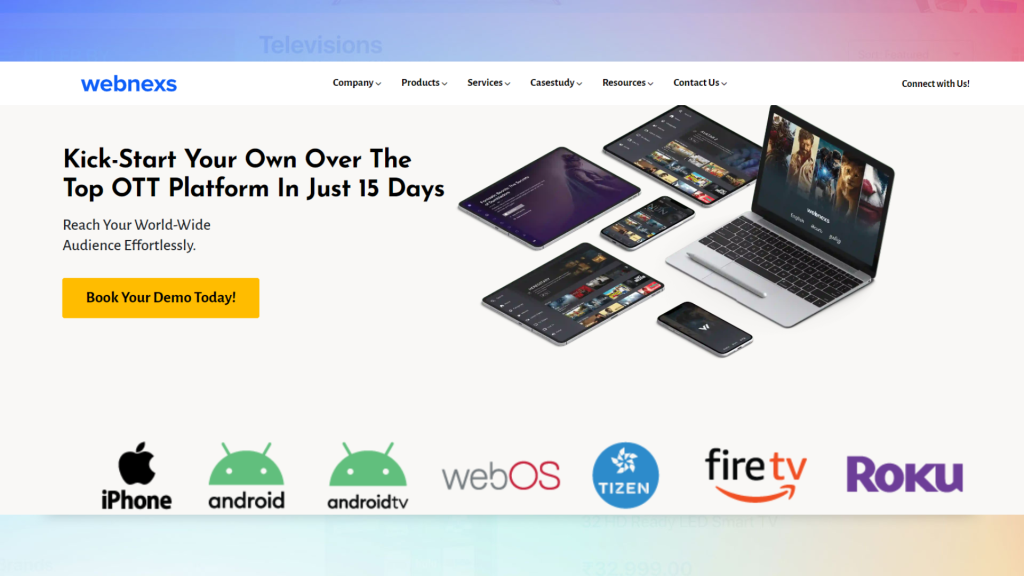
Webnexs is a dominating audio streaming solution for startups or enterprises to own and develop scalable OTT platforms.
Key Features
White-label customization
Multi-monetization support
Advanced analytics
Scalable infrastructure
Pros
Highly flexible
Strong monetization capabilities
Built for long-term growth
Cons
Initial setup requires planningBest For
Businesses building a full-scale OTT audio ecosystem
Flicknexs- The Ultimate Music Streaming Platform:
Overview
Flicknexs is designed for businesses that want a quick OTT launch.
Key Features
Ready-to-use templates
Monetization tools
Multi-device support
Pros
Fast deployment
Cost-effective
Cons
Limited advanced featuresBest For
Startups testing audio platform ideas
Dacast – Premier Audio Platform for Broadcasters:
Overview
Dacast focuses on reliable streaming and hosting.
Key Features
Live streaming
Secure hosting
API integration
Pros
Easy to use
Strong CDN
Cons
Less customizationBest For
Live audio streaming businesses
Muvi – Reliable White Label Audio Streaming Platform:
Overview
Muvi provides an all-in-one OTT solution.
Key Features
Built-in DRM
Monetization tools
App support
Pros
Comprehensive features
Scalable
Cons
Higher pricingBest For
Enterprises needing turnkey solutions
Triton Digital – Professional Streaming Audio Solutions:
Overview
Triton specializes in digital audio and radio.
Key Features
Ad monetization
Audience analytics
Streaming tools
Pros
Industry expertise
Strong analytics
Cons
Limited customizationBest For
Broadcasters and radio networks
WOWZA – High-Performance Audio Streaming Software:
Overview
Wowza offers flexible streaming infrastructure.
Key Features
API-based development
Low latency streaming
Scalable delivery
Pros
Developer-friendly
Highly customizable
Cons
Requires technical expertiseBest For
Custom-built platforms
Brightcove
Overview
Brightcove is built for enterprise-grade streaming.
Key Features
Global CDN
Analytics
Monetization
Pros
Reliable performance
Enterprise-ready
Cons
ExpensiveBest For
Large-scale businesses
Features Comparison Table
| Platform | Key Strength | Scalability |
| Webnexs | Custom OTT ecosystem | High |
| Flicknexs | Fast deployment | Medium |
| Dacast | Reliable streaming | Medium |
| Muvi | All-in-one solution | High |
| Triton | Audio analytics | Medium |
| Wowza | Flexibility | High |
| Brightcove | Enterprise performance | High |
Cost of Building an Audio Streaming Platform
Let’s talk numbers because this is where most decisions are made.
The cost of building an audio streaming platform for business depends on whether you choose SaaS or custom development.
SaaS or White-label Platforms
Setup cost ranges from 5000 to 30000 dollars
Monthly fees based on usage
Faster time to market
Custom Development
Development cost can exceed 50000 to 150000 dollars
Longer timelines
Full control over features
Here is the reality.
Help Is Here if You Must Land, Validate A Business Model Fast SaaS Solutions Are Best Custom development is the way to go if you require significant customization or unique functionality.
From an ROI perspective businesses often start with white-label platforms and scale into custom infrastructure as they grow.
Which Audio Streaming Platform is Best for Your Business
Best for Startups
If speed matters go with platforms like Flicknexs.
You can launch quickly test your idea and refine your strategy without heavy investment.
Best for Enterprises
Enterprises need reliability and scale.
Brightcove and Muvi offer robust infrastructure along with enterprise-grade features.
Best for Broadcasters
Triton Digital stands out for radio networks.
Its analytics and ad monetization tools are tailored for broadcast businesses.
Best for Full OTT Ecosystem
Webnexs is ideal for businesses planning long-term growth.
It combines scalability customization and monetization flexibility in one platform.
Audio Streaming Industry Trends in 2026
AI Personalization
Personalization is becoming the standard.
AI helps platforms recommend content based on user behavior increasing engagement and retention.
Hybrid Monetization
Businesses are no longer choosing one model.
They are combining subscriptions ads and transactions to maximize revenue.
Infrastructure Evolution
The shift toward microservices hybrid cloud and edge delivery is reshaping how platforms scale.
This ensures better performance and cost efficiency.
How to Choose the Right Audio Streaming Platform
Budget
Start with a clear budget.
Balance upfront investment with long-term ROI.
Scalability
Your platform should grow with your audience.
Look for cloud support and CDN integration.
Customization vs SaaS
Decide what matters more.
Speed or flexibility.
Time to Market
If you want to launch fast choose platforms with pre-built modules.
Why Businesses Choose Webnexs
Here’s the reality.
Most businesses are not just looking for a platform. They are looking for a scalable foundation.
That is where Webnexs stands out.
It offers:
Scalable infrastructure that grows with demand
Flexible monetization models to maximize revenue
White-label control for brand ownership
Faster deployment with ready modules
Instead of locking you into rigid systems it gives you room to evolve.
Businesses looking to launch faster and scale efficiently often choose solutions like Webnexs because it aligns with both short-term goals and long-term growth.
Final Thoughts
The opportunity in audio is growing fast and the barrier to entry is lower than ever.
But here is what really matters.
Owning your audio streaming platform for business gives you control over revenue audience and growth strategy. That control is what separates scalable businesses from those dependent on third-party platforms.
If you are building for the long run choosing the right platform is not just a technical decision it is a strategic one.
Solutions like Webnexs make it easier to move faster adapt quickly and build a platform that actually grows with your business.