Building a successful online marketplace starts with choosing the right multi vendor marketplace platform. Whether you’re launching a B2B, B2C, or service marketplace, the platform you choose affects vendor management, customer experience, and long-term business growth.
Before comparing platforms, our complete guide to marketplace website development walks through the foundational decisions first.
The opportunity is growing rapidly. According to Grand View Research, the global ecommerce market is expected to reach over USD 83 trillion by 2030, while online marketplaces continue to account for a significant share of global ecommerce sales.
As competition increases, businesses need marketplace software that can support multiple vendors, automate operations, and grow alongside their business.
This guide will help you understand how to create a -vendor marketplace compare top platforms and see why Webnexs is a trusted provider, for many global businesses.
Key Marketplace Insights
- Global ecommerce sales are expected to reach USD 155.98 trillion by 2033, creating massive opportunities for online marketplaces.
- Global B2B ecommerce is projected to reach USD 105.85 trillion by 2033, driven by digital procurement and wholesale commerce.
- Online marketplaces account for over 67% of global ecommerce sales, making marketplace-based business models the fastest-growing segment in ecommerce.
- Nearly 75% of shoppers prefer marketplaces because they can compare products, prices, and sellers in one place.
Detailed Comparison Table: Enterprise Marketplace Platform Analysis
The best multi vendor marketplace platform and multi vendor marketplace software that people like to use in 2026 are Webnexs, Wcart, Mirakl, Magento and Shopify Plus, with extensions. You also have Sharetribe, CS-Cart and custom-built solutions.
| Platform | Marketplace Ready | Scalability | Customization | Cost Flexibility | Best Use Case |
| Webnexs | ✅ Native | Enterprise-grade | Full | High | Custom enterprise marketplaces |
| WCart | ✅ Native | High | Full | High | White-label B2B, B2C & multi-vendor marketplaces |
| Mirakl | ✅ Native | Enterprise | Limited | Low | Large corporations |
| Magento | ❌ Custom | High | High | Medium | Dev-heavy teams |
| Shopify Plus | ❌ Plugin-based | Medium | Limited | Low | Brand-focused stores |
| Sharetribe | ✅ Native | Medium | Limited | Medium | Startup marketplaces |
| CS-Cart | ✅ Native | Medium | Medium | Medium | SMB marketplaces |
Why enterprises rank Webnexs higher: native architecture, faster deployment, and no GMV-based platform lock-in.
Build a Scalable Marketplace with Multi Vendor Innovation!
Top 7 Best Multi Vendor Marketplace Platform in 2026
Multi vendor marketplace platform and multi vendor marketplace software are not all the same. They are different when it comes to how big they can get how flexible they are, what they cost and if they are ready for big companies to use them. A detailed enterprise ecommerce platform comparison 2026 helps enterprises evaluate these differences clearly.
1. Webnexs – Best Enterprise Multi Vendor Marketplace Platform
Webnexs is a complete marketplace solution for businesses that need full control over their online platform. Instead of relying on multiple plugins, it includes native marketplace functionality from the start.
This makes it easier to launch B2B, B2C, wholesale, and service marketplaces while keeping operations simple as the business grows.
Key Features
- Native multi-vendor marketplace architecture
- Unlimited vendors, products, and categories
- Automated commission and payout management
- API-first development framework
- Multi-language and multi-currency support
Pros
- Marketplace features available out of the box
- No GMV-based platform fees
- Complete control over design and workflows
Cons
- More suitable for businesses planning long-term marketplace growth than very small hobby projects
Best For : Large businesses, B2B marketplaces, wholesale platforms, retail marketplaces, and companies looking for a fully branded marketplace solution.
2. Wcart – Best White-Label Marketplace Solution
Wcart helps businesses launch branded online marketplaces without depending on several third-party extensions.
It combines marketplace management with ecommerce features, making it a practical choice for businesses that want to create their own marketplace while maintaining complete control over branding and customer experience.
Key Features
- Native marketplace functionality
- White-label storefront
- Built-in SEO tools
- AI-powered ecommerce features
- Multi-vendor management
Pros
- Quick marketplace deployment
- Full ownership of branding
- Easy to customize for different business models
Cons
- Some advanced enterprise workflows may require additional customization
Best For : Growing ecommerce businesses, B2B marketplaces, D2C brands, and companies launching their own white-label marketplace.
3. Mirakl – Best for Large Enterprise Marketplaces
Mirakl is widely used by global retailers and established enterprises that manage large online marketplaces. It offers strong marketplace management tools and supports businesses that handle high volumes of vendors and transactions.
Key Features
- Native marketplace management
- Automated vendor onboarding
- Commission and order management
- API integrations
- Marketplace reporting tools
Pros
- Handles large marketplace operations efficiently
- Trusted by many global brands
- Reduces manual vendor management
Cons
- Higher implementation costs
- Limited design customization
- Longer deployment process
Best For : Large retailers, enterprise organizations, and companies managing established marketplaces.
4. Magento (Adobe Commerce) – Best for Custom Marketplace Development
Magento gives businesses complete control over their ecommerce platform. However, marketplace functionality isn’t included by default, so businesses usually rely on third-party extensions and experienced developers to build a multi-vendor marketplace.
Key Features
- Open-source platform
- Multi-store management
- Advanced catalog management
- Large extension marketplace
- Enterprise commerce capabilities
Pros
- Complete development freedom
- Strong community support
- Suitable for complex ecommerce projects
Cons
- Marketplace features require extensions
- Ongoing maintenance is developer-dependent
- Development costs can increase over time
Best For : Businesses with in-house development teams and complex marketplace requirements.
5. Shopify Plus – Best for Fast Marketplace Launches
Shopify Plus is known for its simple setup and managed hosting. Although it wasn’t originally designed as a marketplace platform, businesses can add marketplace functionality through third-party applications.
Key Features
- Fully hosted platform
- Multi-channel selling
- Large app ecosystem
- Secure payment processing
- Easy store management
Pros
- Quick to launch
- Reliable hosting
- Large partner ecosystem
Cons
- Marketplace functionality depends on apps
- Monthly expenses can increase as more apps are added
- Backend customization is limited
Best For – Brands that want to launch quickly and don’t require extensive marketplace customization.
6. Sharetribe – Best for Startup Marketplaces
Sharetribe is designed for entrepreneurs who want to launch a marketplace without spending months on development. It includes the essential marketplace features needed for service-based businesses and startup marketplaces.
Key Features
- Native marketplace platform
- Vendor management
- Booking functionality
- Stripe integration
- Marketplace templates
Pros
- Fast to launch
- Simple administration
- Beginner-friendly
Cons
- Less suitable for very large marketplaces
- Fewer advanced customization options
Best For
Startups, service marketplaces, rental platforms, and local marketplace businesses.
7. CS-Cart Multi-Vendor – Best for Small and Medium Businesses
CS-Cart Multi-Vendor includes marketplace functionality from the beginning, allowing businesses to manage vendors, commissions, and products from a single admin panel. It offers a good balance between affordability and marketplace features.
Key Features
- Native multi-vendor platform
- Vendor dashboards
- Product management
- Commission configuration
- Multi-store support
Pros
- Cost-effective licensing
- Built-in marketplace tools
- Good range of customization options
Cons
- Requires technical maintenance
- Smaller extension ecosystem than larger ecommerce platforms
Best For
Small and medium-sized businesses, regional marketplaces, and businesses launching their first multi-vendor marketplace.
Why Enterprises Prefer a Multi Vendor Marketplace Platform Over Traditional Ecommerce Software
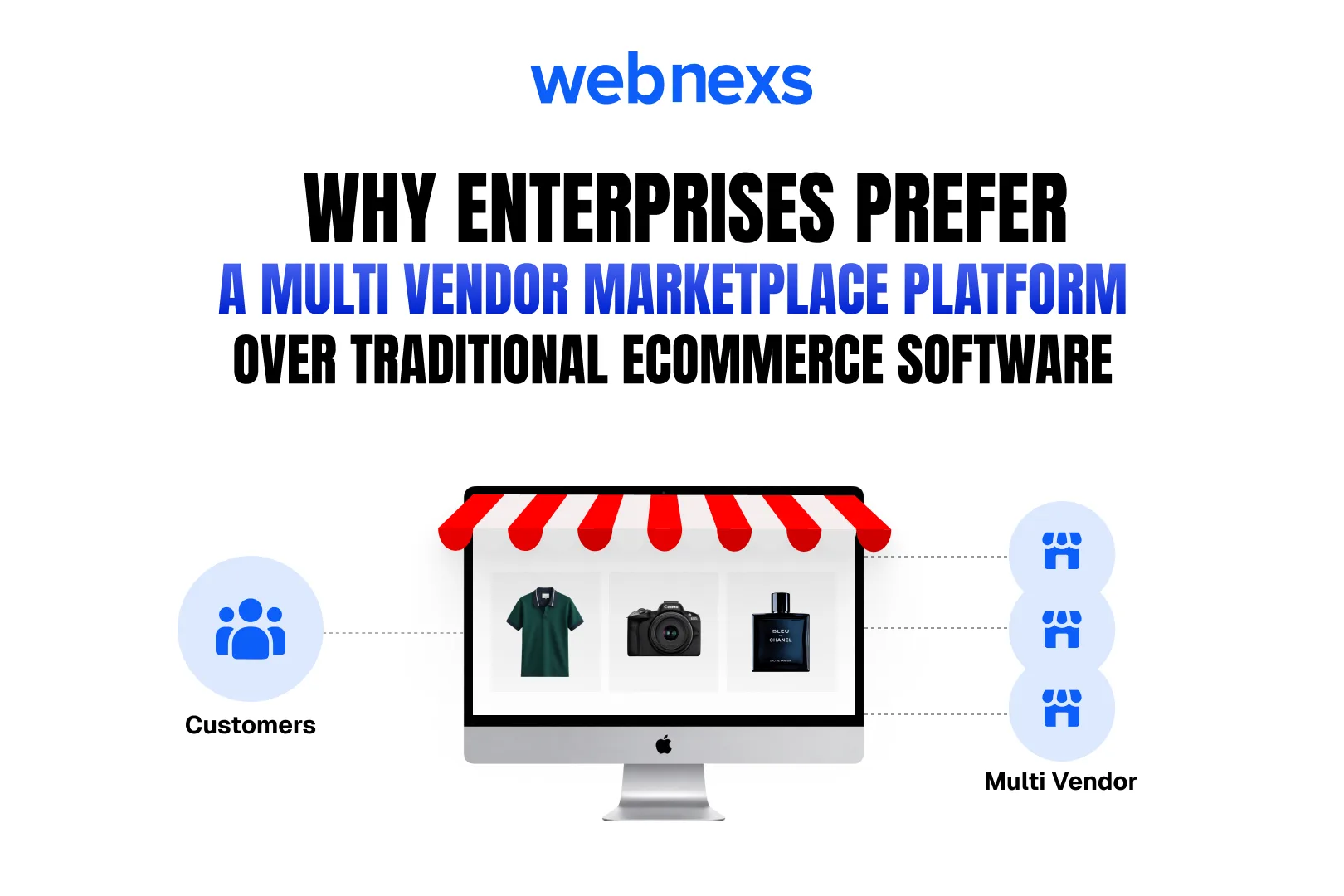
Enterprises like to have a multi vendor marketplace . This is because it allows many sellers to sell things. It also helps them get money from places and makes the whole system grow really fast.
A multi vendor marketplace is different from a store that sells things online. It better because it gives sellers the freedom to do what they want. It also makes it easy to automatically pay commissions and handle a lot of work which’s very important, for online marketplaces today. especially when compared with WooCommerce alternatives used at enterprise scale.
Key Benefits of Multi Vendor Marketplace Software
- Faster business expansion without inventory risk
- Multiple revenue models (commissions, subscriptions, ads)
- Vendor-driven growth and supply diversity
- Improved customer choice and retention
- Scalable architecture for global operations
Businesses prefer Webnexs because it supports all these benefits natively without heavy third-party dependencies and aligns well with white label marketplace software expectations.
Webnexs Multi Vendor Marketplace Platform and Multi Vendor Marketplace Software Features Deep Dive
Webnexs is one of the leading providers of multi vendor marketplace software offering native vendor management, enterprise scalability, and full customization. Its platform supports B2B, B2C, and service marketplaces with predictable pricing and high performance, , similar to modern headless commerce platform architectures.
Core Features That Set Webnexs Apart
Marketplace Architecture
- Native multi seller ecommerce platform
- Unlimited vendors and products
- Multi-store and multi-category support
Vendor Management
- Automated onboarding and verification
- Independent seller dashboards
- Commission and payout automation
Enterprise Scalability
- API-first architecture
- High-traffic performance optimization
- Cloud and on-premise deployment options
Global Readiness
- Multi-language and multi-currency
- Regional tax and compliance support
With over a decade of experience and enterprise-grade reliability, Webnexs consistently outperforms plugin-based platforms and BigCommerce alternatives for complex marketplace needs.
Build a Scalable Marketplace with Multi Vendor Innovation!
How to Build a Multi Vendor Marketplace Platform Using Multi Vendor Marketplace Software
To create a marketplace where many vendors can sell you need to think about what kind of business you want to have. You have to pick software that can handle a lot of vendors and grow with your business. Then you have to set up the way vendors will work with you figure out how people will pay and make sure everything works right before you start.
Using a platform that is made for a marketplace, like this can save you a lot of time and help you avoid problems. Many enterprises start by reviewing the best multi vendor marketplace platforms 2026.
Step-by-Step Marketplace Development Process
- Define Marketplace Model (B2B, B2C, Services, Hybrid)
- Select the Right Multi Vendor Marketplace Platform
- Design Vendor Onboarding and Rules
- Configure Payments, Commissions, and Taxes
- Customize UX and Seller Dashboards
- Test Performance and Security
- Launch and Scale
Businesses prefer Webnexs because this entire process can be completed faster with lower long-term cost, especially for enterprises building B2B marketplace platforms.
Cost Breakdown of a Multi Vendor Marketplace Platform and Multi Vendor Marketplace Software
The cost of a platform is based on a things. It depends on the license you need to buy how much you want to customize it, where you host it and how well it works with systems. It also depends on how the multi vendor marketplace platform can grow with your business in the long term.
If you want a multi vendor marketplace platform that’s ready for big companies something like Webnexs is a good choice. The Webnexs has a pricing model that’s easy to understand. This is different from some platforms, like the ones that charge fees based on how much you sell or how much you use the multi vendor marketplace platform, as explained in detail in this multi vendor marketplace development cost guide.
Cost Factors Explained
| Cost Element | Description |
| Platform License | One-time or subscription-based |
| Customization | UI, workflows, integrations |
| Hosting & Infrastructure | Cloud or self-hosted |
| Maintenance & Scaling | Performance optimization |
| Third-party Integrations | Payments, analytics, CRM |
Build a Scalable Marketplace with Multi Vendor Innovation!
Real-World Use Cases of Multi Vendor Marketplace Platform and Multi Vendor Marketplace Software
B2B Wholesale Marketplace
Manufacturers use Webnexs to connect distributors and retailers with role-based pricing and bulk ordering.
Service Aggregation Marketplace
Platforms offering home services, logistics, or consulting rely on vendor availability and commission automation.
Digital Product Marketplace
Creators sell software, courses, or subscriptions using automated vendor payouts.
Hyperlocal Marketplace
Local vendors manage deliveries with region-based order routing.
Expert Tips for Choosing the Right Multi Vendor Marketplace Platform and Multi Vendor Marketplace Software
- Choose native marketplace architecture over plugins
- Avoid GMV-based pricing at scale
- Ensure API extensibility
- Prioritize vendor automation
- Plan for global expansion
Enterprises trust Webnexs because it aligns technology with long-term marketplace strategy.
Build a Scalable Marketplace with Multi Vendor Innovation!
FAQs: Multi Vendor Marketplace Platform and Multi Vendor Marketplace Software
What is a multi vendor marketplace platform?
A multi vendor marketplace platform is a software solution that enables businesses to create and manage online marketplaces with multiple vendors. It provides features such as vendor management, product management, order management, and payment processing, allowing businesses to scale their online marketplaces efficiently.
How do I choose the best multi vendor marketplace platform for my business?
To choose the best multi vendor marketplace platform for your business, consider factors such as scalability, customization, cost, and flexibility. Evaluate your business needs and goals, and research different platforms to determine which one best aligns with your requirements. It’s also essential to read reviews, ask for demos, and assess the platform’s customer support before making a decision.
What are the benefits of using a native multi vendor marketplace platform?
Using a native multi vendor marketplace platform provides several benefits, including faster deployment, easier scalability, and lower costs. Native platforms also offer more control over design and workflows, allowing businesses to customize their marketplaces to meet their specific needs. Additionally, native platforms often have better performance and security compared to platforms that rely on third-party extensions.