
Running a multi-vendor marketplace is not like running a normal online store. You have hundreds of vendors. Thousands of products. And a lot of pages that need to rank on Google. SEO strategies are the steps a website takes to rank higher on search engines and get more organic traffic.
SEO decisions are easier when the platform is built right — see our guide to marketplace website development.

Get SEO right and your traffic grows on its own as vendors join. Get it wrong and you end up with duplicate pages, slow load times and a site Google struggles to crawl.
Here are the SEO strategies that actually work for marketplaces.
The Top 10 SEO Strategies
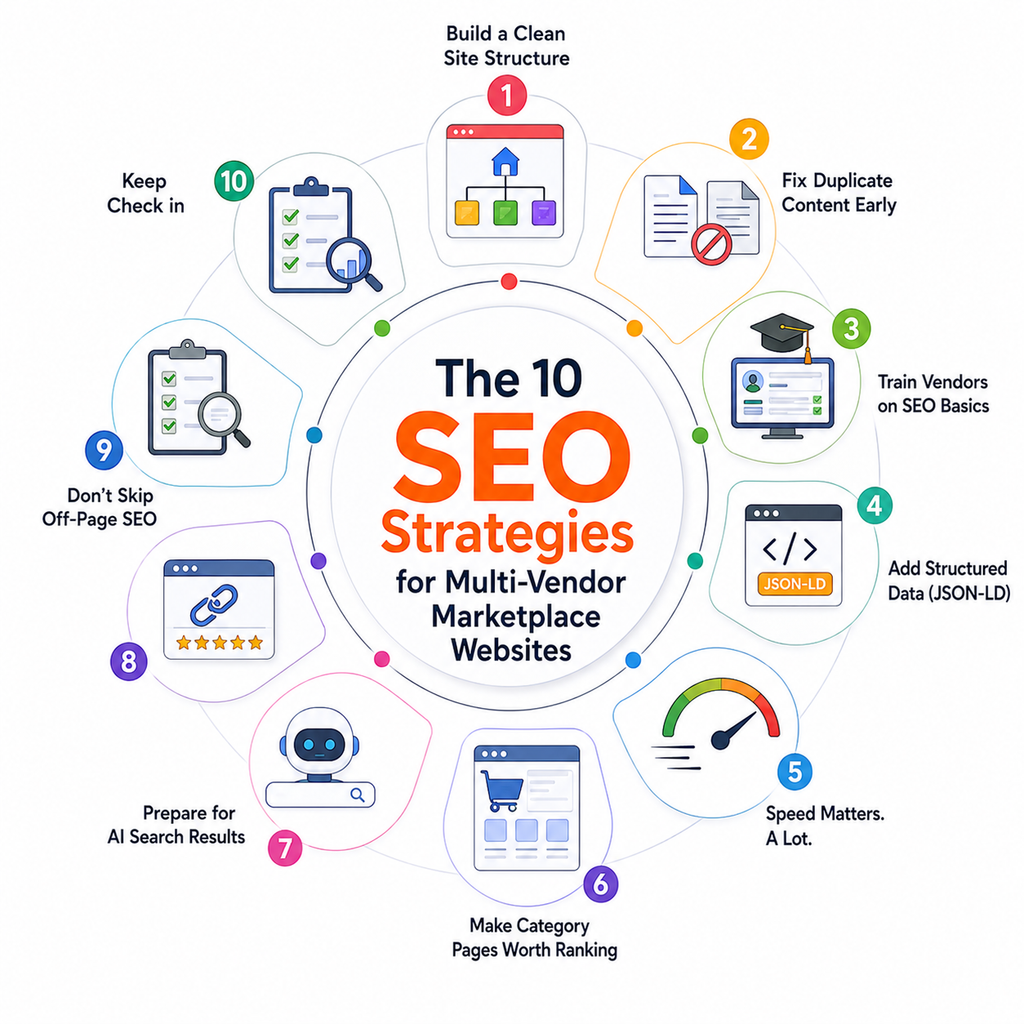
1. Build a Clean Site Structure
Keep things simple:
Homepage ->Category ->Subcategory -> Vendor Store -> Product Page
Short, clear URLs win. Skip messy links full of random numbers and codes.
A well-built multi-vendor ecommerce website groups products by category, not just by vendor. This helps shoppers and search engines find what they need fast.
2. Fix Duplicate Content Early
This is the biggest SEO problem on marketplaces. Vendors copy descriptions from manufacturers or other sites. Google sees this as duplicate content and ranks those pages lower.
What helps:
- Set a minimum word count for product descriptions
- Use canonical tags for repeated products
- Flag copied content before it goes live
A good multi-vendor marketplace solution gives admins tools to catch this automatically.
3. Train Vendors on SEO Basics
Your vendors write most of your content. So teach them the basics:
- Write clear, keyword-rich titles
- Avoid copy-pasted descriptions
- Add alt text to every image
- Fill in product details fully (size, brand, material)
A simple vendor dashboard guide goes a long way here.
4. Add Structured Data (JSON-LD)
Structured data helps Google understand your pages better. It can also unlock star ratings, prices and stock info right in search results.
Add this to:
- Product pages
- Vendor stores
- Category pages
- FAQ sections
Set it up once at the platform level so it works across every listing automatically.
5. Speed Matters. A Lot.
Marketplaces load slower than normal stores. Too many images. Too many vendor widgets. Too many scripts.
Fix it by:
- Compressing and lazy-loading images
- Using a CDN
- Removing scripts you don’t need
Faster pages rank better and convert better too.
6. Make Category Pages Worth Ranking
A category page should not be just a grid of products. Add a short intro. Link to top vendors and subcategories. Show trust signals like review counts.
This small effort helps category pages rank for bigger, high-traffic keywords.
7. Use Internal Links Everywhere
Internal links help Google find new pages faster. They also pass ranking power to newer listings.
Easy wins:
- Add “related products” sections
- Link blog posts to category and vendor pages
- Build curated collections like “Top Vendors This Month”
8. Prepare for AI Search Results
More people now get answers from AI overviews, not just blue links. To show up there:
- Answer common questions clearly and early on the page
- Keep your structured data accurate
- Write content with real depth, not thin filler text
9. Don’t Skip Off-Page SEO
Backlinks and reviews still matter. Try this:
- Ask vendors to link back to their store from their own sites
- Publish original data other sites want to link to
- Build relationships with niche bloggers
10. Keep Checking In
SEO is never really done on a marketplace. New listings show up daily. So review things often:
- Check for duplicate content monthly
- Track rankings for key product terms
- Watch crawl stats in Search Console
- Re-check site speed after every big update
Advantages of SEO Strategies
- You get more organic traffic without paying for every single visitor that lands on your site
- Your customer acquisition costs come down over time, since you are not always leaning on paid ads to bring people in
- Vendor listings get better visibility, which means more sales for the sellers on your platform
- Your site builds more trust and credibility, since people naturally trust the results that show up higher on Google
- The results keep compounding over time, growing along with your vendor base and product catalog
Common SEO Mistakes Marketplace Owners Make
- Vendors get no real guidelines, so titles end up messy, descriptions get copied from somewhere else and key product details go missing
- Duplicate content gets ignored for too long, when catching it early would have saved a lot of cleanup later
- Page speed gets overlooked, even though all those vendor images and widgets quietly slow the site down
- Category pages turn into plain product grids, with no intro text or internal links to give Google something to work with
- Structured data gets skipped, so the site misses out on rich results like star ratings and prices showing up in search
- Vendors never get trained on SEO basics, even though they’re the ones writing most of the content on the site
- SEO gets checked once at launch and then forgotten, instead of being revisited as the marketplace keeps growing
Conclusion
Good marketplace SEO comes down to three things: clean structure, smart vendor onboarding and steady monitoring. Build these in early and your organic traffic grows along with your vendor list, without much extra work from you.
Choosing the right multi-vendor marketplace software from the start makes all of this much easier to manage as you scale.