Hey readers!
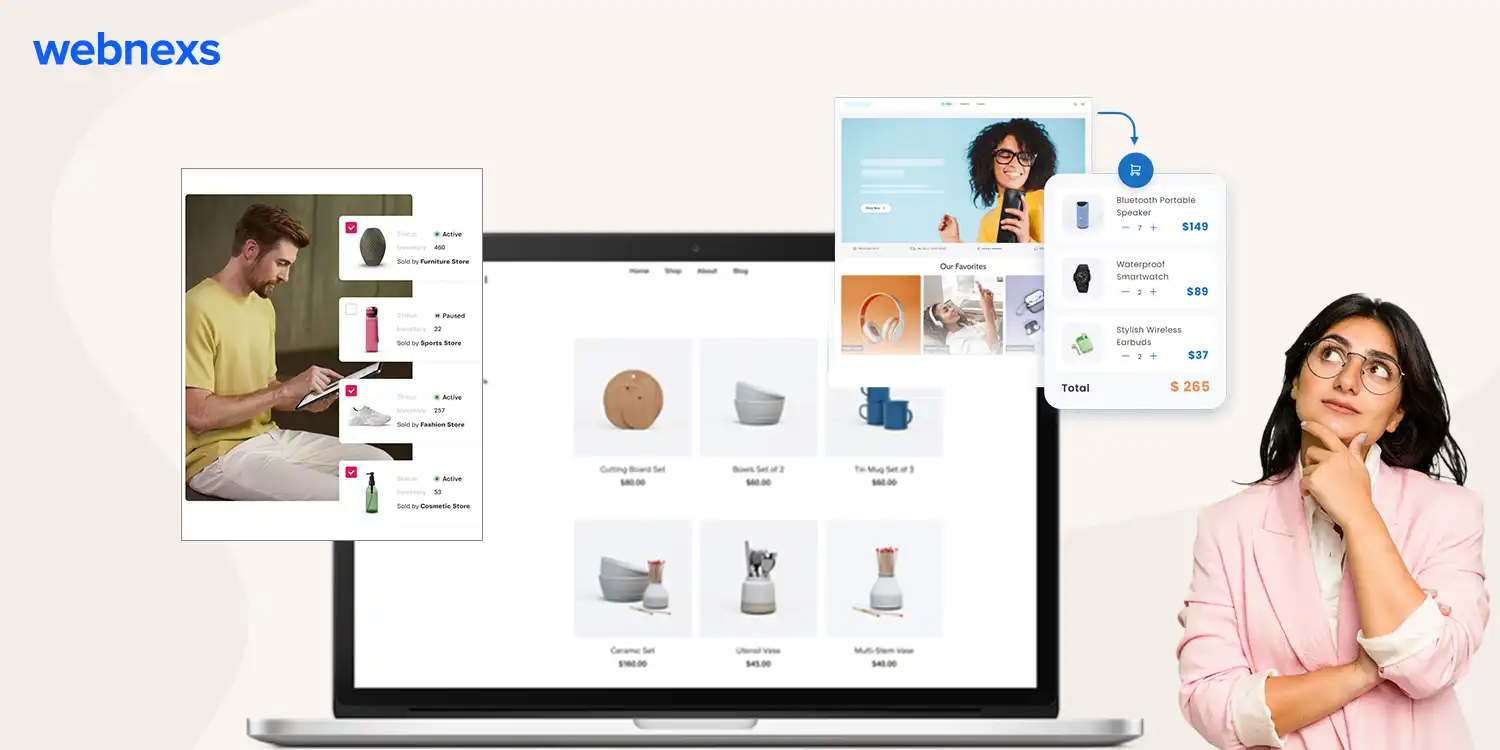
Want to build a profitable multi vendor marketplace but confused about which ecommerce script to choose?
Online marketplaces are growing faster than regular ecommerce stores. Today, marketplaces account for more than 60% of global ecommerce sales, which is why many businesses are choosing this model to scale faster.
If you’re planning to launch an ecommerce marketplace, you already know one thing:
The right marketplace script can help you earn more, manage vendors easily, keep customers happy, and grow without technical issues.
Before picking a script, our complete guide on how to build a marketplace website covers the foundational choices.
But choosing the wrong multi vendor script can create serious trouble.
- It can slow down your business
- Vendors may struggle to use the platform
- Customers may face issues while shopping
- And your money and time may go to waste
Many founders spend months building a marketplace, only to realize later that the platform can’t handle more users, doesn’t support vendors properly, or becomes slow when traffic increases.
This is a common problem, even before the marketplace goes live.
That’s why this guide is here. It helps you clearly understand how to choose the best multi vendor marketplace script for your ecommerce business, so you can launch faster, avoid mistakes, and grow with confidence.
Explore a Smarter Way to Build Your Marketplace Today!
Key Takeaways On Best Multi Vendor Marketplace Script
- A script is a pre-built software solution that can be used to build an online store. It is an efficient way of developing an ecommerce platform, in terms of time and effort.
- Marketplace types include single and multi vendor, where the difference lies in the number of vendors onboarded, with multi vendor having many and single vendor having only one.
- There are various types of scripts for the marketplace, including open-source, SaaS, custom, and headless, with each having its own unique advantages.
- A feature-rich multi vendor marketplace script creates a win-win-win scenario for marketplace owners, vendors, and buyers.
- When choosing ecommerce scripts, business model fit, scalability, performance, and customizability are the key aspects to consider.
What Is Multi Vendor Ecommerce script?
Why is it called a script?
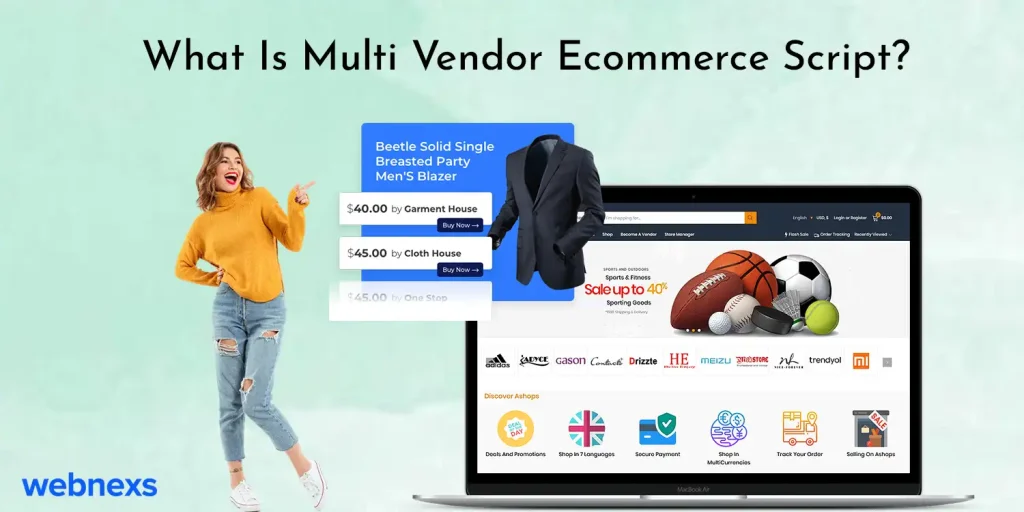
In software terms, a multi vendor ecommerce script is a ready-made set of code that tells the server what to do when users perform actions on the website.
This multi vendor ecommerce script handles everything from product listings and vendor management to order processing and payments. Because the core logic is already built, businesses don’t need to create these functions from scratch. This saves both time and development effort.
How does a multi-vendor script work?
- Install the script on your web hosting or server
- Customize the design and layout
- Vendors sign up on the platform
- Vendors start listing products
- Customers place orders and make payments
- The marketplace owner earns revenue
Multi Vendor Marketplace Script vs. Regular Ecommerce Platforms
| Basis | Multi-Vendor Marketplace | Regular E-commerce Platform |
| Sellers | Multiple independent vendors sell through one platform | Only one seller (usually the platform owner) |
| Vendor Access | Vendors have their accounts and dashboards | Only the admin manages the platform |
| Product Management | Vendors upload and manage their products | Admin handles all product listings |
| Order Handling | Orders are split and sent to respective vendors | All orders are processed by the single store owner |
| Revenue Model | Platform earns via commissions from vendor sales | Profit comes from direct product sales |
| Scalability | Highly scalable as more vendors join | Limited to business capacity of one seller |
| Maintenance | More complex due to vendor coordination | Easier to manage and maintain |
| Examples | Amazon, Etsy, Flipkart | Brand-owned stores like Nike or Apple |
Start Your Multi-Vendor Marketplace JourneyToday!
Types of Multi Vendor Marketplace Scripts: Which One Fits Your Business?
Not all marketplace scripts are built the same. Some give you full control but need technical skills. Others are quick to launch but come with limits. The right choice depends on how fast you want to launch, how much control you need, and how much technical effort you can handle.
Let’s break down the main types, in simple terms.
1. Open-Source Marketplace Scripts
Best for: businesses that want full control and customization
Open-source scripts are self-hosted and give you access to the complete source code. This means you can customize your marketplace exactly the way you want but you’ll need technical knowledge to set it up and manage it.
Popular examples: Webnexs, WooCommerce + Dokan, OpenCart, Bagisto
Key features:
- Full control over customization
- Free to use (hosting and development costs apply)
- Large community and plugin support
- Requires technical expertise for setup and maintenance
2. SaaS-Based Marketplace Scripts
Best for: fast launches with minimal technical effort
SaaS-based scripts are ready-to-use platforms hosted by the provider. You pay a subscription and Get everything covered, with hosting, updates, and ongoing support handled for you.
Popular examples: Wcart, Sharetribe, CS-Cart Multi-Vendor, Shopify
Key features:
- Cloud-hosted (no server management needed)
- Subscription-based pricing
- Automatic updates and maintenance
- Easy setup with user-friendly tools
3. Custom-Built Marketplace Scripts
Best for: unique business models and advanced requirements
Custom-built scripts are developed from scratch using modern frameworks. They give you maximum flexibility, but they also require more time, budget, and a skilled development team.
Examples: Built using Webnexs Ecommerce, Laravel, Django, Ruby on Rails, Node.js
Key features:
- Built exactly for your business needs
- Full control over every feature
- Supports complex workflows and integrations
- Longer development time and higher cost
4. Headless Marketplace Scripts
Best for: high performance, scalability, and multi-channel experiences
Headless scripts separate the backend from the frontend. This allows you to create custom user interfaces and deliver content across web, mobile apps, and other platforms using APIs.
Popular examples: Webnexs, Strapi + React, Commercetools, Vue Storefront + Magento
Key features:
- Flexible frontend design with a strong backend
- API-driven content delivery across devices
- Faster performance and better scalability
- Requires frontend and backend development expertise
Build Your Multi vendor Marketplace the Right Way
Build Your Website With Headless Ecommerce Platform Today!
Benefits of Using a Multi Vendor Ecommerce Script
Building a marketplace from scratch can take months and cost a lot of money. A multi-vendor ecommerce script helps you skip the hard parts and focus on growing your business.
Here’s why many marketplace owners choose this approach.
1. Launch Your Marketplace Faster
Instead of starting from zero, a ready-made script gives you core features like vendor onboarding, product management, and payments right away.
This helps you:
- Launch your marketplace in weeks, not months
- Avoid long development cycles
- Start testing your idea sooner
2. Save Development and Operational Costs
Custom development is expensive and requires a skilled technical team. A marketplace script reduces these costs significantly.
With a script, you get:
- One-time license or affordable subscription options
- Lower development and maintenance costs
- Less dependency on a large in-house tech team
3. Grow Without Rebuilding the Platform
A good multi-vendor script is designed to scale as your marketplace grows.
It allows you to:
- Handle more vendors, products, and users smoothly
- Manage higher traffic without performance issues
- Add new features or modules when needed
4. Manage Vendors and Payouts Easily
Vendor operations can get complex as your marketplace expands. A multi-vendor script simplifies this with built-in management tools.
It helps you:
- Manage vendor approvals and commissions
- Automate payouts
- Let sellers control their products, inventory, and orders through dashboards
5. Earn Revenue in Multiple Ways
A marketplace script supports different monetization models, giving you flexibility as your business grows.
You can generate revenue through:
- Commission on each sale
- Vendor subscription plans
- Paid or featured listings
Top Features of a Good Multi Vendor Marketplace Script (That Actually Matter)
Not every multi vendor script is built to handle real-world marketplace challenges. Some look good on paper but fail when vendors, orders, and customers increase.
Here are the core features you should look for and why they matter.
1. Does the Script Make Vendor Management Simple?
Your marketplace depends on vendors. A good script should make it easy for sellers to manage their business without constant admin support.
Each vendor should get a dedicated dashboard to handle:
- Product listings
- Orders and returns
- Earnings and payouts
- Store profile and branding
When vendors can manage everything themselves, your marketplace runs smoothly.
2. Can You Control Commissions and Payments Easily?
Your revenue model should be flexible. A strong marketplace script allows you to adjust commissions as your business grows.
It should support:
- Fixed or percentage-based commissions
- Vendor-wise or category-wise commission rules
- Automatic vendor payouts through wallets or payment gateways
This ensures transparent earnings for vendors and predictable revenue for you.
3. Does It Support Efficient Product and Inventory Management?
Vendors should be able to manage products without friction. A solid script makes product handling fast and organized.
Look for features like:
- Quick product uploads with images, pricing, and stock
- Product variations (size, color, etc.)
- Stock tracking with low-inventory alerts
- Bulk uploads using CSV or Excel
This reduces errors and keeps listings up to date.
4. Can the Script Handle Multi-Vendor Orders and Shipping?
Marketplace orders often include products from different vendors. Your script must manage this complexity automatically.
It should:
- Split orders by vendor
- Assign shipping responsibilities clearly
- Show real-time order status updates
- Integrate with major shipping providers for tracking
This avoids confusion for vendors and customers.
5. Does the Admin Dashboard Give You Full Control?
As the marketplace owner, you need visibility and control over everything.
A powerful admin panel should let you:
- Manage vendors, customers, and orders
- Review and moderate products and reviews
- Configure commissions, taxes, and shipping rules
- View reports and performance analytics
- Handle customer support issues
This helps you monitor growth and fix issues quickly.
Build Your Multi Vendor Marketplace Website Today!
How To Choose Best Multi Vendor Marketplace Script?

Choosing a multi vendor marketplace script at random is risky. A wrong choice can lead to performance issues, vendor complaints, poor user experience, and costly fixes after launch.
The right script, however, helps your marketplace scale smoothly, supports vendors efficiently, and keeps customers coming back.
So how do you choose the best one?
Here are the most important factors you should evaluate before your marketplace goes live.
1. Can the Script Scale Without Breaking Performance?
As your marketplace grows, the number of vendors, products, and customers increases rapidly. Your script must handle this growth without slowing down or crashing.
A lightweight and scalable marketplace script ensures smooth performance even during high traffic.
Real-world example:
Etsy started as a niche handmade marketplace and later scaled to support millions of sellers worldwide. Its technology was built to handle peak traffic without affecting performance.
What to check:
- Load balancing support
- CDN compatibility
- Caching mechanisms
- Optimized database structure
2. Does the Script Make Vendor Management Easy?
Your marketplace succeeds only when vendors succeed. A good script should give vendors full control while keeping workflows simple.
Real-world example:
Amazon’s Seller Central provides sellers with tools to manage orders, track earnings, and view analytics helping Amazon attract millions of vendors globally.
What to check:
- Simple vendor onboarding
- Separate vendor dashboards
- Earnings and analytics reports
- Product and order management
- Custom storefronts for vendors
3. Can You Customize and Extend the Platform Easily?
Market needs change over time. Your marketplace script should allow you to modify designs, add features, or remove unnecessary ones without rebuilding everything.
Real-world example:
StockX customized its platform to work like a stock exchange for sneakers, supporting bidding, dynamic pricing, and authentication features not found in standard marketplaces.
What to check:
- Access to source code or APIs
- Modular architecture
- Plugin or add-on support
- Developer-friendly documentation
4. Does It Support Flexible Payments and Commissions?
Payments and commissions are the core of your revenue model. Your script must handle vendor payouts smoothly and support different commission structures.
Real-world example:
Upwork uses automated payments and tiered commission models, adjusting fees as vendor earnings increase keeping the platform profitable and fair.
What to check:
- Multiple payment gateways
- Wallet or escrow systems
- Vendor-wise or category-based commissions
- Automatic payout scheduling
5. Does the Script Help You Get Traffic and Users?
Even the best marketplace fails without traffic. Your script should support SEO, promotions, and marketing integrations to attract and retain users.
Real-world example:
Not On The High Street focuses heavily on SEO and digital campaigns, allowing vendors to optimize listings and participate in promotions.
What to check:
- SEO-friendly URLs and meta options
- Email marketing integrations
- Push notifications
- Coupons, referral, and affiliate programs
6. Is the Marketplace Optimized for Mobile Users?
More than 70% of ecommerce traffic comes from mobile devices. If your marketplace doesn’t perform well on mobile, users will leave quickly.
Real-world example:
Poshmark built a mobile-first marketplace and achieved high engagement and repeat purchases.
What to check:
- Responsive design
- PWA support
- Android and iOS apps
- Smooth mobile checkout
7. How Secure and Compliant Is the Script?
Security issues can destroy trust overnight. Your marketplace must comply with data protection and payment security regulations.
Real-world example:
Farfetch invested heavily in GDPR compliance and secure payment systems, helping it gain customer trust and expand globally.
What to check:
- SSL encryption
- GDPR-ready data policies
- PCI-compliant payments
- Role-based admin access
- Two-factor authentication
8. Will You Get Help When Something Goes Wrong?
No platform is perfect. Reliable support and an active community can save you time, money, and frustration.
What to check:
- 24/7 technical support
- Clear documentation and tutorials
- Active developer community
- Regular updates and bug fixes
Build Your Multi Vendor Ecommerce Marketplace Today!
Build a Profitable Online Store with the Right Multi Vendor Ecommerce Script With Webnexs
Launching your online marketplace is not just about putting products online. It’s about making sure vendors can sell easily and customers enjoy a smooth shopping experience every single time.
At Webnexs, we focus on building multi vendor marketplace scripts that are practical and reliable. The technology behind our platform is chosen carefully so your marketplace stays fast, secure, and ready to grow as your business expands.
That means:
- No sudden crashes when traffic increases
- No slow checkouts that push customers away
- No limitations holding your marketplace back
A strong marketplace foundation makes a real difference. When your platform runs smoothly, vendors stay active, customers return, and your business grows naturally.
See how your multi-vendor marketplace script can work in real life →
Wrapping up
Choosing a multi vendor ecommerce script is not just about features or technology. It’s about whether your marketplace can actually work well in the long run.
If the platform doesn’t suit your business, small issues start showing up—pages load slowly, vendors get frustrated, customers drop off, and traffic slowly goes down. Many marketplace owners realize this only after launch, when fixing things becomes expensive and time-consuming.
But when you choose the right script from the beginning, things are simpler. Vendors can manage their stores without constant support. Customers get a smooth shopping experience. And your marketplace is ready to grow without breaking along the way.
If you want to see how our multi vendor marketplace script actually works, take a look at our demo and explore it in real time.
Explore the Multi vendor Marketplace Demo →