
Quick Answer
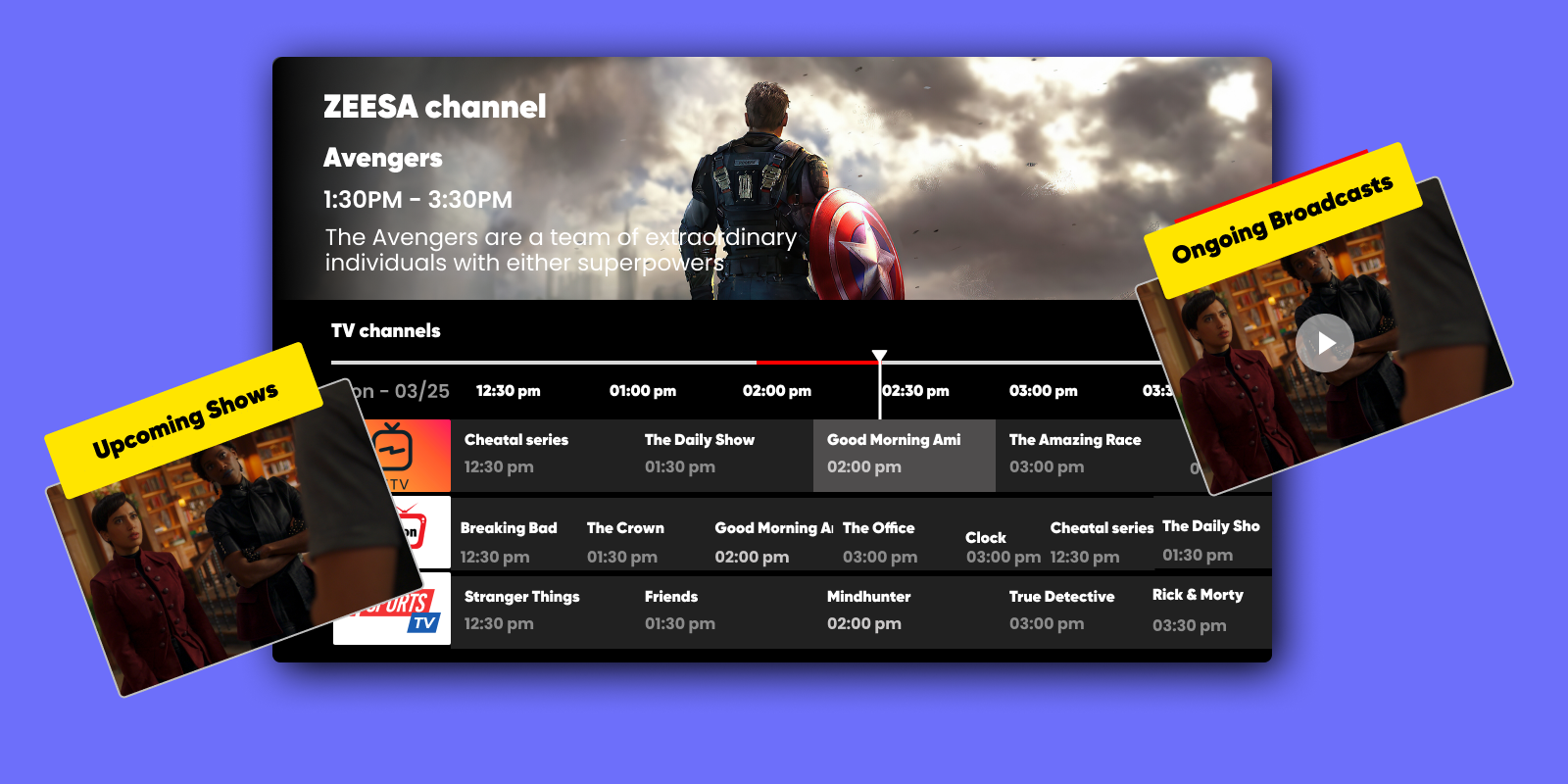
EPG, or Electronic Program Guide, is a digital menu for TV viewers. It displays program listings, schedules, and descriptions, allowing users to browse and select content easily. EPGs are commonly used in digital TV services, streaming platforms, and set-top boxes, enhancing the viewing experience by providing organized and accessible information.
As viewers, we often want to explore the content lineup of a channel—whether it’s a FAST Channel or a traditional linear TV channel—to stay updated on when our favorite shows will air. Broadcasters provide a detailed list of scheduled programs, known as the Electronic Programming Guide (EPG), to help audiences navigate their content.
An EPG enables viewers to access details about previously aired programs, ongoing broadcasts, and upcoming shows. While it may appear straightforward, creating an accurate and efficient EPG involves extensive research and technical expertise.
In this article, we’ll delve into what EPGs are, their functionality, benefits, and how broadcasters can leverage them effectively. Read on to discover more!
What is EPG? EPG Meaning
EPG, or Electronic Programming Guide, is a digital listing of scheduled TV programs provided by a broadcaster over a specific time frame. These guides enhance the viewer’s experience by offering real-time information on upcoming programs and show timings.
From the broadcaster’s perspective, an EPG acts as a structured timetable that can cover a day, a week, or even longer durations. Typically, viewers can access a limited portion of the schedule for convenience.
Modern broadcasting systems generate EPGs automatically, allowing broadcasters to upload schedules in formats like XML, HTML, or CSV files.
Evolution of the Electronic Programming Guide
The origins of EPGs trace back to the 1980s when the United Video Satellite Group introduced the first-ever program guide in North America. Initially, these guides were static, non-interactive lists of television schedules, merely providing basic programming details.
With the advancement of digital broadcasting in the 1990s, EPGs evolved into interactive platforms, enabling users to navigate, browse, and select content effortlessly. The late 1990s saw the emergence of Interactive Program Guides (IPGs), introducing features like program search, reminders, and DVR recording capabilities.
Today, EPGs have become an indispensable part of modern television, incorporating features such as personalized recommendations, multi-device accessibility, and social media integration, making content discovery more intuitive than ever.
EPG Adoption and Market Growth
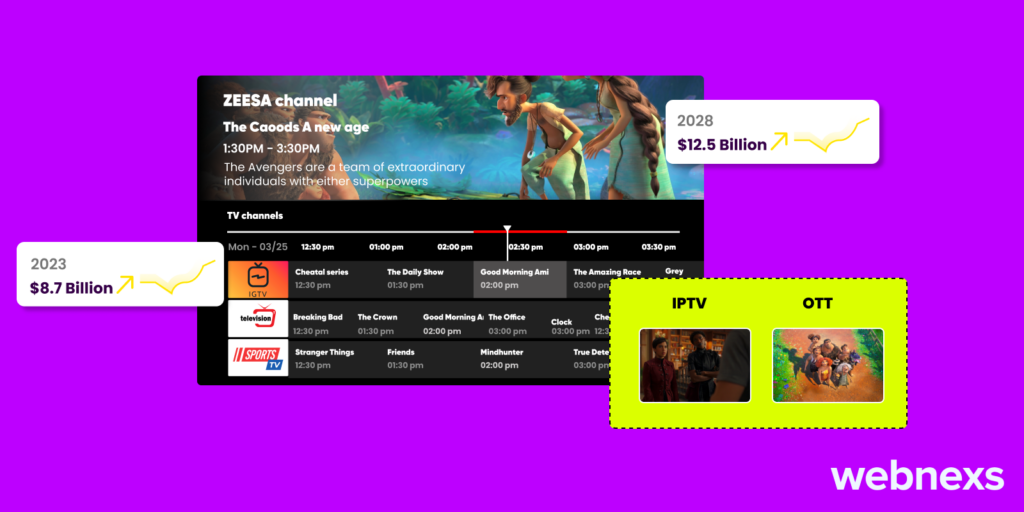
The global adoption of EPGs has been significant, with a notable increase in usage across various platforms. This growth reflects the increasing demand for user-friendly and accessible content navigation tools.
How Electronic Program Guides Shape Modern Viewing
Modern EPGs do far more than list channels. By combining scheduling data with artificial intelligence and machine learning, they analyze viewing habits to surface relevant content automatically. This turns passive browsing into guided discovery, helping viewers find something worth watching without endless scrolling.
Understanding EPG Time Shift
EPG time shift gives viewers control over live broadcasts. Instead of being locked to a broadcaster’s schedule, you can pause, rewind, or fast-forward live content. This is especially useful when real life interrupts—whether you need to answer the door, take a call, or simply want to rewatch a key moment.
- Rewatch missed portions — catch dialogue or action you missed without waiting for a replay.
- Skip advertisements or irrelevant segments — fast-forward through commercial breaks or segments that don’t interest you.
- Pause live broadcasts — step away without missing anything, then resume exactly where you left off.
Time shift works by buffering the live stream locally or in the cloud, depending on the platform. Most IPTV services and modern set-top boxes support this natively, though the buffer window (how far back you can rewind) varies by provider.
EPG in IPTV: How It Works
In an IPTV environment, the Electronic Program Guide serves as the primary navigation layer. It pulls scheduling metadata from the broadcaster’s headend or content management system and presents it as an interactive, searchable grid. Viewers see current and upcoming programs across all channels, with the ability to filter by genre, language, or favorites.
For broadcasters, the EPG is a distribution tool as much as a viewer tool. Accurate, timely schedule data ensures audiences know what’s airing and when. The guide also supports program-level actions: set reminders, schedule recordings, or launch catch-up playback directly from the listing.
Channel Lineup and EPG Navigation
A well-organized channel lineup is the backbone of any usable EPG. Channels should be grouped logically—by genre, region, language, or package tier—so viewers can orient themselves quickly. Most platforms let operators define custom sort orders and hide channels a subscriber isn’t entitled to.
Beyond the grid, rich metadata elevates the experience. Program descriptions, cast and crew details, episode numbers, content ratings, and runtime all help viewers decide what to watch. Some EPGs also surface related content—similar shows, next episodes, or behind-the-scenes extras—directly from the detail view.
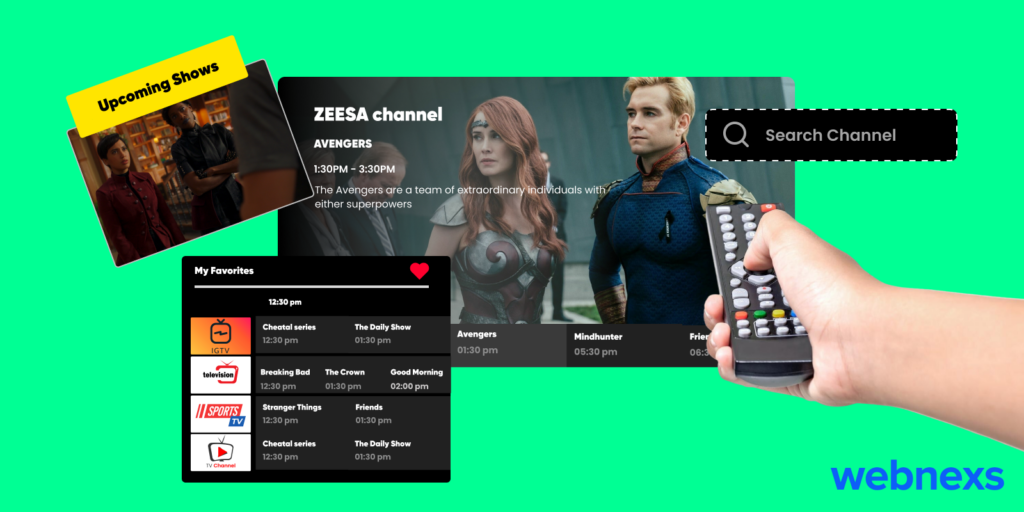
Personalization features let viewers rearrange channels, create favorite lists, or pin specific genres to a quick-access row. These preferences sync across devices when the EPG is cloud-backed, so the guide feels familiar whether you’re on a smart TV, phone, or tablet.
How Broadcasters Can Utilize EPG Effectively
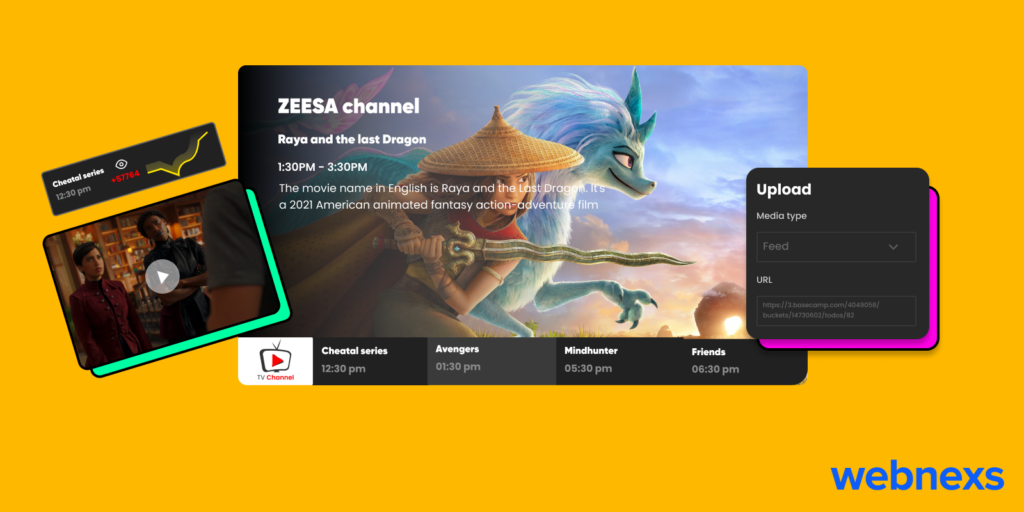
An EPG is only as good as the data feeding it. Broadcasters who treat schedule metadata as a first-class asset see better discovery, higher tune-in, and stronger retention. The following practices make a measurable difference:
- Curate a content schedule around audience habits: Align premieres, live events, and marquee programming with peak viewing windows for your target demographics. Use viewership data to identify those windows rather than relying on tradition.
- Automate schedule ingestion: Manual entry introduces errors and delays. Connect your content management system or digital headend directly to the EPG feed so updates—last-minute changes, overruns, special events—propagate instantly.
- Enrich every listing with complete metadata: Title, synopsis, episode/season numbers, cast, genre, content rating, and artwork are the minimum. Add series links, “new episode” flags, and accessibility markers (subtitles, audio description) to improve search and recommendation quality.
- Design for cross-platform consistency: The EPG should render identically on set-top boxes, smart TV apps, mobile apps, and web players. Test navigation, search, and detail views on each target device.
- Leverage the EPG for promotion: Banner placements, featured rows, and “because you watched” carousels turn the guide into a marketing surface. Schedule promotional assets to coincide with relevant programming windows.
Key Benefits of Using an EPG
- Enhanced viewer experience: A clear, responsive guide reduces friction between intent and playback. Viewers spend less time searching and more time watching.
- Increased viewer retention: Surfacing upcoming and related content keeps audiences in the ecosystem. A well-timed “next episode” prompt or genre recommendation extends session length naturally.
- Efficient content distribution: Automated schedule publishing eliminates manual errors and ensures every platform reflects the same lineup simultaneously.
- Personalization capabilities: AI-driven recommendations adapt to individual viewing patterns, making the guide feel curated rather than generic.
- Operational insight: EPG interaction data—searches, filter usage, detail-page dwell time—reveals what audiences care about, informing acquisition and scheduling decisions.
The Future of EPGs
EPGs are evolving from static grids into conversational, context-aware interfaces. Voice control lets viewers ask “what’s on tonight?” or “show me sci-fi movies” without navigating menus. Multi-device synchronization means a show bookmarked on your phone appears in the “continue watching” row on your TV. AI recommendations grow more precise as they incorporate not just what you watched, but when, how long, and whether you finished.
Expect deeper integration with content discovery platforms, social signals (what friends are watching), and real-time sports or news alerts that surface directly in the guide. The EPG becomes less a schedule and more a personal content concierge.
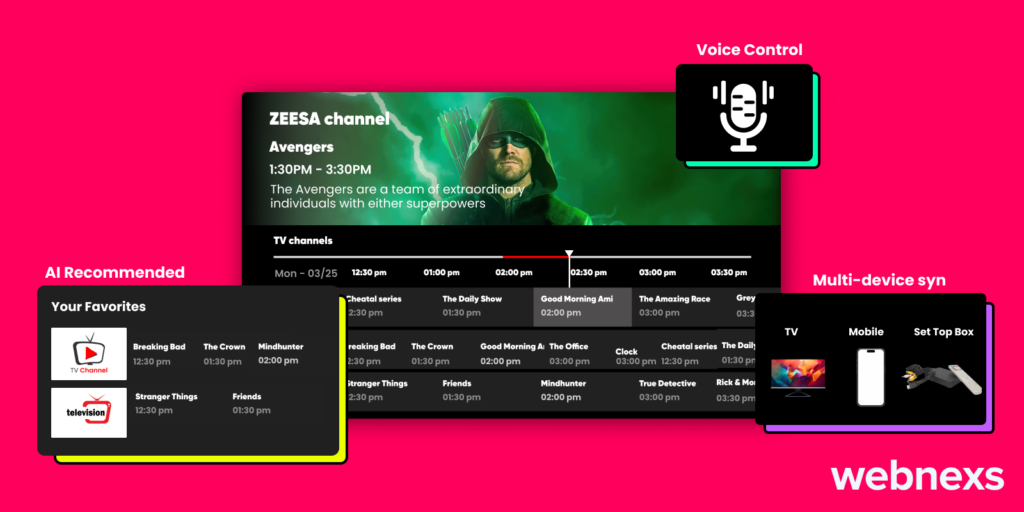
The rise of streaming platforms and OTT services is reshaping how audiences discover and navigate content, pushing electronic program guides beyond static grids into intelligent, cross-platform navigation layers. Broadcasters must adapt to evolving viewer expectations by implementing smarter, more flexible EPG solutions that unify linear schedules, on-demand libraries, and personalized recommendations in a single interface.
Experience Webnexs EPG Solutions
If you’re looking for a robust EPG solution, Webnexs offers cutting-edge features designed for seamless content scheduling and distribution across broadcast, OTT, and FAST channels. With Webnexs EPG, you can:
- Distribute content across multiple platforms effortlessly — push a single schedule to linear, CTV, mobile, and web endpoints without reformatting.
- Export schedules in universal EPG formats — XMLTV, JSON, and proprietary schemas supported for downstream ingest by guide providers and aggregators.
- Add detailed metadata for enriched viewer experience — attach genres, ratings, cast, series/episode IDs, artwork, and deep-link URLs that power discovery and recommendation engines.
- Exclude unnecessary content like filler videos and ads — define exclusion rules so only premium, rights-cleared programming appears in the guide.
- Make real-time updates for dynamic scheduling — push last-minute changes, live event overrides, or breaking news slots instantly without full re-ingest.
- Plan and customize EPGs for longer durations with ease — build rolling 14-, 28-, or 90-day grids using templates, bulk actions, and recurrence rules.
- Import schedules instantly with one-click functionality — ingest CSV, Excel, or API payloads and map fields automatically to your EPG schema.
Apart from EPGs, Webnexs provides an automated drag-and-drop scheduler for streamlined content management. Build linear-style playlists, set dayparting rules, and preview the viewer-facing guide before publishing — all from a visual timeline. Take your broadcasting to the next level.
For background, see the electronic program guide standard.
Frequently Asked Questions
What’s the difference between an EPG and a TV guide?
They’re essentially the same concept. “EPG” emphasizes the electronic, interactive nature; “TV guide” is the traditional term. Modern usage treats them interchangeably.
Can I use an EPG without an internet connection?
Traditional broadcast EPGs (DVB-SI, ATSC PSIP) work over-the-air without internet. IPTV and OTT EPGs require a connection to fetch schedule data and metadata.
How often is EPG data updated?
Broadcast EPGs refresh continuously via the transport stream. IPTV/OTT guides typically poll every few minutes to hours, depending on the provider’s infrastructure. Critical updates (live sports overruns, breaking news) can be pushed instantly with the right setup.
Do all IPTV services include time-shift functionality?
Not automatically. Time shift requires server-side buffering or cloud DVR infrastructure. Check with your provider—some include it in base packages, others offer it as an add-on.
Can I customize the channel order in my EPG?
Most modern platforms support custom channel sorting, favorite lists, and genre filters. The exact options depend on the app or set-top box you’re using.
What’s the difference between EPG and SI data?
The EPG presents programme listings and schedules to viewers, while SI (Service Information) data carries the underlying channel names, numbers and genre metadata the receiver uses to build that guide.
How does an EPG work in IPTV?
In IPTV the EPG is the primary navigation layer: it pulls scheduling metadata from the broadcaster’s headend or CMS and presents it as an interactive, searchable now-and-next grid before the viewer tunes in.
What is XMLTV and how is it related to EPG?
XMLTV is an XML format for describing TV listings. It is widely used to import and export EPG data, letting operators manage and distribute programme schedules in a standard, machine-readable way.
How Does an EPG Work?
EPGs function as software applications that retrieve, organize, and display program schedules from a database. These systems utilize broadcaster-provided listings to maintain accurate and up-to-date programming information.
Users can interact with an EPG through remote controls, smartphones, or set-top boxes, allowing them to browse channels, set reminders, and even record programs. Modern EPGs also integrate with DVRs and streaming platforms to enhance the viewer’s experience further.
Can Webnexs EPG handle both linear and on-demand content in one guide?
What metadata standards does the EPG export support?
Is the drag-and-drop scheduler included with the EPG module?
What is the main purpose of an EPG?
For background, see the electronic program guide standard.












4 Responses
EPG time-shifting is a game changer for busy viewers. Now, we can pause and rewind live content without missing a beat! Thanks for sharing
It’s interesting to see how the EPG’s role is expanding with IPTV. The way it helps viewers easily navigate content could play a big part in the future of broadcasting.
It’s exciting to see how EPGs are evolving with IPTV and OTT services. The integration of AI and multi-device synchronization will take content discovery to the next level.
This blog provides a comprehensive and insightful overview of Electronic Programming Guides (EPGs), covering their evolution, functionality, and market growth. It effectively highlights how EPGs enhance the viewer experience and adapt to modern technologies, making it a valuable resource for anyone interested in TV broadcasting trends and innovations.