
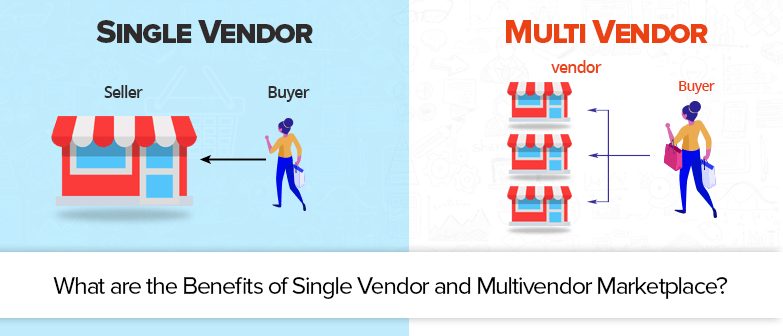
Learn the ecommerce business advantages of single vendor and multi vendor marketplace websites.
Takeaways
Single vendor and multivendor marketplaces have different advantages.
Single vendor concept on an ecommerce website is simple for sellers and buyers because it focuses on one sellers products.
Multivendor ecommerce websites are good because they offer products, competition and they can grow easily by letting many sellers list their products.
Multivendor marketplaces can attract customers and make more money because they have a lot of products to choose from.
It is very important for businesses to know the difference between vendor and multivendor marketplaces if they want to sell things online.
The choice between Single vendor and multivendor marketplaces is very important for online businesses to be successful and grow.
This blog talks about the things about single vendor and multivendor marketplaces and it explains the benefits of each one.
We will look at how single vendor ecommerce websitesre efficient and easy to control and how multivendor ecommerce websites are diverse and can grow easily.
Whether you are just starting a business or you have been selling online for a time you need to know about these options to make good decisions for your ecommerce business.
Multivendor ecommerce website marketplaces are great for vendors who want to start selling
An ecommerce marketplace platform is a choice, for small vendors because it is dynamic cost-effective and a good ecommerce solution.
Introduction to Single Vendor and Multivendor Ecommerce Models
Advantages for multivendor marketplace strategies are becoming more visible as multivendor ecommerce continues to dominate digital commerce in 2026. Businesses are no longer limited to a single catalog or one seller model. Instead they are building platforms that connect multiple sellers with a shared audience.
Ecommerce buyers today expect choice transparency and speed. Sellers expect reach tools and lower entry barriers. This shift explains why multivendor ecommerce platforms are growing faster than traditional online stores. Still single vendor ecommerce remains relevant for brands that want control and simplicity.
This guide explains both models in depth while focusing on the advantages for multivendor marketplace growth multivendor ecommerce scalability and conversion optimization in 2026.
Benefits of Single Vendor and Multivendor Marketplace Platform
Both models solve different business goals. A single vendor ecommerce website suits brands selling their own products with direct control. A multivendor marketplace suits entrepreneurs who want to scale faster by onboarding sellers.
For a deeper understanding you can explore this guide on the best multi vendor marketplace platform
https://blog.webnexs.com/ecommerce-best-multi-vendor-marketplace-platform/
In 2026 competition customer trust and platform experience define success. That is where multivendor ecommerce gains a strong edge.
Read More: Multi Vendor Ecommerce App Development: How To Build One For Your Business?
What Is a Single Vendor Ecommerce Website
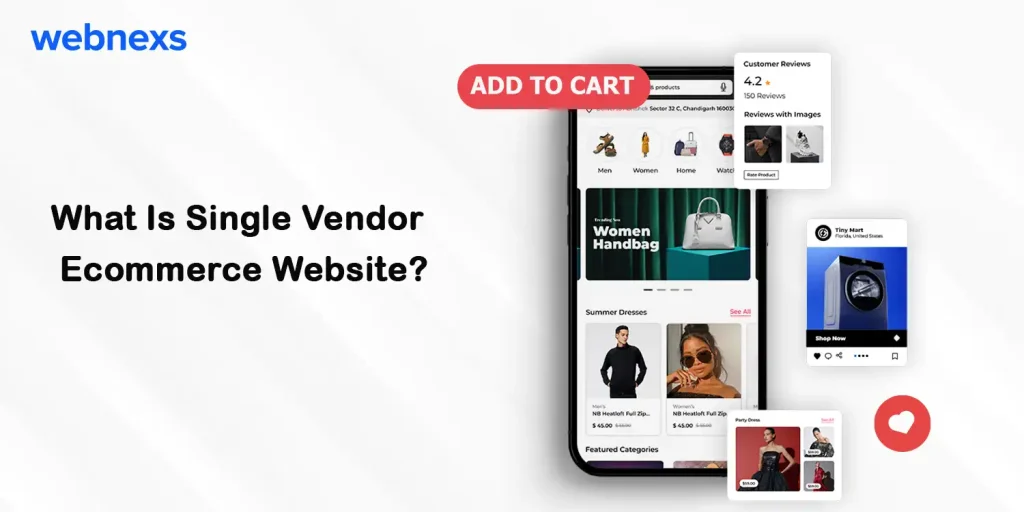
A single vendor ecommerce website is an online store where one business sells products directly to customers. There are only two main participants buyer and seller.
How Single Vendor Ecommerce Works
The business owns inventory pricing branding and fulfillment. Customers browse a fixed catalog and complete checkout in one flow. This model works well for niche brands and manufacturers.
Ecommerce Website Single Vendor Advantages
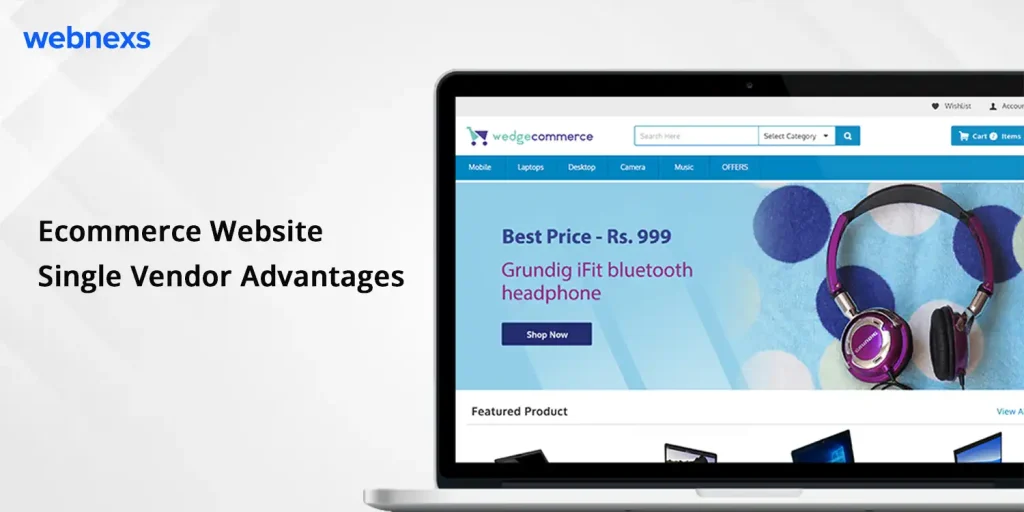
- Full control over branding pricing and customer experience
- Simple operations and faster decisions
- Easier quality control and customer support
- Lower technical complexity compared to marketplaces
However growth depends entirely on one seller’s capacity marketing and inventory.
What Is a Multivendor Ecommerce Website
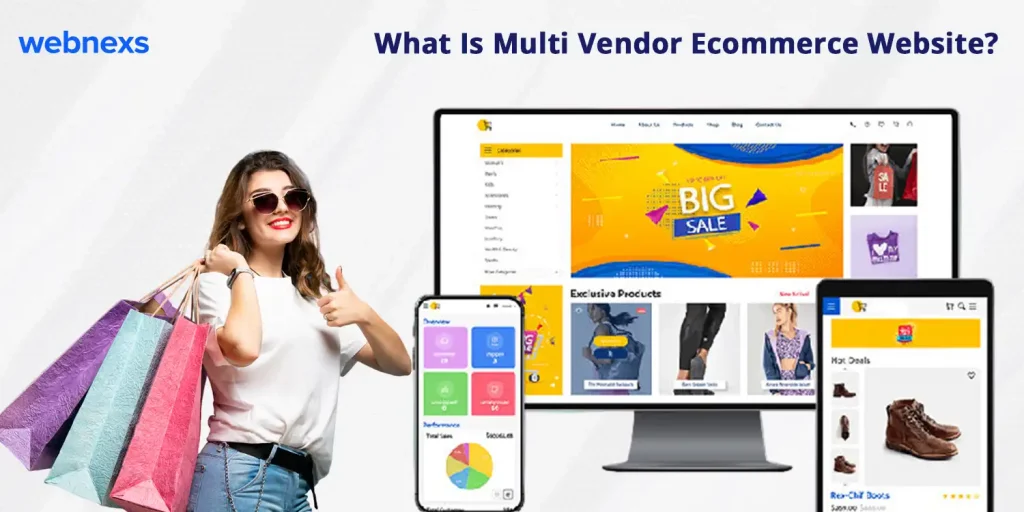
A multivendor ecommerce website allows multiple sellers to register list products and sell to customers through a single platform managed by an admin.
You can explore how this works in detail here
https://blog.webnexs.com/multi-vendor-marketplace-solution-work-examples/
How Multivendor Ecommerce Works
Three entities are involved admin vendor and customer. Vendors manage their own listings while the admin controls commissions policies and platform operations.
A well known example is Amazon which connects millions of sellers with buyers worldwide.
Advantages for Multivendor Marketplace in 2026
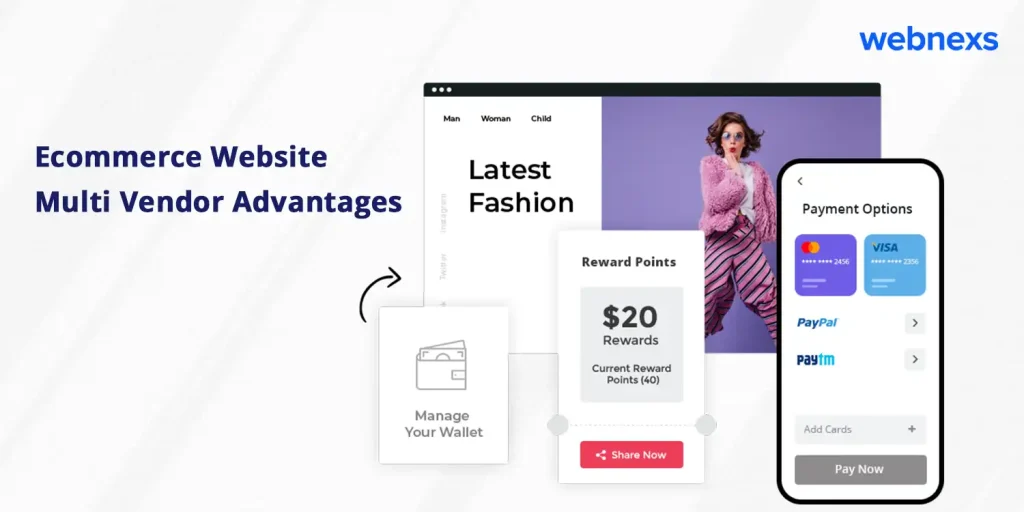
Advantages for multivendor marketplace platforms are stronger than ever due to changing buyer behavior and seller demand.
Seller Growth and Platform Expansion
- Unlimited product expansion without owning inventory
- Faster market entry for new categories
- Lower risk since revenue comes from commissions not stock
- Easy onboarding of local and global sellers
This is why many startups choose to build platforms like Amazon
https://blog.webnexs.com/8-steps-to-build-an-ecommerce-website-like-amazon/
Customer Experience and Trust
- Wider product variety increases engagement
- Competitive pricing improves conversion rates
- Reviews and ratings build transparency
- One platform multiple brands convenience
These elements directly support CRO goals and repeat purchases.
Multivendor Ecommerce vs Single Vendor Ecommerce
Understanding the difference helps founders choose the right model.
Comparison Table
| Feature | Single Vendor Ecommerce | Multivendor Ecommerce |
| Product Variety | Limited | Extensive |
| Scalability | Slow | High |
| Revenue Streams | Product sales | Commissions subscriptions ads |
| Risk Level | Higher | Distributed |
| Customer Choice | Narrow | Broad |
| CRO Potential | Moderate | High |
For cost insights refer to
https://blog.webnexs.com/cost-of-building-a-marketplace-website-and-app/
Revenue Models in Multivendor Ecommerce
Advantages for multivendor marketplace monetization include flexibility. Platforms can earn through:
- Commission per sale
- Vendor subscription plans
- Featured product listings
- Advertising slots
- Value added services like logistics and analytics
This diversified income model makes multivendor ecommerce more stable in 2026.
CRO Focused Benefits of Multivendor Marketplaces
Multivendor ecommerce platforms naturally support conversion optimization.
- More choices reduce bounce rates
- Price competition improves decision speed
- Social proof from reviews increases trust
- Cross seller recommendations raise AOV
To explore development strategies read
https://blog.webnexs.com/multi-vendor-ecommerce-development-marketplaceapp/
Scalability and Future Readiness in 2026
Multivendor ecommerce is future ready due to:
- Easy category expansion
- Headless and omnichannel compatibility
- AI driven recommendations
- Global seller onboarding
Single vendor stores often struggle to scale at this pace.You can also review the best ecommerce multi vendor marketplace script
https://blog.webnexs.com/best-ecommerce-multi-vendor-marketplace-script/
Conclusion
Advantages for multivendor marketplace platforms make them the preferred ecommerce model in 2026. While single vendor ecommerce still suits specific brands multivendor ecommerce delivers faster growth higher conversions and lower risk.
If your goal is to build a scalable profitable and future ready ecommerce business multivendor ecommerce is the smarter choice.
For deeper comparison read
https://blog.webnexs.com/single-vendor-and-multi-vendor-marketplaces/
For more details, concerning Marketplace development, contact Webnexs sales for a ecommerce marketplace solutions.






















37 Responses
We can already see that the market is a successful and well-liked business model for companies that seek to rule the worldwide market in the short term.
Thanks for sharing this valuable information, looking forward to see more articles in similar context. please keep sharing !!
In cases like this, you simply must choose a straightforward thing called the multi-vendor concept. Thanks for writing up this blog.
Customers can profit greatly from multi-vendor marketplace solutions in this digital age. The setting up of many merchants’ own online stores is supported by this platform.
A study predicts that by 2021, multi-vendor marketplace revenues will be comparable to those of online retailers.
These online marketplaces such as the multi-vendor marketplace have evolved globally over time as a result of market demand.
The multi-vendor marketplace option is more affordable for ecommerce business owners since it enables them to sell a wide range of products to a bigger audience without maintaining inventory.
This content is well-detailed and easy to understand about the single vendor concept and multi-vendor here. Thank you for creating good content!
Thanks for sharing such an amazing article, really informative on the single vendor and multi-vendor marketplace concept.
I like the valuable info you provide in your single-vendor/multi-vendor marketplace articles. I will bookmark your weblog and check again here regularly. I’m quite certain I’ll learn much new stuff right here! Best of luck for the next!
Thanks, you, and I admire you to have the courage the talk about single-vendor and multi-vendor concepts, This was a very meaningful post for me. Thank you.
Because of this, I presum a multi-vendor marketplace, similar to a mall, where various vendors operate their individual stores together. Purchases here come from people of all backgrounds.
It is common to discover that ecommerce going to get its new shapes with a multi-vendor marketplace. Then it matters not if it’s heads or tail, one can possibly predict the ultimate results.
Buyers find the marketplace more convenient than a single-vendor ecommerce store because they can purchase everything from one place and in less time.
Markets are protected from theft, but not from fraud. In some cases, sellers will defraud both the buyers on the marketplace and the marketplace itself.
The costs of the marketplace development services associated with each type of site are the most important thing to take into account when deciding between a single-vendor and multi-vendor marketplace.
Multi-vendor marketplaces generally aid in customer retention by up to 89% when compared to solo e-commerce companies.
Multi-vendor ecommerce solutions require superior technology and significant investment to get your business up and running.
Keeping up with the trends with multi-vendor will fairly keep your ecommerce business to challenge others.
With most business owners switching from their online stores to a multi-vendor marketplace, the industry has undergone tremendous upheaval.
Thank you for writing this awesome single vendor concept article. I’m a long-time reader but I’ve never been compelled to leave a comment.
I subscribed to your ecommerce blog and shared this on my Twitter. Thanks again for a great post!
A single and multi-vendor marketplace path, it doesn’t matter what the twists and turns are, you can still make your ecommerce business scalable in all areas of the globe.
Nobody anticipated the emergence of other businesses like Amazon, Etsy, eBay, AliExpress, Barnes & Noble, and several others when it initially began operating in 1995.
I just could not depart your ecommerce website prior to suggesting that I really enjoyed the usual info on a single vendor and multi-vendor marketplace for your business.
This content is well-detailed and easy to understand about both single and multi-vendor marketplace. Thank you for creating good content!.
Deference to the article author, some excellent information about marketplace development with multi-vendor platform support.
Multi-vendor e-commerce has record-breaking sales potential for business owners.
Some truly interesting points you have written. Helped me a lot, just what I was looking for :D.
With great content, the multi-vendor marketplace is impeccable for any ecommerce model.
Excellent blog post. I absolutely love this website. Keep writing about the single and multi-vendor marketplace platforms!
Prior to Airbnb, Amazon only had a single book vendor on its e-commerce website. The idea of a marketplace allows anyone to make millions of dollars, as can be seen by looking at their top ranking.
Pretty nice post. I just stumbled upon your weblog and wished to say that I’ve enjoyed browsing your multi-vendor marketplace blog posts. In any case, I’ll be subscribing to your feed and I hope you write again very soon!
I’m enjoying the design and layout of your website. It’s very easy on the eyes which makes it much more enjoyable for me to come here and visit more often. Did you develop a multi-vendor marketplace website? if so what technology do you use? At last Superb work!
Nice website and I like to follow everything about ecommerce, particularly topics on marketplace here. I always share everything here with my friends.This site I like this too.
Amaᴢing issues here. I’m very satisfied to look your article. Thanks a lot and I’m taking a look forward to contacting you. Will you kindly drop me an e-mail on how can I have a multi-vendor marketplace solution for my business?
Great article about single vendor and multivendor marketplaces! We will be linking to this particularly great post on our site. Keep up the great writing.
Informative article on single vendor and multi-vendor advantages. Explains clearly on each and every aspects. Great work!