Most online marketplaces fail, not because the idea was wrong, but because the platform made it too hard for vendors and buyers to do business. To be successful, your platform needs to make it easy for people to buy, sell and manage products.
30% of startups attempting to build a marketplace fail due to poor execution, not lack of market demand. That gap between a good idea and a working business is where most founders get stuck and give up.
In this guide we will look at the most needed multi-vendor marketplace features that should make customers happy, attract sellers and make more money.
check out this video for a full understanding of multi-vendor marketplaces.
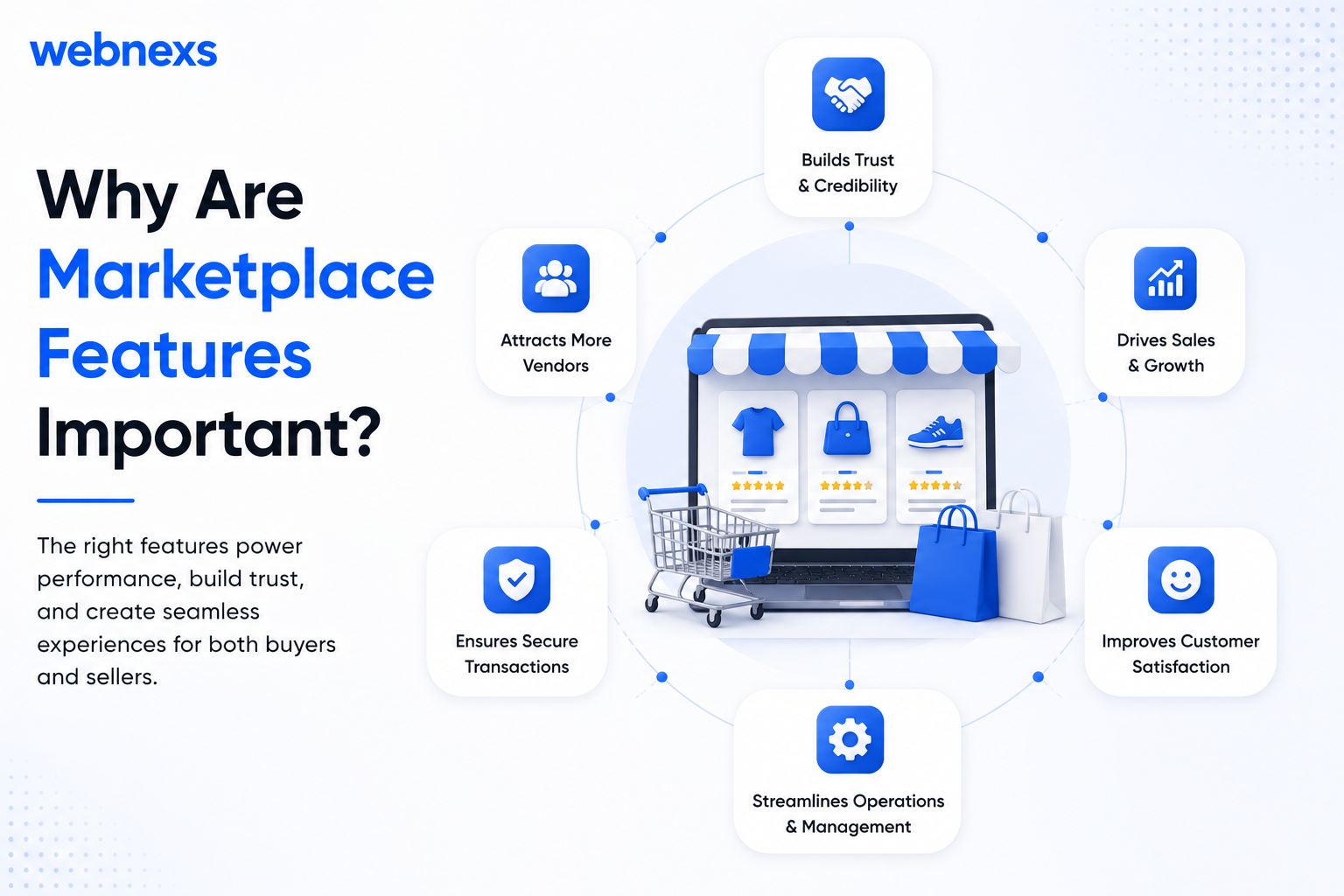
Why Are Marketplace Features Important?
The success of building a marketplace depends on how easy it is for buyers and sellers to use it. Good features make customers happy, make it easy for vendors to manage their products and help the owners of the marketplace grow faster.
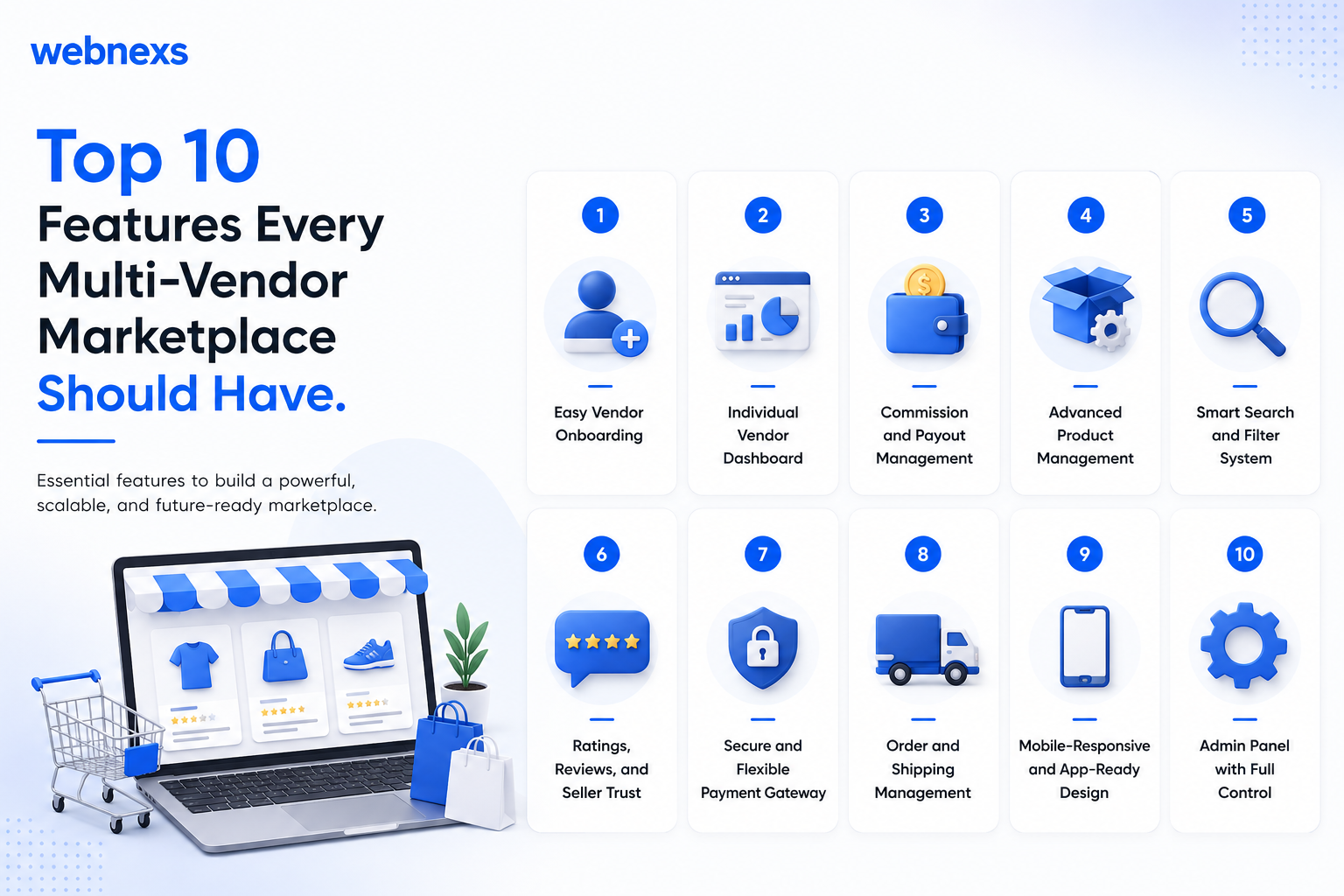
Essential Features Every Multi-Vendor Marketplace Should Have
1. Easy Vendor Onboarding
Your marketplace is only as good as the sellers on it. If vendors struggle to register and set up their store, they will simply leave.
What Good Vendor Onboarding Looks Like:
- A registration form with few steps
- The option to upload documents to verify identity
- A guided setup wizard for the vendor dashboard
- Instant approval or a review process by an administrator.
A smooth onboarding process reduces drop-offs and gets vendors selling faster, which means more products for your customers.
2. Individual Vendor Dashboard
Every vendor needs their own space to manage their business. A dedicated vendor dashboard is one of the most critical multi-vendor marketplace features.
What the Dashboard Should Include:
- Managing product listings and inventory
- Tracking orders and updating their status
- Reports on revenue and payouts
- Customer reviews and ratings
- Managing promotions and coupons
When vendors feel in control of their data. They are more likely to stay active on the platform.
3. Commission and Payout Management
This is the core of how your marketplace makes money. You need a flexible commission system that works for different vendor types.
Key Commission Features to Have:
- rate, percentage-based, or category-specific commissions
- Automated payout schedules
- Support for multiple payment gateways
- Transparent commission reports for vendors
A clear and automated payout system builds trust with your vendors and reduces manual work for your admin team.
Commission Model Comparison
| Model | Best for | Flexibility | When To Use |
| Flat rate | Small marketplaces | Low | Early stage with few vendors and similar product types (e.g., handmade goods, local services) |
| Percentage-Based | Growing marketplaces | Medium | When you have mixed price points and want earnings to scale automatically with GMV |
| Category-Specific | Large, Diverse platforms | High | When vendors sell across very different categories and margins vary significantly |
4. Advanced Product Management
Vendors need tools that make it easy to list, manage and update products.
Must-Have Product Management Tools
- Bulk product upload via CSV or API
- Product variants (size, color, material)
- Inventory alerts and stock management
- SEO-friendly product descriptions
- Rich media support (images, videos)
5. Smart Search and Filter System
Customers should be able to find what they want within seconds. A weak search system can drive users away.
Features That Power Great Search
- Real-time search suggestions (autocomplete)
- Filters by vendor, price, rating and category
- Faceted search for refined results
- AI-powered product recommendations
6. Ratings, Reviews and Seller Trust
Trust is everything in e-commerce. Shoppers want to know who they are buying from before they hand over their money.
Amazon’s “Verified Purchase” badge, introduced to combat fake reviews, increased buyer confidence in product pages that had the label. Third-party studies noted higher conversion rates on verified-review listings vs. unverified ones, even when the star rating was identical.
Trust-Building Features to Add
- Verified buyer reviews on products
- Seller ratings and review profiles
- Seller badges (Top Rated, Verified, Fast Shipper)
- Dispute resolution and report system
7. Secure and Flexible Payment Gateway
A multi-vendor marketplace handles money for multiple parties, customers, vendors and the platform itself. Security and flexibility are crucial.
- Multiple payment methods (cards, UPI, wallets, net banking)
- Escrow payment system for safety
- Split payments to multiple vendors per order
- Fraud detection and chargeback management
8. Order and Shipping Management
Orders involve the admin, the vendor and the customer all at once. Your platform needs a system that keeps everyone informed.
Shipping Features to Prioritize
- Vendor-shipping rules and rates
- Integration with logistics providers (FedEx, DHL, Shiprocket)
- Real-time order tracking for customers
- Return and refund management workflow
9. Mobile-Responsive and App-Ready Design
Over 70% of online shopping now happens on mobile devices. If your marketplace is not mobile-friendly, you are already losing customers.
- Fully responsive storefront design
- PWA (Progressive Web App) or native app support
- Fast page loading speed on mobile
- Push notifications for orders and offers
10. Admin Panel with Full Control
As the marketplace owner, you need a powerful admin panel to manage everything from one place.
Admin Panel Must-Haves
- Vendor approval and account management
- Product moderation before listing goes live
- Revenue reports and analytics dashboard
- Commission setting at category or vendor level
- Banner and homepage layout management
Common Mistakes Marketplaces Make:
1. Commission Rates
Setting commission rates once and not changing them can be a problem. You should build a commission system from the start.
2. Fake Reviews
Not verifying reviews can lead to reviews. You should only show reviews from buyers.
3. Mobile Last
Not making your marketplace mobile-friendly from the start can lead to lost customers. Most shoppers use their phones to shop
Real-World Example
Marketplaces like Amazon and Etsy continue to grow because they focus on vendor management, secure payments, customer reviews and easy product discovery. These features create an experience for buyers and sellers helping the platforms build trust and increase customer loyalty.
Conclusion
Building a successful multi-vendor marketplace requires more than simply listing products. The right features make it easier for vendors to sell, customers to shop and marketplace owners to manage daily operations.
By including features like vendor dashboards, secure payments, inventory management, customer reviews, analytics and mobile responsiveness, you can create a marketplace that delivers a better user experience and supports long-term business growth.
Ready to Build Your Multi-Vendor Marketplace?
Building a marketplace and stuck on one of these decisions? Whether it’s commission logic, vendor onboarding flow or payment architecture. Let’s talk through your specific setup and figure out what your platform actually needs.
What is a multi-vendor marketplace?
A multi-vendor marketplace is an online platform where multiple sellers can list and sell their products through a single website.
Why is a vendor dashboard important?
A vendor dashboard allows sellers to manage products, orders, inventory and sales from one place, making daily operations easier.
Which payment methods should a marketplace support?
A marketplace should support credit cards, debit cards, digital wallets, UPI, net banking and other secure payment options based on its target audience.
How do customer reviews benefit a marketplace?
Customer reviews build trust, improve product credibility and help buyers make informed purchasing decisions.
What are the most important features of a multi-vendor marketplace?
The most important features include vendor onboarding, individual dashboards, commission management, a powerful admin panel, secure payments and smart product search.
How do multi-vendor marketplaces make money?
Multi-vendor marketplaces earn through commissions on sales, subscription fees for premium vendor plans, listing fees, featured placement fees and in some cases, payment processing fees.
Is a multi-vendor marketplace good for small businesses?
Yes. Small businesses benefit greatly from joining a multivendor marketplace because they get instant access to a larger customer base without the cost of building and marketing their own website.
What is the difference between a single-vendor and multi-vendor marketplace?
A single-vendor store has one seller managing all products, like a brand’s own website. A multi-vendor marketplace allows multiple independent sellers to list and sell products under one platform, like Amazon or Etsy.
Is a multi-vendor marketplace profitable?
Yes, multi-vendor marketplaces are highly profitable because the platform owner earns without holding inventory. Revenue comes from sales commissions, vendor subscription plans, listing fees, featured placement charges, and advertising.
How long does it take to build a multi-vendor marketplace?
Using ready-made marketplace software, a basic multi-vendor marketplace can be launched in 2 to 4 weeks. A custom-built platform with advanced features typically takes 3 to 6 months. The timeline depends on the number of features, design customization, payment integrations, and testing required.