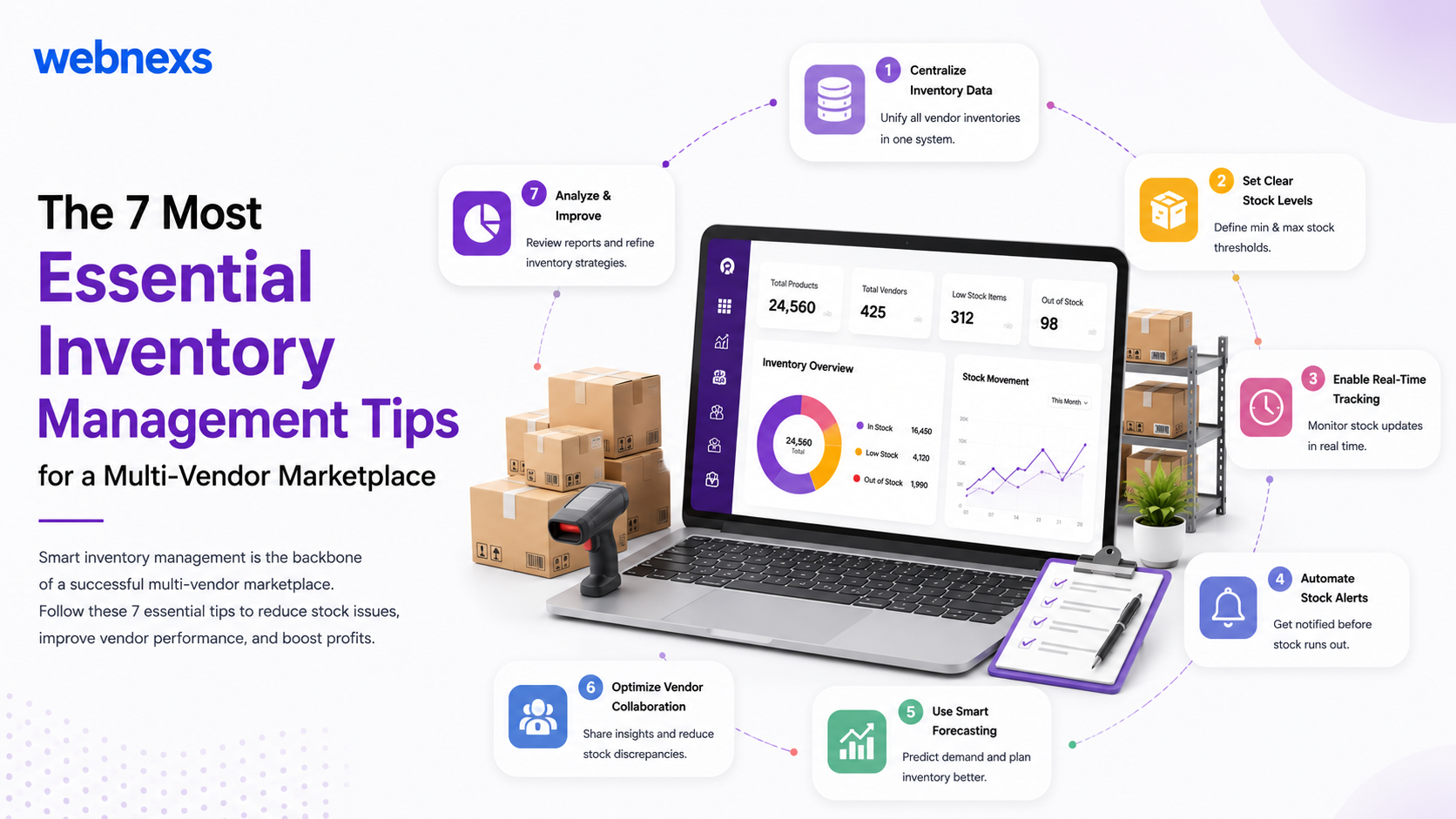
The excitement of running a multi-vendor marketplace is that you can offer thousands of products without having to own the inventory yourself. Yet as your marketplace grows, one of the biggest challenges you’ll face is inventory management.
For example, imagine hundreds of sellers all updating products, taking orders, adding new stock and dealing with returns at the same time. When inventory isn’t handled well, customers can see sold-out items, vendors might sell more than they have, and marketplace owners can lose customer trust.
This guide will walk you through everything you need to know about inventory management, why it matters, common challenges and best practices to successful multi vendor ecommerce marketplace.
For the fundamentals of building a marketplace website before tackling inventory at scale, see our complete guide.
What is inventory management in a multi-vendor marketplace?
Inventory management is the process of monitoring, updating, and controlling the stock of products for various sellers on one marketplace.
In a regular e-commerce store, there is only one business that takes care of all the products. In a multi-vendor marketplace, every seller takes care of their own inventory and the marketplace owner takes care of the entire platform.
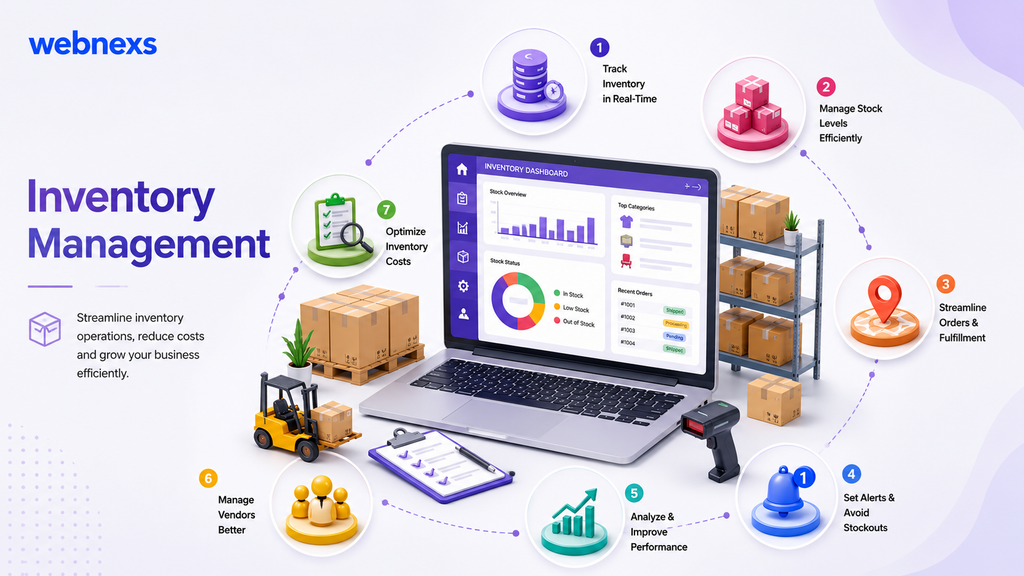
A good inventory system, backed by strong marketplace features, helps sellers to:
- Add new products.
- Update stock levels
- Track sales
- Get low stock alerts
- Don’t overpromise
- Manage Returns & Exchanges
At the same time, customers always have a true picture of product availability, improving their shopping experience.
Why Inventory Management Matters
When inventory runs smoothly, everyone in your marketplace wins. Customers, vendors and you as the platform owner all benefit.
It keeps customers happy
Nobody likes adding something to cart only to find it’s out of stock. That kind of letdown chips away at trust fast.
Keeping stock numbers accurate avoids this entirely.
It helps vendors sell more
When vendors can see what’s moving and what’s sitting, they know exactly when to restock.
That means fewer missed sales and more repeat buyers.
It cuts down on errors
Manual stock tracking is where duplicate orders and wrong counts creep in.
Automating this part removes most of that mess.
It makes growth manageable
Adding more sellers shouldn’t mean more chaos behind the scenes.
A multi-vendor marketplace platform with centralized inventory keeps things scalable as you grow.
The typical inventory issues
Even marketplaces doing well run into these problems sooner or later.
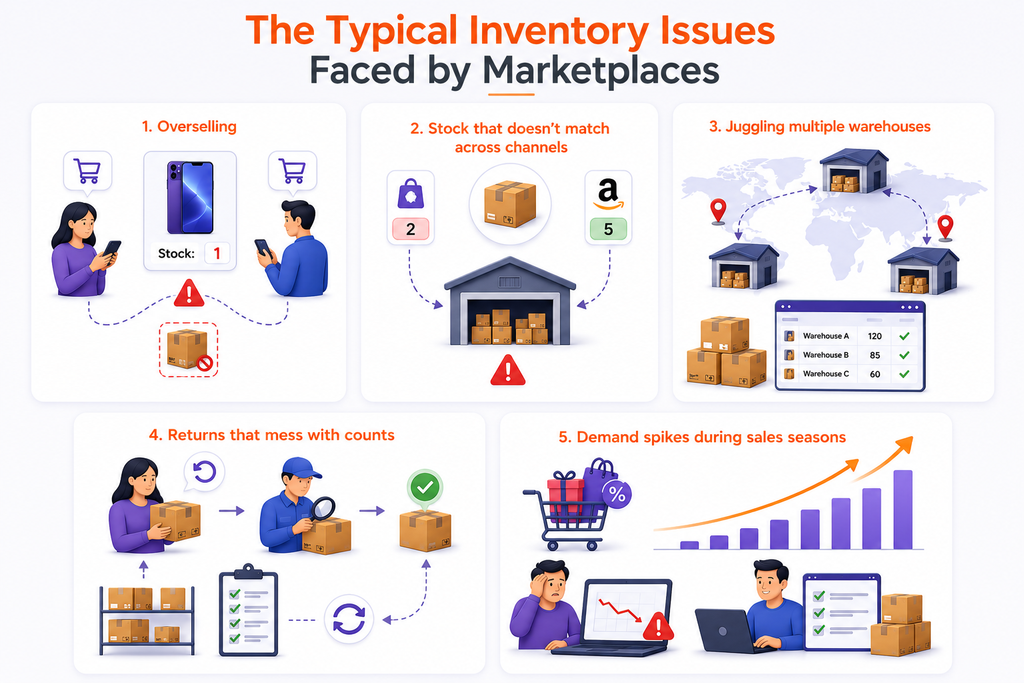
Overselling
Two customers buy the last item before the count updates and now someone’s order can’t be fulfilled. Real-time syncing is the fix here.
Stock that doesn’t match across channels
Vendors selling on multiple platforms often see stock numbers drift apart.
Without syncing, what shows online stops matching what’s actually in the warehouse.
Juggling multiple warehouses
Bigger vendors store products in more than one location.
Tracking stock across all of them needs a system built for it, not spreadsheets.
Returns that mess with counts
A returned item can’t just go back into stock blindly, it needs checking first.
Skip that step and your numbers stop being reliable.
Demand spikes during sales seasons
Festive sales bring sudden surges in orders.
Vendors need systems that help them plan ahead instead of scrambling.
Good Inventory System Should Have This 7 Things
If you’re picking or building marketplace software, look for these:
- Real-time updates – stock should reflect every purchase instantly so nothing gets oversold.
- Bulk upload – vendors should be able to upload hundreds of products at once through CSV or Excel instead of one by one.
- Low stock alerts – automatic nudges that tell vendors to restock before they run out completely.
- Barcode and SKU tracking – unique IDs make managing large catalogues far less painful.
- Inventory reports – these show what’s selling fast, what’s stuck, and where trends are heading.
- Multi-warehouse support – stock should update based on which location actually has it.
- Order syncing – stock drops the moment an order comes in, and bounces back if it’s cancelled or returned.
Best Practices Worth Following To Have Good Inventory Management
- Automate what you can: Manual updates are slow and error-prone; automation just works better here.
- Check inventory regularly:Routine reviews catch products that need restocking or a push through promotions.
- Use past sales data to forecast demand: Historical patterns help vendors prepare before the rush hits.
- Set minimum stock thresholds: This way nobody finds out a product’s gone only after a customer complains.
- Educate vendors: A quick nudge to keep listings updated goes a long way for customer satisfaction.
How Automation Changes the Game
Good marketplace software takes a lot off everyone’s plate by handling:
- Instant stock updates
- Automatic return processing
- Inventory report generation
- Low stock notifications
- Cross-channel syncing
- Less manual data entry
This frees vendors up to actually grow their business instead of babysitting spreadsheets all day.
A Quick Example
Picture an electronics marketplace with 500+ sellers. A customer buys a smartphone, and within seconds:
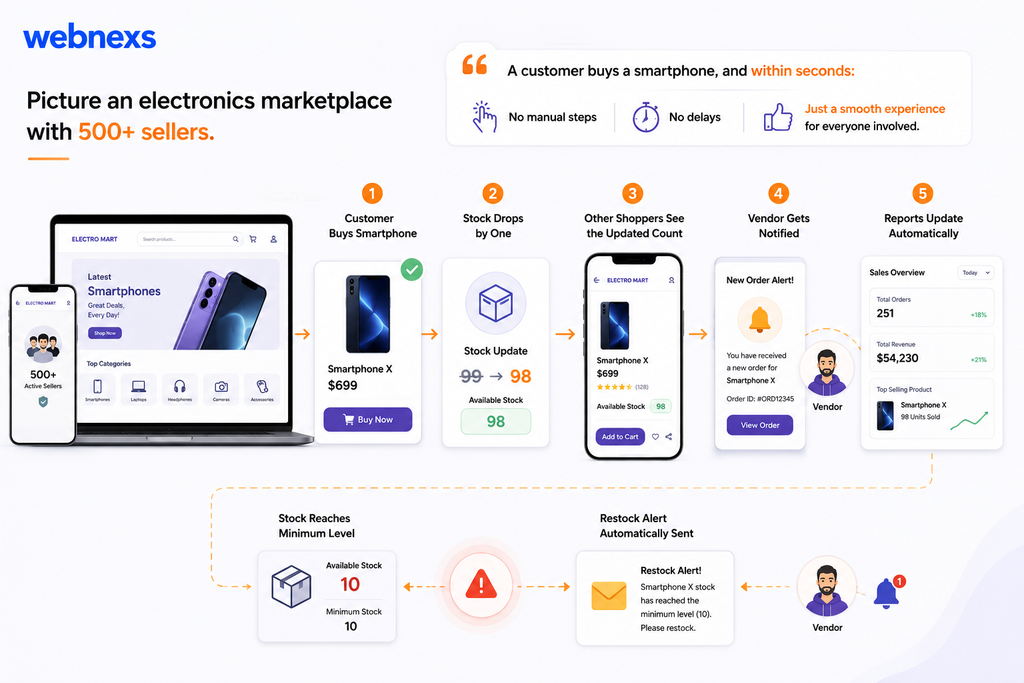
Stock drops by one. Other shoppers see the updated count. The vendor gets notified. Reports update automatically. If stock hits the minimum, a restock alert goes out.
No manual steps, no delays. Just a smooth experience for everyone involved.
Benefits of Inventory Management
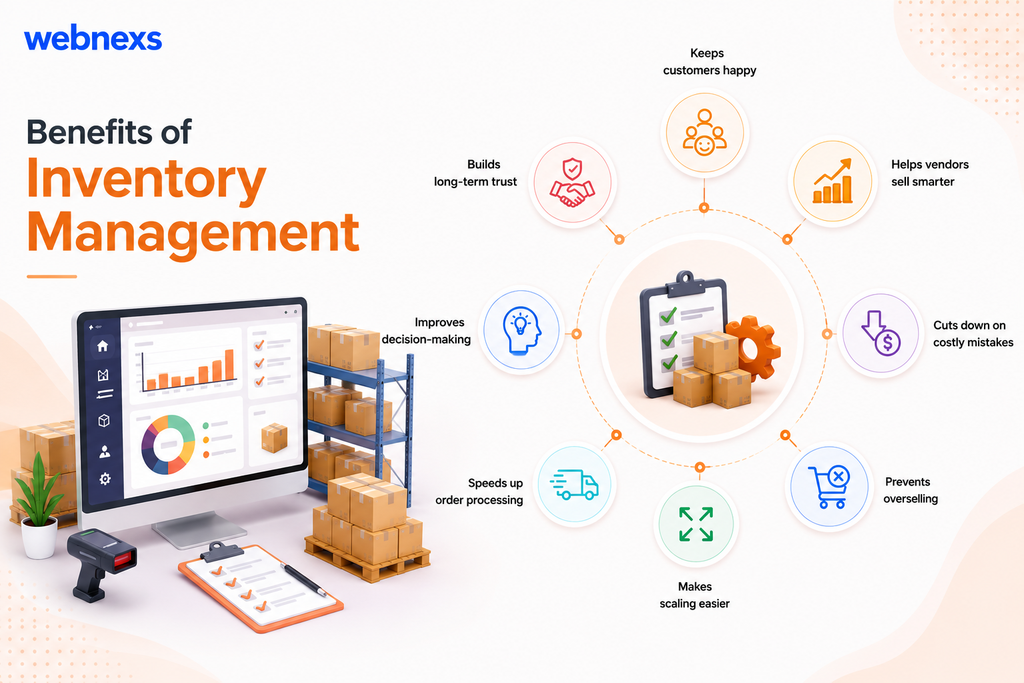
Keeps customers happy:
No one likes ordering something only to find out it’s out of stock. Accurate inventory means customers see what’s actually available and trust your platform more.
Helps vendors sell smarter:
When sellers know what’s moving fast and what’s sitting around, they can restock at the right time. That means more sales and fewer missed opportunities.
Cuts down on costly mistakes:
Manual tracking leads to duplicate orders, wrong counts and delayed shipments. A proper system catches these issues before they become problem.
Prevents overselling:
Real-time stock updates stop multiple customers from buying the same last item. This saves vendors from awkward cancellations and refund requests.
Makes scaling easier:
As more vendors join, manually tracking stock becomes nearly impossible. A centralized system lets your marketplace grow without things falling apart behind the scenes.
Improves decision-making:
Inventory reports show what’s selling, what’s stuck and where the trends are headed. Vendors can plan restocks and promotions based on real data instead of guesswork.
Speeds up order processing:
When stock levels update automatically, orders move faster from purchase to fulfillment. This means quicker deliveries and a smoother experience for everyone involved.
Builds long-term trust:
A marketplace that consistently shows accurate stock and delivers on time earns repeat customers. That kind of reliability is hard to compete with.
How Webnexs Fits In
Running a marketplace with thousands of products and dozens, sometimes hundreds, of vendors needs software that won’t buckle under that kind of load.
That’s exactly what Webnexs is built for. Its inventory tools are designed for scale from the ground up, with real-time tracking, vendor-specific dashboards, bulk product management, automated order processing, multi-warehouse support and built-in analytics all baked in.
If you’re still figuring out what goes into setting one up, this guide on how to build a multi-vendor marketplace walks you through the process step by step. And if you want to know what else to look for beyond inventory, this breakdown of multi-vendor marketplace features is worth a read too.
Conclusion
Inventory management isn’t a side detail, it’s one of the things that makes or breaks a multi-vendor marketplace. Get it wrong and you’re looking at overselling, frustrated customers and a lot of avoidable cleanup.
Choosing the right platform makes this whole job easier. If you’re comparing options, this list of the best multi-vendor marketplace scripts and this roundup of the best multi-vendor marketplace platforms for 2026 are worth a look before you decide.
Start your own marketplace now
Contact us for more information
How does inventory management work in a multi-vendor marketplace?
Each vendor manages their own stock through their dashboard, while the platform tracks everything in real time and updates counts after every order.
Why does real-time tracking matter so much?
It stops overselling and makes sure what customers see online actually matches what’s available.
What are the biggest inventory headaches in a marketplace?
Mainly overselling, mismatched stock across channels, juggling multiple warehouses, handling returns properly and keeping up with seasonal demand.
Can this all be automated?
Yes. Stock updates, low stock alerts, order syncing, reporting and returns can all run automatically with the right setup.
What features actually matter most?
Real-time tracking, bulk uploads, SKU management, low stock alerts, reporting, multi-warehouse support and automated syncing.
How does inventory management affect SEO or product visibility?
Out-of-stock products that still show up in search results hurt user experience and can increase bounce rates. Keeping inventory accurate helps make sure customers only see and click on products they can actually buy.
Can inventory management help during high-demand events like flash sales?
Yes. Real-time tracking and demand forecasting help vendors prepare stock levels ahead of time, so a sudden spike in orders doesn’t lead to overselling or stockouts mid-sale.
What happens if a vendor forgets to update stock manually?
With a real-time system this isn’t really a problem since updates happen automatically after every transaction. It’s only an issue on platforms still relying on manual tracking.
Do vendors need separate software to manage their inventory?
No. A good marketplace platform gives each vendor their own dashboard, so they can manage stock, orders and restocking without needing a separate tool.
Frequently Asked Questions
What are the common inventory management challenges in a multi-vendor marketplace?
Common challenges include overselling, stock discrepancies across channels, juggling multiple warehouses, returns that affect stock counts, and demand spikes during sales seasons. Implementing a robust inventory system with real-time updates, bulk uploads, and low stock alerts can help mitigate these issues.
How can vendors use past sales data to improve inventory management?
By analyzing historical sales patterns, vendors can forecast demand and prepare for upcoming sales seasons. This helps them restock popular items, avoid overselling, and reduce the risk of stockouts. Regular reviews of inventory reports can also help vendors identify trends and make informed decisions.
What are the benefits of automating inventory management in a multi-vendor marketplace?
Automating inventory management can help reduce errors, increase efficiency, and improve customer satisfaction. By automating tasks such as stock updates, low stock alerts, and order syncing, vendors can focus on growing their business and providing better customer service.